Helaena Targaryen dies in House of the Dragon finale
Developed over time first seen 2 months ago
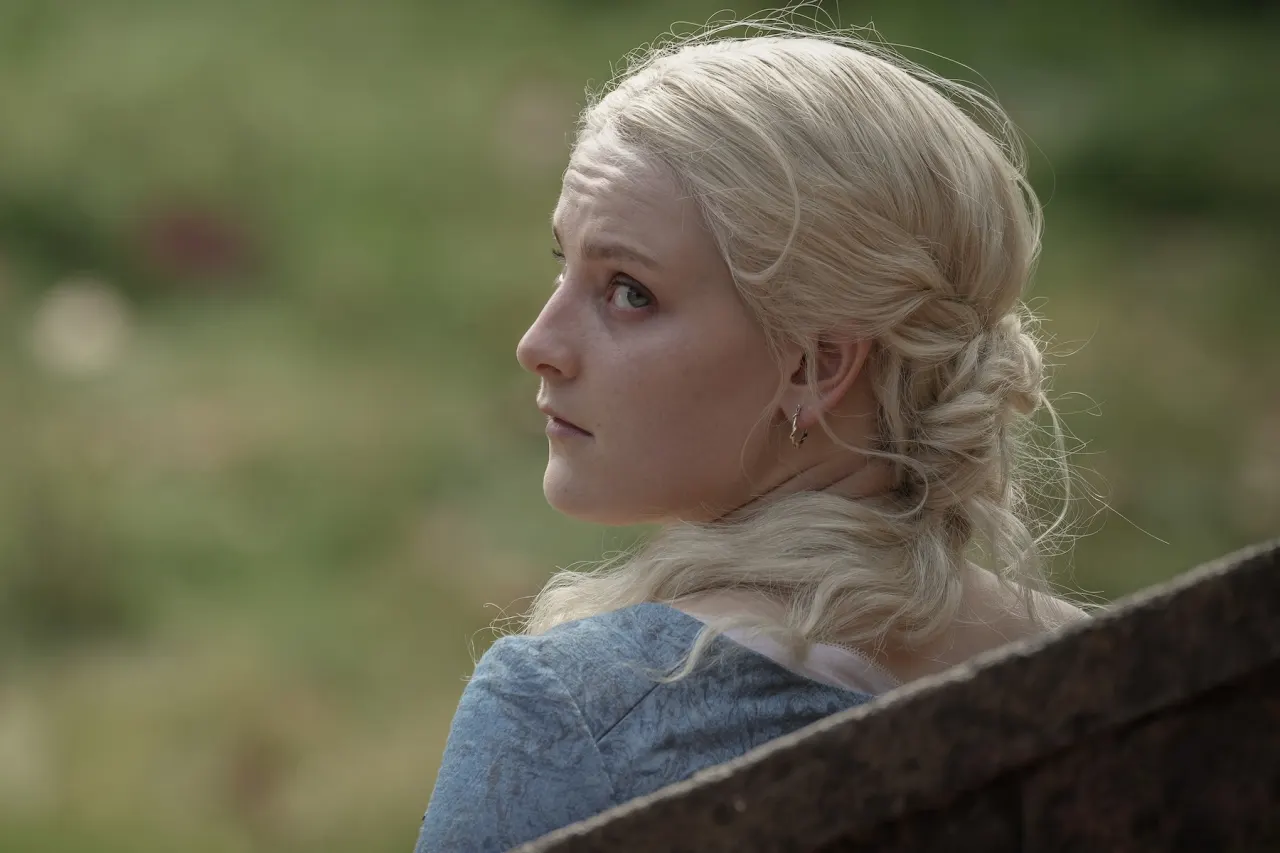
"House of the Dragon" killed off Helaena Targaryen (Phia Saban) in Sunday's Season 3 finale, with the pregnant queen taking her own life by jumping from her window in the Red Keep after being left alone. The death, which many viewers anticipated after a season of ominous visions and depression over separation from her daughter Jaehaera, marks a significant departure from George R.R. Martin's source material and is expected to have far-reaching consequences for Rhaenyra and the show's final season.
Saban told Variety the moment is "a tragedy" reflecting Helaena's sense that both her body and her child had been "forsaken" throughout her life, adding that she wanted to protect the children she still had. Queen Rhaenyra (Emma D'Arcy) discovers the death moments before the episode ends, alongside a tapestry Helaena had embroidered foretelling Rhaenyra's own fate on the Iron Throne. D'Arcy described Helaena as the show's "moral heart," arguing that her death removes any route back to moderate leadership for Rhaenyra and likely forecloses reconciliation with Alicent. The show has also diverged from Martin's "Fire & Blood," notably by excluding Helaena's youngest child Maelor, whose brutal murder triggers her suicide in the books.
- Helaena Targaryen dies by suicide in the Season 3 finale
- Actor Phia Saban calls her arc "a tragedy" in Variety interview
- Death diverges from books and will shape Rhaenyra's final season
New here? Start with this
Same-sex succession disputes lie at the heart of "House of the Dragon," a prequel to "Game of Thrones" set roughly 200 years earlier in the history of the Targaryen dynasty, a family of dragon-riding rulers. The series, based on George R.R. Martin's novel "Fire & Blood," follows the civil war known as the Dance of the Dragons, fought between Rhaenyra Targaryen, who was named heir by her father but passed over on his death, and her half-brother Aegon II, whose claim was backed by rival court factions.
Helaena Targaryen, played by Phia Saban, is Aegon II's sister and wife, making her both queen and a mother to their children. Throughout the show she has been portrayed as gentle and somewhat detached from the political scheming around her, often given visions that hint at future events, and has suffered greatly after the earlier killing of her son Jaehaerys and separation from her surviving daughter.
The show is an adaptation rather than a direct retelling, meaning it sometimes changes details from the book, including how certain characters meet their fates. These choices matter to viewers because they affect how the story's remaining plot, including the fates of Rhaenyra and other central figures, is likely to unfold in the episodes still to come.
Both sides, in good faith
The strongest fair case each way — we don't pick a winner.
The case for
Those who welcome the show's departure argue that television and prose are different mediums with different demands, and that adaptors are right to streamline sprawling book plots for narrative economy. Removing Maelor's storyline, they contend, sharpens Helaena's arc by making her despair self-contained rather than dependent on a young child actor's onscreen brutalisation, while still delivering the same devastating outcome and thematic weight. This view holds that fidelity to a book's spirit, not its every plot beat, is the proper standard for a strong adaptation, and that trusting writers to reshape material can produce more coherent television.
The case against
Those who are uneasy about the change argue that Maelor's fate is not an incidental detail but the very engine of Helaena's breakdown in Martin's text, and that removing it strips her suicide of its originating horror, reframing a mother's reaction to her child's murder as a more generalised, less specifically motivated act of despair. They contend that adaptations owe a duty of care to the internal logic of the source material, especially in a story built on cause and effect across generations, and that trimming such a pivotal event risks softening the narrative's moral stakes for the sake of pacing or convenience. From this perspective, faithful adaptation is itself a value worth protecting, not merely a constraint to be worked around.
More coverage
- The Hollywood Reporter — ‘House of the Dragon’ Star Shares the Bright Side of That Tragic Finale Twist
- The Hollywood Reporter — ‘House of the Dragon’ Boss Explains Finale’s Big Book Change
Read the full article at the source →
Originally published by Variety as “‘House of the Dragon’ Star Phia Saban on Helaena’s Finale ‘Tragedy’ and Changes to Maelor Storyline”.