OBR forecasts stagnant UK earnings amid tax and conflict pressures
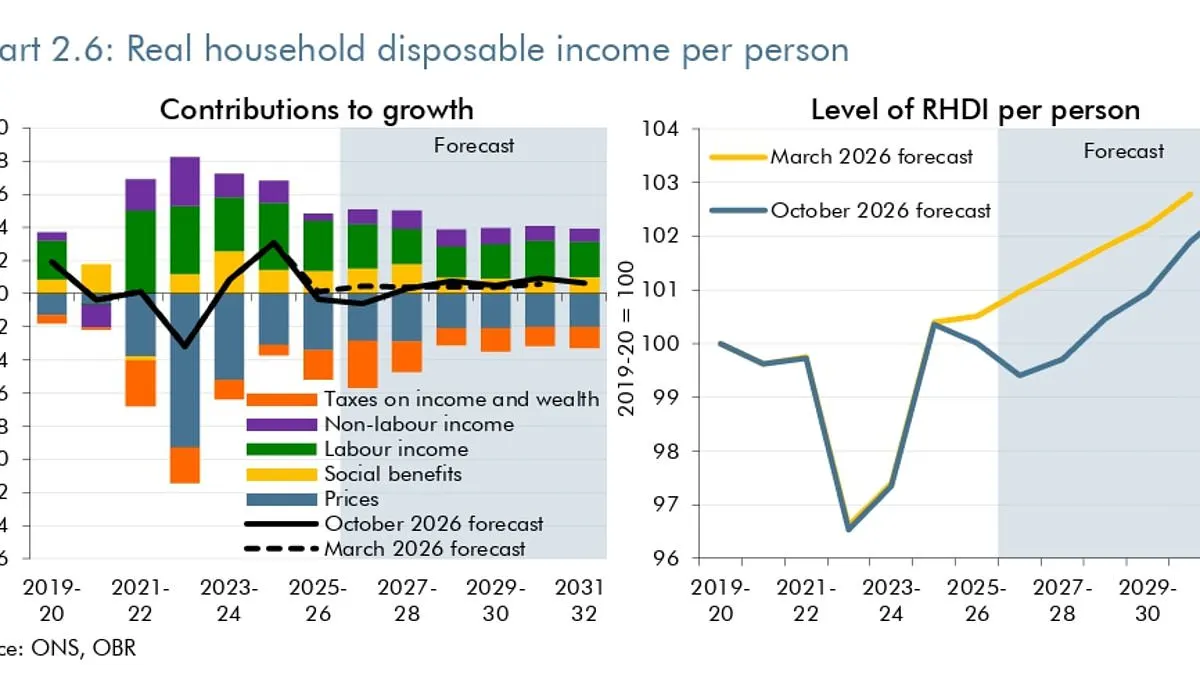
The OBR warns that UK households face another period of weak income growth, with higher taxes and the effects of the Middle East conflict adding to long-running pressure on living standards. Its forecasts suggest real earnings will stop growing in 2027 and 2028, while household disposable income per person is expected to remain close to its pre-pandemic level a decade after the pandemic began.
The OBR expects real earnings growth to recover to 0.5% a year by 2030, partly as energy prices ease. But it says employers are likely to pass on higher National Insurance costs to workers, while inflation and frozen income tax thresholds will weigh on disposable incomes. Growth in real household disposable income per person averaged just 0.25% a year over the decade to 2025-26; by 2029-30, the OBR forecasts an average of less than 0.1% over the preceding decade.
In short
- The OBR forecasts no real earnings growth in 2027 and 2028.
- Disposable income per person has barely grown since the financial crisis.
- Frozen tax thresholds and higher prices are adding pressure.
Steelman: both sides, in good faith
The strongest fair case each way — we don't pick a winner.
The case for
The forecasts underline how a combination of higher taxes, inflation and conflict-related energy costs could leave households struggling to improve their living standards. From this perspective, weak real earnings and near-stagnant disposable incomes make it important to recognise the pressure on workers and families, particularly when employers may pass on higher National Insurance costs.
The case against
The outlook is a forecast, not a certainty: the OBR expects real earnings growth to recover as energy prices ease, and outcomes will depend on how the economy and conflict develop. A defender of the tax and policy choices might argue that raising revenue can support public services and fiscal stability, while frozen tax thresholds and employer contributions are policy trade-offs whose effects should be weighed against those aims and longer-term growth.
Explained simply
The Office for Budget Responsibility (OBR) is the independent body that assesses the UK’s public finances and produces forecasts for the economy and government policy. Earnings are pay from work, while disposable income is what households have left after taxes and other deductions.
Inflation reduces what money can buy, and frozen tax thresholds can mean more income is taxed as pay rises. Employers also pay National Insurance, a tax on earnings, and changes to those costs can affect workers’ pay.
The Middle East is an important source of energy, so conflict there can push up prices and add to household costs. These pressures matter because they shape how much families can spend and save over time.
Business Companies Middle East World
Read the full article at the source →
Originally published by Daily Mail as “Household incomes set for another grim squeeze as taxes and Middle East crisis add to lost decade, OBR warns”.