Houthis Expand Red Sea Control Amid Intensifying Attacks on Saudi Energy Infrastructure
Developed over time first seen 2 months ago
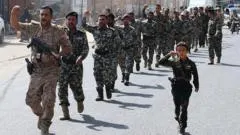
Yemen's Houthi rebels have completed their takeover of Yemen's entire Red Sea coastline and both shores of the Bab al-Mandab Strait, culminating a week-long offensive that also saw a Saudi oil pipeline struck by drones launched from Iraq. The rebels' capture of the strait, a vital chokepoint linking the Red Sea to the Gulf of Aden and the Suez Canal beyond, gives Iran-backed forces control over two of the Middle East's most strategic maritime passages, alongside the Strait of Hormuz, deepening concerns for global shipping and energy supplies.
Government sources said the Houthis seized Perim (Mayyun) Island and the port of Mokha, along with the Greater and Lesser Hanish islands, completing control of the western coast after hundreds were killed in the offensive that began on 3 September. Saudi Crown Prince Mohammed bin Salman reportedly pressed President Trump directly for military intervention, but Washington offered only intelligence and targeted support rather than committing forces. The unrest coincided with the shutdown of Saudi Arabia's East-West oil pipeline after a drone strike, sending oil prices sharply higher, while Iran's leadership publicly congratulated the Houthis on what it called a "resounding victory".
- Sources
- 2
- Outlets
- 2
- Left · Centre · Right
- 0 · 1 · 1
In short
- Houthis now control Yemen's entire Red Sea coast and Bab al-Mandab Strait.
- Saudi Crown Prince urged Trump to intervene militarily; US demurred.
- Saudi oil pipeline drone strike compounded the crisis, lifting oil prices.
How this story developed
- 2 months ago Saudi Arabia has shut down its critical East-West oil pipeline after it was struck by multiple drone attacks launched from Iraqi territory on Thursday, injuring several people and sending oil prices sharply higher.
- 2 months ago Houthi forces have achieved their most significant territorial expansion in years, capturing approximately 130 kilometres of strategically vital Red Sea coastline from Saudi-backed opposition fighters during a rapid offensive across Yemen's Tihamah region.
- 2 months ago Yemen's Houthi rebels have completed their takeover of Yemen's entire Red Sea coastline and both shores of the Bab al-Mandab Strait, culminating a week-long offensive that also saw a Saudi oil pipeline struck by drones launched from Iraq.
Full account
Houthi fighters have swept across large stretches of Yemen's Red Sea coastline in a matter of days, catching Saudi-backed forces and outside observers off guard and reigniting fears over the security of one of the world's most important shipping corridors. The Iranian-aligned movement is reported to have taken control of roughly 130km of the Tihamah coastal plain from the National Resistance, the anti-Houthi coalition that had held the area for years, marking what analysts describe as the group's most significant military gain in a considerable time.
With opposing forces described as demoralised and in disarray, observers say the Houthis are likely to dig in rather than be pushed back quickly, given the cost and difficulty of retaking lost ground. The advance is reported to include the capture of islands commanding the narrowest point of the Bab al-Mandab strait, potentially strengthening the group's long-demonstrated ability to threaten vessels passing between the Red Sea and the Gulf of Aden using missiles, drones and small boats.
The gains have sharpened concern about Iran's regional reach. Tehran is said to have leaned more heavily on its Yemeni allies as other members of its self-styled network of aligned groups — Hezbollah in Lebanon, Hamas in Gaza, and formerly the Assad government in Syria — have suffered serious setbacks. Commentators note that, months after a major US-Israeli military campaign against Iran, the country now exerts influence, directly or through partners, over both the Strait of Hormuz and the Bab al-Mandab, corridors through which more than a third of the world's oil and fuel trade is said to pass — a form of leverage some liken to possessing a strategic weapon.
The territorial shift has coincided with a separate and damaging blow to Gulf energy infrastructure: Saudi Arabia's East-West pipeline, a 1,200km link that allows the kingdom to move large volumes of crude to export terminals while bypassing the Strait of Hormuz, was struck by multiple drone attacks reportedly launched from Iraqi territory, causing injuries and fire damage to pumping stations and prompting operators to shut the line down as a precaution. Iraq's government has condemned the strikes and ordered an inquiry, while Riyadh is understood to have held back from immediate retaliation. The combination of the coastal offensive and the pipeline attack has unsettled energy markets, with crude prices climbing sharply over the week and pump and diesel costs rising in step, underscoring how intertwined the region's security crises have become with global fuel supplies.
Where outlets differ
From the full account, which is AI-written from the sources:
The BBC-style report concentrates on the military and geopolitical dimension — the speed and scale of the Houthi land advance, the capture of Red Sea islands, and expert commentary on Iran's expanded strategic leverage over two global chokepoints — while giving only passing mention to oil prices.
The second report is centred on the economic and infrastructure fallout, providing specific detail on the East-West pipeline attack (satellite imagery, pump-station damage, drones traced to Iraq, Iraqi condemnation and an investigation) and precise market figures, including Brent settling at $104.56 a barrel and US diesel topping $6 a gallon, whereas the first source cites oil merely 'hitting $100 a barrel' in a more general sense.
The two accounts attribute the market reaction to different immediate triggers — one frames rising prices mainly around US and Houthi military strikes generally, the other ties the price surge specifically to the pipeline attack days after the Bab al-Mandab seizure — reflecting differing emphasis on cause and sequence.
Only the pipeline-focused report mentions Iraq's role and response; only the coastal-advance report includes named analyst commentary (from the European Institute of Peace and Chatham House) on the Houthis' relationship with Iran.
Centre outlets 1
Only here: lightning, houthi, advance, yemen, bring
Right-leaning outlets 1
Only here: houthis, seize, shipping, strait, drone
Headline columns compared word for word; nothing in them is AI-written.
Steelman: both sides, in good faith
The strongest fair case each way — we don't pick a winner.
The case for
Advocates of a robust military and security response argue that the international community, and particularly the United States and its Gulf allies, cannot allow a strait as vital as Bab al-Mandab and a partner as significant as Saudi Arabia to be menaced without consequence. They point to the tangible harm already visible in this account, surging oil and diesel prices, an ally's critical pipeline ablaze, and hundreds of lives lost in the islands offensive, as evidence that deterrence has failed and must be restored through naval escorts, strikes on launch sites, and firmer backing for Riyadh. On this view, decisive action now protects global trade routes and ordinary consumers from far worse economic shocks later, and reassures allies that their security guarantees are credible.
The case against
Those urging restraint argue that deeper military involvement risks dragging outside powers into another open-ended Middle Eastern conflict with no clear exit, potentially widening the war rather than ending it, especially given the risk of direct escalation with Iran. They emphasise that previous interventions in Yemen have proven costly and inconclusive, and that hundreds of deaths in the islands offensive already show how quickly such conflicts spiral; further strikes could inflame regional anger and destabilise energy markets even more than the attacks themselves. Instead, they favour prioritising diplomacy, regional-led de-escalation, and protecting shipping through defensive rather than offensive means, trusting that a measured approach better serves long-term stability than another military commitment.
Explained simply
Saudi Arabia's East-West pipeline is one of the kingdom's most important pieces of oil infrastructure, carrying crude across the country so it can be exported without passing through the Strait of Hormuz, the narrow waterway off Iran that Saudi Arabia has long worried could be blocked or restricted. Any disruption to this pipeline matters well beyond Saudi Arabia, since the kingdom is one of the world's largest oil exporters and shocks to its supply tend to push up prices and fuel costs globally.
The Houthis are an armed movement that controls large parts of Yemen and is backed by Iran. They have fought a long civil war against Yemen's internationally recognised government and, since July, have also been targeting Saudi shipping and interests, part of a wider regional pattern in which Iran-aligned groups have used attacks on energy and shipping infrastructure to exert pressure. The Bab al-Mandab Strait, which the Houthis are reported to be tightening their grip on, is a narrow sea passage between the Red Sea and the Gulf of Aden that a large share of the world's shipping, including oil tankers, must pass through to reach the Suez Canal.
Together, these two threads — attacks on Saudi Arabia's overland oil infrastructure and Houthi control over a key maritime chokepoint — are significant because they raise the possibility that oil and shipping routes could be squeezed from multiple directions at once, with knock-on effects for global energy prices and supply chains.
Coverage · 2 sources
Bias meters
From 2 rated sources.
Americas Middle East Space Technology World