How did Frank Zappa become a hero of Czech democracy?
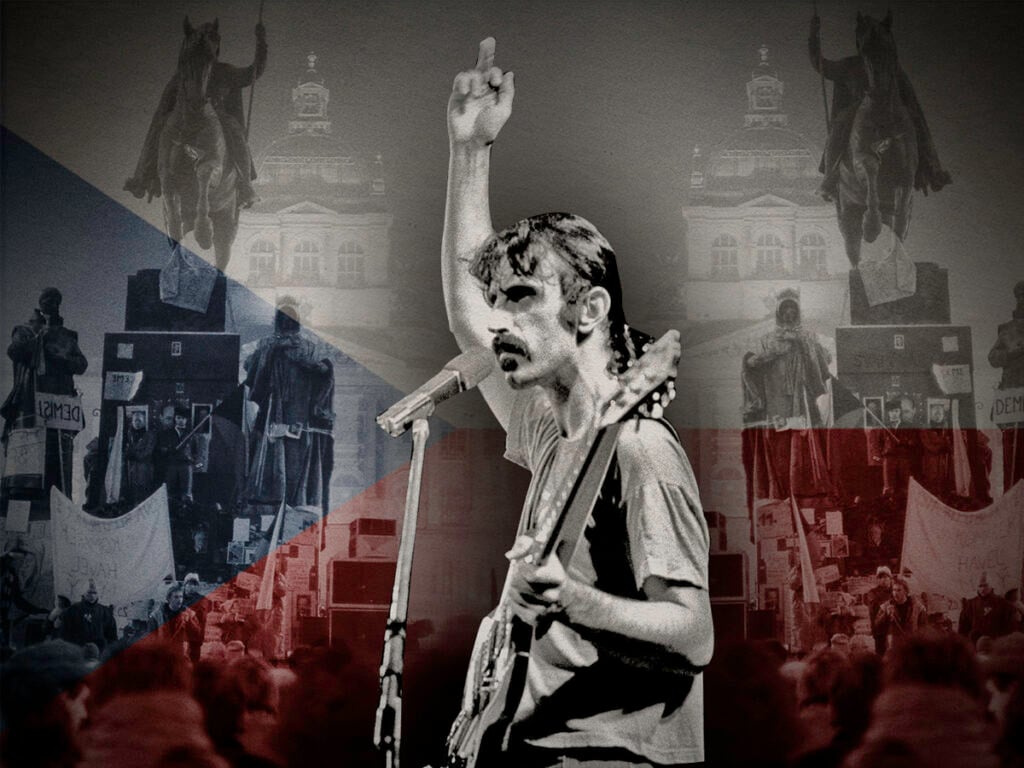
Frank Zappa became an unlikely symbol of resistance in communist Czechoslovakia, his music having inspired dissidents who defied state suppression during the Cold War. His 1967 song "Plastic People", recorded with the Mothers of Invention, so resonated with the Prague underground that the banned rock band the Plastic People of the Universe took their name from it; the band's 1976 arrest helped prompt Václav Havel and fellow dissidents to draft the Charter 77 human rights manifesto, a defining document of Czechoslovak resistance to communist rule.
After the Velvet Revolution swept him to power in December 1989, President Havel invited Zappa to Prague, where he was met by around 5,000 well-wishers at the airport, prompting the musician to remark he had never seen anything like it in 25 years in rock and roll. At Prague Castle, Havel offered Zappa the post of special ambassador to the West for trade, culture and tourism, which Zappa accepted, though the appointment was later withdrawn following intervention by US Secretary of State James Baker III, whose wife had co-founded the PMRC, an anti-explicit-lyrics group Zappa had long opposed. Despite the setback, the friendship between Zappa and Havel endured.
- Zappa's music inspired Czechoslovak dissidents who later founded Charter 77
- President Havel invited Zappa to Prague after the 1989 revolution
- A planned ambassador role was scrapped after US State Department pressure