How does Epic Games CEO Tim Sweeney reckon we can fight the industry’s “Crash 2.0”? By building more factories
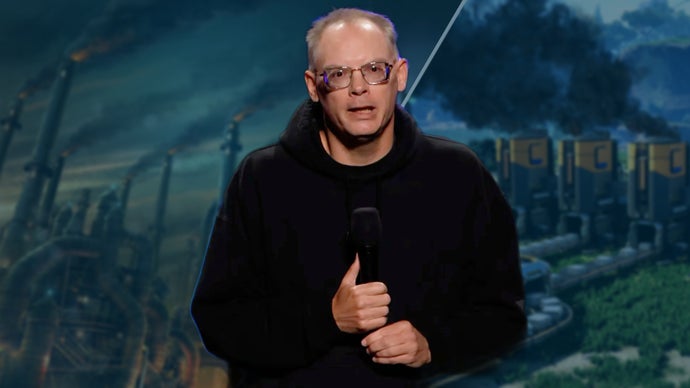
Epic Games boss Tim Sweeney has warned that the video games industry is experiencing its worst downturn since the 1983 "Atari shock" crash, driven largely by a severe shortage of components. Speaking to Edge Magazine, he attributed the crisis to unprecedented investment in AI systems and data centres, which is allowing tech firms to outbid the entertainment industry for hardware supplies, pushing up RAM and storage prices sharply. His comments add to a growing chorus of concern about instability across the sector, which has already seen sweeping layoffs at major publishers including Sony, Microsoft, EA, Ubisoft and Take-Two.
Sweeney said RAM and storage prices are quadrupling and warned that a "continual supply crisis" for gaming hardware is likely to persist for the next three years. He argued the only real fix is building massive new manufacturing capacity to meet global demand, predicting this expansion will eventually happen. His remarks follow Epic's own restructuring, having laid off 1,000 staff in March amid falling Fortnite engagement, and come shortly after he suggested rival platform Roblox would "grow and eat gaming."
- Sweeney likens current downturn to 1983's Atari crash
- AI data-centre demand is driving up RAM and storage prices
- His fix: build new factories to boost hardware supply
New here? Start with this
Video games are going through a rough patch, and Tim Sweeney, the boss of Epic Games (the company behind Fortnite and the Unreal Engine used in many big-budget titles), says it's the worst slump the industry has faced since a famous crash back in 1983. He puts much of the blame on a shortage of computer components, particularly memory chips and storage, needed to make games consoles and gaming PCs.
That shortage, he argues, stems from tech companies pouring huge sums into artificial intelligence and data centres, which soak up the same hardware supplies and drive up prices for everyone else. This comes against a backdrop of real strain across the games industry, with major publishers such as Sony, Microsoft, EA, Ubisoft and Take-Two all cutting jobs recently, and Epic itself having laid off staff earlier this year.
The reason this matters beyond one executive's opinion is that Sweeney occupies an unusually influential position: Epic makes one of the most widely used game-development tools in the world and also runs its own online store, giving him visibility across much of the industry. His warnings and proposed fixes carry weight for how developers, hardware makers and other games companies plan for what could be a prolonged period of higher costs and instability.
Both sides, in good faith
The strongest fair case each way — we don't pick a winner.
The case for
Sweeney's diagnosis reflects a genuine and well-documented supply-side shock: AI and data-centre investment has driven unprecedented demand for RAM, NAND and other components, and when hyperscalers can pay far more per unit than console or PC makers, prices for gamers and developers inevitably spike. On this view, the industry's downturn is substantially an exogenous hardware problem rather than a failure of creative or business judgement, so the sensible long-term fix is exactly what Sweeney proposes: expanding global semiconductor and memory manufacturing capacity so supply eventually catches up with demand from both AI and entertainment sectors.
The case against
Others would argue that framing this primarily as a component shortage risks obscuring deeper, self-inflicted problems within gaming itself, including years of over-hiring during the pandemic boom, bloated live-service investments, rising development costs, and declining player engagement in titles like Fortnite. From this perspective, layoffs at Sony, Microsoft, EA, Ubisoft and Take-Two predate and are only partly explained by the recent hardware crunch, so pinning hopes on new factories years away risks distracting from more immediate structural reforms the industry needs to make to its own cost bases, release strategies and business models.