World news and discussion on TalkFuse.
How has the ceasefire in Russian-occupied Oleshky been unfolding?
Developed over time first seen 5 days ago
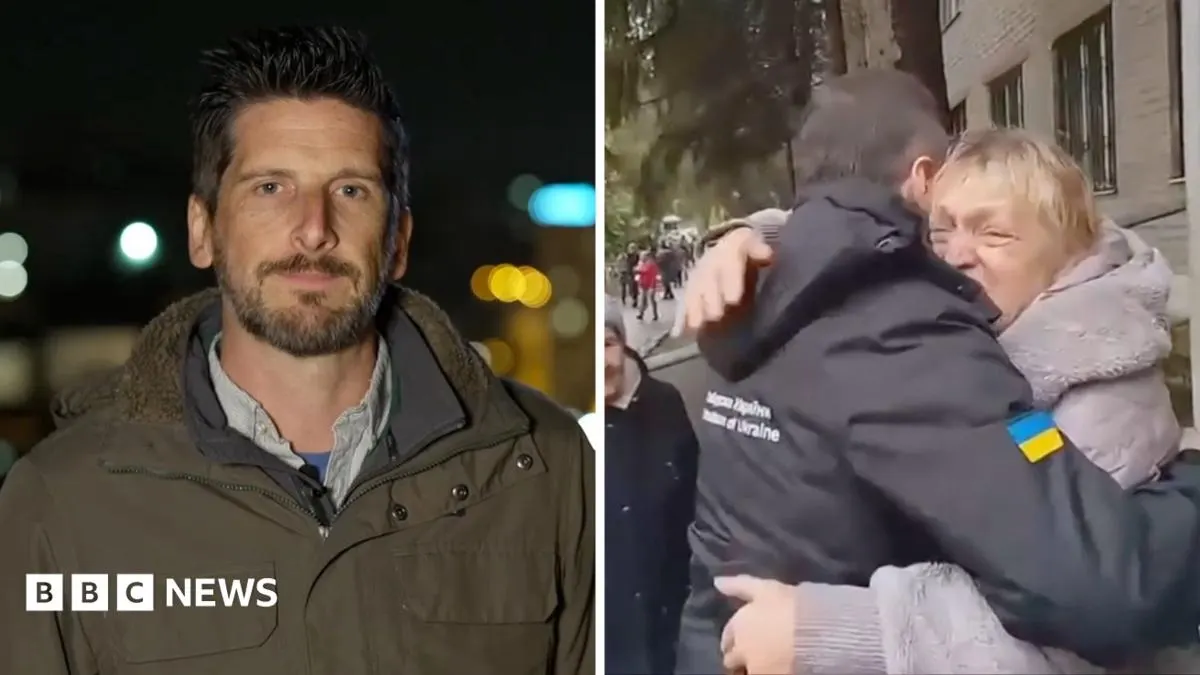
A six-day local ceasefire began on 27 October around Russian-occupied Oleshky in Ukraine’s Kherson region, creating a short window for aid deliveries and civilian evacuations. After roads were cleared of mines, a convoy of 25 buses, ambulances and other vehicles entered the area. Hundreds of residents left; those choosing to travel to Ukrainian-held territory made a long journey via Russian-held Crimea, then Belarus, before crossing into Ukraine. Others went to Russia or stayed in Oleshky, where residents faced shortages of basic services and supplies. Officials from both sides said the operation proceeded without reported ceasefire violations, while Ukrainian and Russian representatives discussed further humanitarian efforts. [BBC](https://www.bbc.co.uk/news/articles/c60me298k1yeo), [Associated Press](https://apnews.com/article/russia-ukraine-oleshky-ceasefire-1eb633aee4d33b3845a72053d7f6346c)
The truce ended on 1 November. Ukraine’s General Staff later accused Russian forces of using the pause to rotate troops, reinforce positions and improve logistics; the Kremlin said adjusting positions during a ceasefire was standard practice and suggested Ukraine may have done the same. The claims underline the limits of a narrowly defined humanitarian pause: it enabled some civilians to leave and aid to reach the town, but fighting continued elsewhere and residents who remained faced uncertainty about what would follow. [Reuters](https://www.investing.com/news/world-news/ukraine-says-russia-used-oleshky-ceasefire-to-reinforce-positions-4990442), [Interfax-Ukraine](https://en.interfax.com.ua/news/general/1229540.html)
- Sources
- 2
- Outlets
- 2
- Left · Centre · Right
- 0 · 2 · 0
In short
- A six-day truce enabled aid deliveries and civilian evacuations from Oleshky.
- Hundreds left by routes through occupied territory, Russia and Belarus; others stayed.
- The ceasefire ended on 1 November, with Kyiv alleging Russian military regrouping during the pause.
How this story developed
- 1 day ago A six-day local ceasefire began on 27 October around Russian-occupied Oleshky in Ukraine’s Kherson region, creating a short window for aid deliveries and civilian evacuations. After roads were cleared of mines, a convoy of 25 buses, ambulances and other vehicles entered the area.
Steelman: both sides, in good faith
The strongest fair case each way — we don't pick a winner.
The case for
A limited ceasefire can be worthwhile when it creates a real, if brief, chance to deliver aid and help civilians leave a dangerous area. The reported evacuations and supplies show that even a pause that does not end the wider war may reduce immediate harm, while discussion of further humanitarian efforts could build on that opening.
The case against
A humanitarian pause can carry risks if either side uses the lull to improve its military position, potentially making later fighting more dangerous. Critics may also argue that a short, local truce offers little lasting protection to people who remain, while its narrow scope leaves civilians elsewhere exposed to continued fighting.
Explained simply
Oleshky is a town in Ukraine’s southern Kherson region, on the Russian-occupied side of the Dnipro River. Since Russia’s full-scale invasion, the area has been under Russian control, while Ukrainian forces hold territory across the river.
A local ceasefire is a limited pause in fighting, agreed for a specific place and purpose. In Oleshky, the pause was intended to let aid reach residents and give civilians a chance to leave; people heading to Ukrainian-held territory had to travel through areas controlled by Russia and Belarus.
The arrangement involved Ukrainian and Russian officials, whose forces remain at war elsewhere. It matters because humanitarian pauses can help civilians while leaving questions about safety, access and what happens when the pause ends.
Coverage · 2 sources
Bias meters
From 2 rated sources.
Culture Europe Russia-Ukraine War Travel World