How is Android Auto different from Android Automotive?
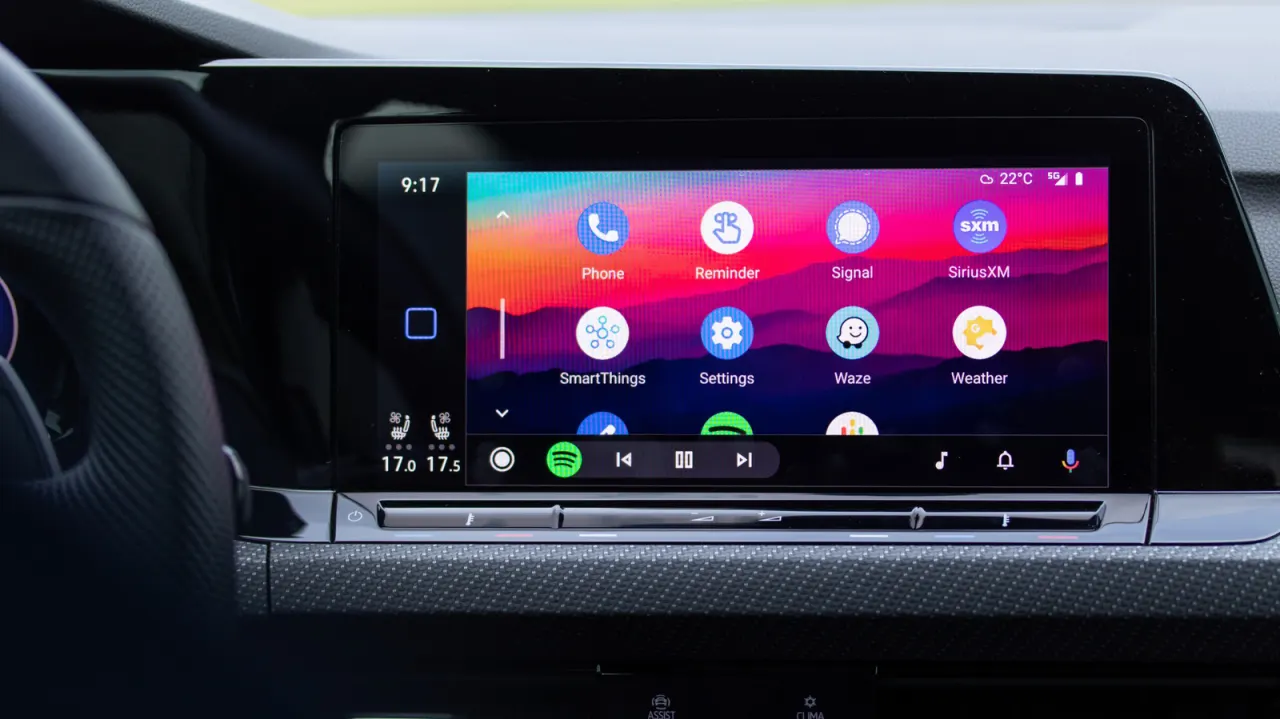
Android Auto and Android Automotive OS are often confused despite being fundamentally different systems. Android Auto is powered by a driver's smartphone and projects a simplified interface for navigation, music and messaging onto a compatible car display, functioning much like Google's answer to Apple CarPlay. Android Automotive OS (AAOS), by contrast, runs directly on the vehicle's own hardware, requiring no phone at all and giving carmakers deeper control over infotainment, instrument displays, climate and EV data.
The distinction matters for buyers checking spec sheets, since a car can support one, both, or neither depending on how the manufacturer builds it. Adding further complexity, "Google built-in" is a separately licensed package of Google services, such as native Maps and Play Store, that can sit on top of AAOS but isn't part of the open-source platform itself; Rivian, for instance, uses AAOS without Android Auto or CarPlay, while Polestar supports Google built-in alongside both Android Auto and Apple CarPlay. The Polestar 2 was the first production car to feature Android Automotive OS, in 2020.
- Android Auto runs from your phone; Android Automotive OS runs on the car itself
- Google built-in is a separate, optional Google services package atop AAOS
- Polestar 2 (2020) was the first car with Android Automotive OS
New here? Start with this
Android Auto and Android Automotive OS are two separate Google-made systems that both appear in cars but work in very different ways. Android Auto mirrors apps from a driver's smartphone onto the car's screen, giving a simplified interface for things like maps and music, similar to Apple CarPlay. Android Automotive OS is a full operating system built into the car itself, which means it can run without a phone connected at all.
The mix-up between the two matters because manufacturers can choose to include either, both, or neither in a given vehicle, so the features on offer vary widely from car to car. A further layer of complexity comes from "Google built-in," an optional bundle of Google apps and services that carmakers can add on top of Android Automotive OS, but which is not a required part of it. Companies such as Rivian and Polestar have taken different approaches to combining these systems, illustrating how varied the setups can be.
Android Automotive OS first reached the market in the Polestar 2 in 2020, and manufacturer adoption has grown since then. Understanding the difference matters most to people shopping for a new car, since it affects what a vehicle can do independently of a smartphone and how deeply Google's services are integrated into its controls.