How much does DDR5 RAM speed matter for gaming?
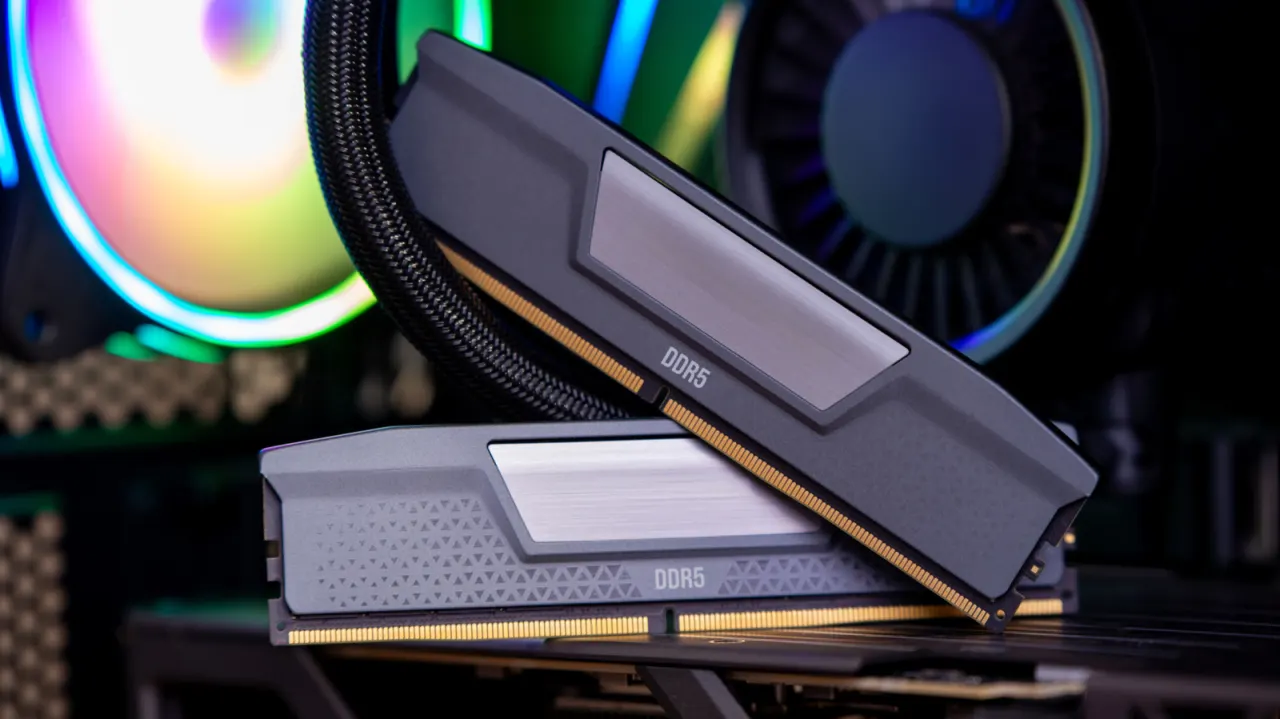
DDR5 speed can affect gaming performance, but the article says the gains are generally small: moving from a slow kit to a mid-range one may help, while paying much more for top-end RAM often brings little benefit. Most games run adequately on entry-level DDR5, with faster memory offering marginal frame-rate improvements mainly when the processor is the bottleneck.
The figures on a kit describe its data rate and CAS latency, which together determine response time; a higher data rate does not automatically mean lower latency. AMD lists support for DDR5-5600 on Ryzen 9000 and DDR5-5200 on Ryzen 7000, while DDR5-6000 is commonly used because faster memory can make AMD’s controller run at half speed and add delay. The article notes that JEDEC’s official standard reached 8,800 MT/s in 2024, while some kits now reach 9,600.
- Faster DDR5 can slightly improve processor-bound gaming.
- Entry-level DDR5 is sufficient for most games.
- High-end kits often cost far more for little extra performance.
New here? Start with this
DDR5 is a type of computer memory that helps your processor handle tasks like running games. The speed of this memory is measured in various ways, and the question for gamers is whether faster memory actually makes a meaningful difference to gaming performance.
Manufacturers list two main numbers for memory kits: a data rate (how much information it handles per second) and latency (the delay before it responds). The relationship between these two figures is not straightforward, as faster data rates do not automatically mean faster response times. Different processors are designed to work best with specific memory speeds, though memory faster than officially recommended is often used.
For gaming, the practical finding is that upgrading from budget memory to decent mid-range DDR5 can provide a small performance boost. However, buying the most expensive memory kits often yields little tangible improvement in gaming, as most games run adequately on basic DDR5. Faster memory mainly helps in situations where the processor is what is holding back performance, rather than memory being the problem.