Culture news and discussion on TalkFuse.
How One Startup Built a (Mostly) China-Free Robot
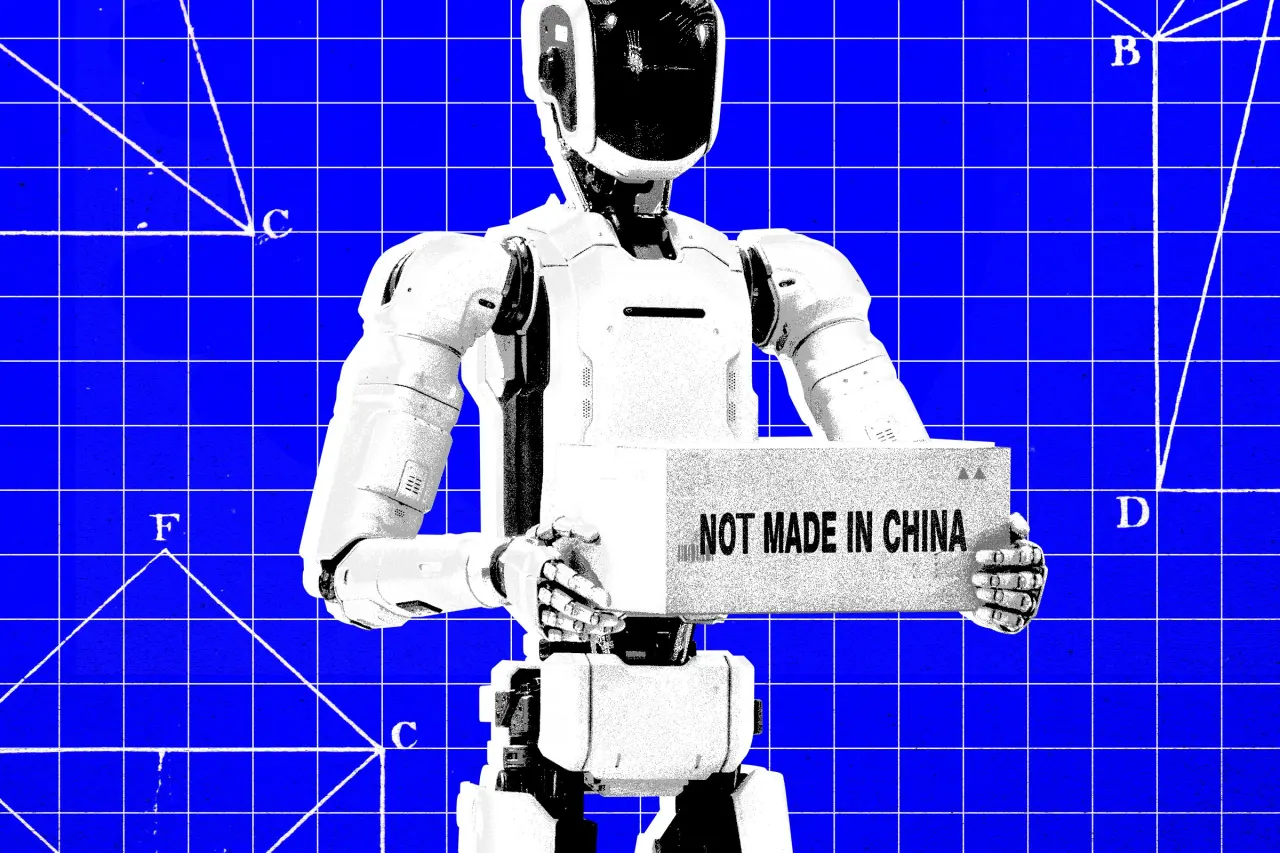
US regulators recently banned the import of Chinese-made robots citing national security concerns, potentially reshaping the competitive landscape for robotics companies. Most American robotics startups continue relying on Chinese suppliers for hardware, but Ati Robotics—which assembles robots in India—has positioned itself with significantly fewer Chinese components than competitors.
Ati, originally founded in 2017 to develop motors for autonomous vehicles, pivoted to industrial robots and made the unconventional decision to develop hardware in-house. This strategy reduced Chinese dependence while leveraging India's expanding electric vehicle supply chain in Bangalore for cost-effective, automotive-grade components. The company now operates several hundred robots across over 50 customers and plans to launch its first humanoid robot later this year, demonstrating that local hardware investment can achieve competitive pricing and performance with fewer China-sourced parts.
In short
- US regulators banned Chinese-made robots citing national security; most American robotics startups still rely heavily on Chinese hardware suppliers
- Ati Robotics, assembled in India with minimal Chinese components, positions itself to benefit from the regulatory shift
- The company achieved supply-chain independence by developing proprietary hardware and tapping India's electric vehicle supplier ecosystem
Steelman: both sides, in good faith
The strongest fair case each way — we don't pick a winner.
The case for
Those supporting reduced Chinese supply chain dependence argue that national security concerns in critical infrastructure sectors are legitimate and that relying on a single geopolitical rival for essential components poses genuine risks to strategic autonomy. Ati's example demonstrates that building resilient alternative supply chains through companies investing in domestic or allied manufacturing can achieve competitive pricing and performance, suggesting that strengthening supply chain independence is both strategically sound and economically viable rather than an unaffordable luxury.
The case against
Those sceptical of this approach contend that supply chain protectionism ultimately raises costs and reduces global competitiveness, that diversifying to alternative countries (including India) does not fundamentally resolve supply chain vulnerability, and that most robotics applications do not pose genuine national security threats justifying the economic costs of forced restructuring. They argue that companies should compete on merit within efficient global markets rather than being steered by government mandates, and that innovation and consumer welfare are better served by natural competitive advantage than by managed supply chain nationalism.
Explained simply
Industrial robots are machines used to carry out tasks in factories and warehouses, often working alongside people or moving goods. Many US robotics startups buy parts from Chinese suppliers, which can help them keep costs down and build machines quickly.
Ati Robotics began in 2017 making motors for self-driving vehicles, then shifted its focus to industrial robots. It designs and makes more of its hardware itself, assembling robots in India and drawing on the vehicle-parts industry in Bangalore. The company says it has robots working for more than 50 customers.
The issue matters because US restrictions on Chinese-made robots, driven by national security concerns, could affect which machines can be sold in America. Ati’s approach shows one way a robotics company might rely less on Chinese parts, while its planned move into humanoid robots could test whether that approach works in a new market.
Art Asia Business Celebrity Companies Culture Entertainment Markets World