World news and discussion on TalkFuse.
How sporting events are being impacted by Middle East conflict
Developing story first seen 7 hours ago
The new coverage adds that, after the Asian Cup’s postponement, this weekend’s full round of Saudi Pro League matches has been called off. The league says it will recalibrate the calendar for a more balanced fixture schedule, rather than attributing the decision to the conflict; several earlier matches were also postponed or rearranged.
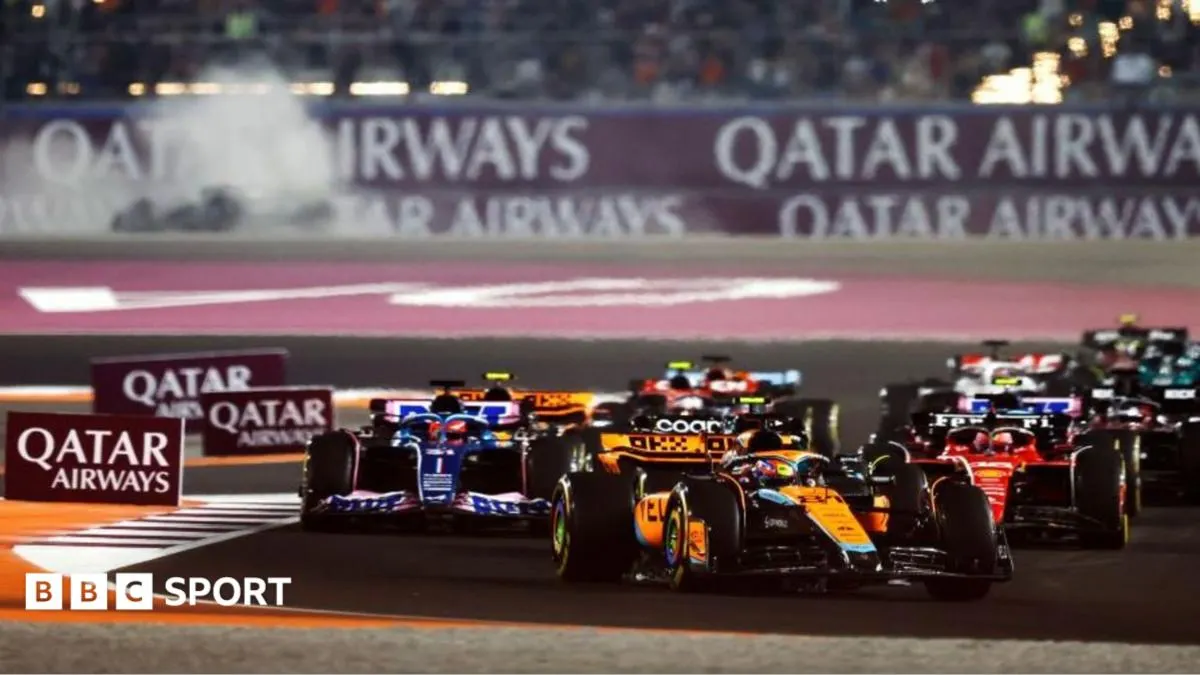
Regional tensions continue to put major events at risk, including Formula 1’s Qatar and Abu Dhabi races, which are still planned while organisers assess security advice. The 24-team Asian Cup has been delayed by almost a year, to 23 December 2027 to 21 January 2028; Bahrain and Saudi Arabia’s April F1 races were cancelled, and a possible Imola replacement has been discussed if the late-season races are called off.
- Sources
- 2
- Outlets
- 2
- Left · Centre · Right
- 0 · 1 · 0
In short
- Saudi Pro League called off this weekend’s full round of matches.
- The league says it will rebalance fixtures after the Asian Cup delay.
- Qatar and Abu Dhabi F1 races remain under review.
How this story developed
- 2 hours ago The Asian Football Confederation has postponed the 2027 Asian Cup in Saudi Arabia by almost a year amid regional security concerns, including fears of missile attacks by Yemen’s Houthi movement.
- 3 hours ago The new coverage adds that, after the Asian Cup’s postponement, this weekend’s full round of Saudi Pro League matches has been called off.
Steelman: both sides, in good faith
The strongest fair case each way — we don't pick a winner.
The case for
Postponing the Asian Cup and reconsidering other events is a prudent way to protect players, staff and spectators when regional security risks could change quickly. Giving organisers time to assess threats and travel conditions may also help ensure competitions can proceed safely and reliably.
The case against
Keeping events on schedule, where risks can be managed, respects athletes’ preparation, fans’ plans and the commitments made by host cities and organisers. Repeated postponements or cancellations can disrupt competitions and livelihoods, so decisions should weigh specific, current risks against the costs of moving events rather than treating the whole region as unsafe.
Explained simply
The Middle East is home to several major sporting competitions, and international events depend on teams, officials and spectators being able to travel safely. Conflict in the region has raised concerns about possible attacks and disruption to air travel.
The Asian Football Confederation organises the Asian Cup, a tournament for national football teams across Asia. Saudi Arabia is due to host the 24-team competition; Formula 1 also has races in Qatar, Abu Dhabi, Bahrain and Saudi Arabia. Organisers, governing bodies and governments must consider security, travel and the sporting calendar when deciding whether events can go ahead.
Changes to major tournaments can affect teams, fans, broadcasters and host countries, as well as other competitions scheduled around them. Decisions about safety and timing can also have knock-on effects across international sport.