27 August lunar eclipse will redden most of the Moon
Developed over time first seen 2 months ago
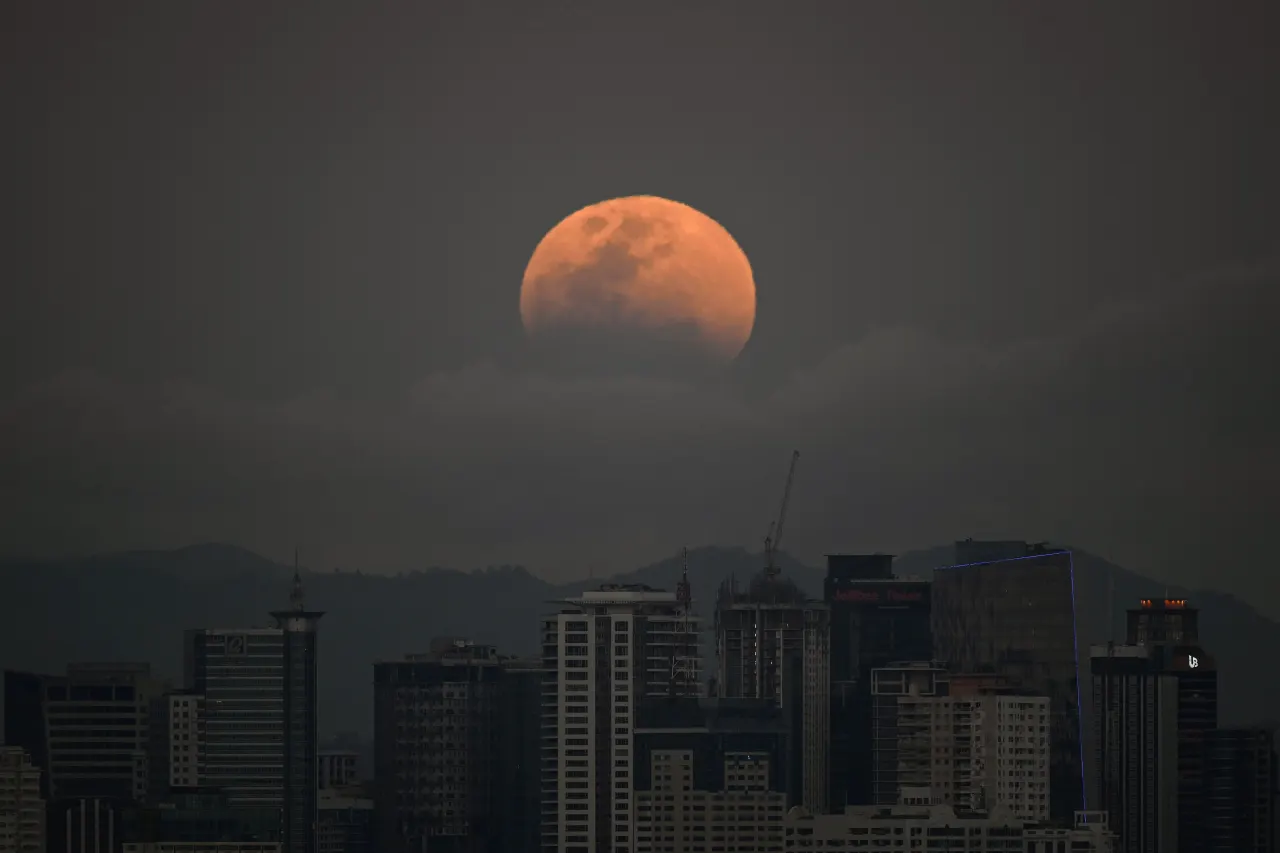
On 27 August, a partial lunar eclipse will cover most of the Moon, turning much of its surface reddish or orange as it passes through Earth’s shadow. The event is most significant for observers in North and South America, where its peak will occur at night, while European viewers will have limited pre-dawn visibility.
The partial phase will last about three hours and 18 minutes, reaching a magnitude of 0.93, with roughly 93% of the Moon’s diameter inside Earth’s darkest shadow. Peak local times include 12:14am in New York, 9:14pm in Los Angeles and 5:12am in London; no eye protection is required, though dark locations, clear horizons and binoculars or telescopes can improve viewing.
- A partial eclipse will redden most of the Moon on 27 August.
- The Americas have the best night-time viewing conditions.
- London’s peak is at 5:12am, near dawn.
New here? Start with this
A lunar eclipse happens when the Earth moves directly between the Sun and the Moon, casting its shadow across the Moon’s surface. Unlike a solar eclipse, it is safe to watch without special eye protection because people are looking at the Moon, not directly at the Sun.
The Moon can appear red or orange during an eclipse because sunlight passing through Earth’s atmosphere is bent into the planet’s shadow. Bluer light is scattered more strongly, leaving more of the redder light to reach the Moon; this is why such events are sometimes called “blood moons”.
A partial lunar eclipse means only part of the Moon enters Earth’s darkest central shadow, known as the umbra. How clearly it can be seen depends on local time, weather, the Moon’s height above the horizon and nearby light pollution.
Full account
A partial lunar eclipse on 27 August is expected to cover almost all of the Moon’s bright face with Earth’s darkest shadow, giving much of the lunar surface a red or orange appearance. At maximum, about 93% of the Moon’s diameter is due to lie within the umbra, so although it will not be a total eclipse, it may resemble one closely.
The colour is caused by sunlight passing through Earth’s atmosphere before reaching the Moon. Blue light is scattered more readily, while redder wavelengths are bent through the atmosphere and illuminate the eclipsed surface. This effect is often called a “blood moon”, though the shade can range from orange to deep red rather than necessarily resembling blood.
The eclipse will be most conveniently placed for observers in the Americas, where the peak occurs during the night. In the UK and Ireland, the key stage falls close to dawn: maximum is expected at about 05:12 BST. In Belfast, the Moon is forecast to be only around nine degrees above the western horizon at that point, with the eclipse ending shortly before or around moonset, making a clear, unobstructed western view important.
No special eye protection is needed for a lunar eclipse, unlike a solar eclipse, and the Moon can be viewed directly. Binoculars or a telescope may reveal more detail in the moving edge of the shadow and the changing colours, but are not essential. Cloud cover, nearby buildings, trees and hills are likely to determine whether viewers in northern and western Europe can see the event.
Where outlets differ
Source 1 places greater emphasis on viewing opportunities across North and South America, provides peak times for several cities, and says London’s view will be limited by dawn and the Moon’s low altitude.
Source 2 concentrates on Northern Ireland and nearby Irish locations, giving phase timings, local moonset details and a regional cloud forecast. It also includes an astronomer’s description of the possible range of colours.
Both reports agree on the roughly 93% maximum coverage, the red-light explanation and the fact that eclipse glasses are unnecessary.
More coverage
Read the full article at the source →
Originally published by Wired as “How to See the Partial Lunar Eclipse and Blood Moon on August 27”.