Technology news and discussion on TalkFuse.
How Voyager engineers found two more years in a 50-year-old power budget
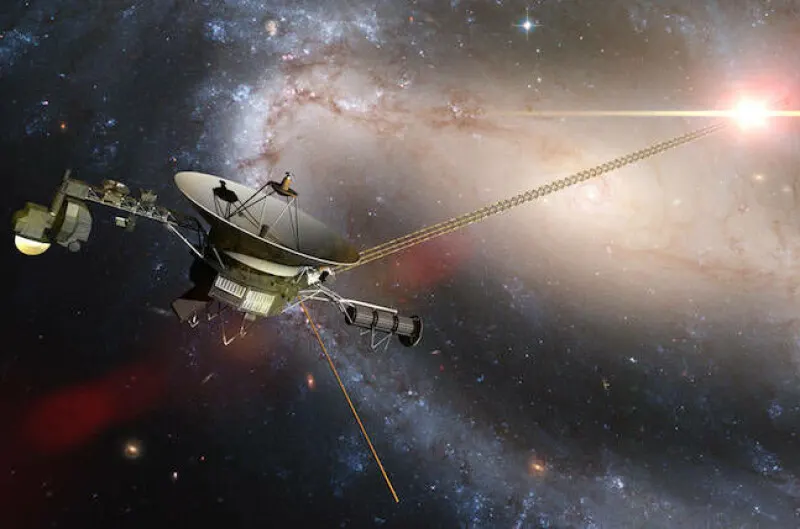
NASA engineers have developed a ‘Big Bang’ power-management change for Voyager 2 that could extend its scientific life by about two years. Rather than shutting systems down one by one, the team switched several spacecraft-bus systems at once, freeing power while retaining enough waste heat to prevent propellant lines from freezing and preserve the craft’s ability to point at Earth.
The approach was necessary because Voyager 2, launched in 1977, is operating on a dwindling power supply where even 0.2 watts can be significant. Engineers relied on nearly 50-year-old component data, tested the power configuration briefly first, then ran it for six hours in June to assess temperature changes; each test involved up to 20 hours for commands to arrive and another 20 hours for telemetry to return. Results broadly matched, and sometimes surpassed, the thermal and power models.
In short
- Voyager 2’s new power configuration may add two operational years.
- Switching systems together saves power while retaining essential heat.
- Tiny power differences matter on the ageing 1977 spacecraft.
Explained simply
Voyager 2 is a NASA spacecraft launched in 1977 to study the outer planets. It has travelled beyond the region dominated by the Sun’s wind and still sends measurements back to Earth, using radio signals that take many hours to arrive.
The spacecraft runs on power from a radioisotope generator, which produces less electricity as it ages. Its remaining power must support both scientific instruments and basic functions, including keeping fuel lines warm and aiming the antenna towards Earth.
NASA engineers have to decide how to use that limited supply while relying on old records of how the spacecraft’s components behave. Their choices affect how long Voyager 2 can continue making observations and communicating from far beyond the planets.