How ‘Whalefall’s Director & Author Wove The Closure Of A Father-Son Relationship Into A Survival Tale
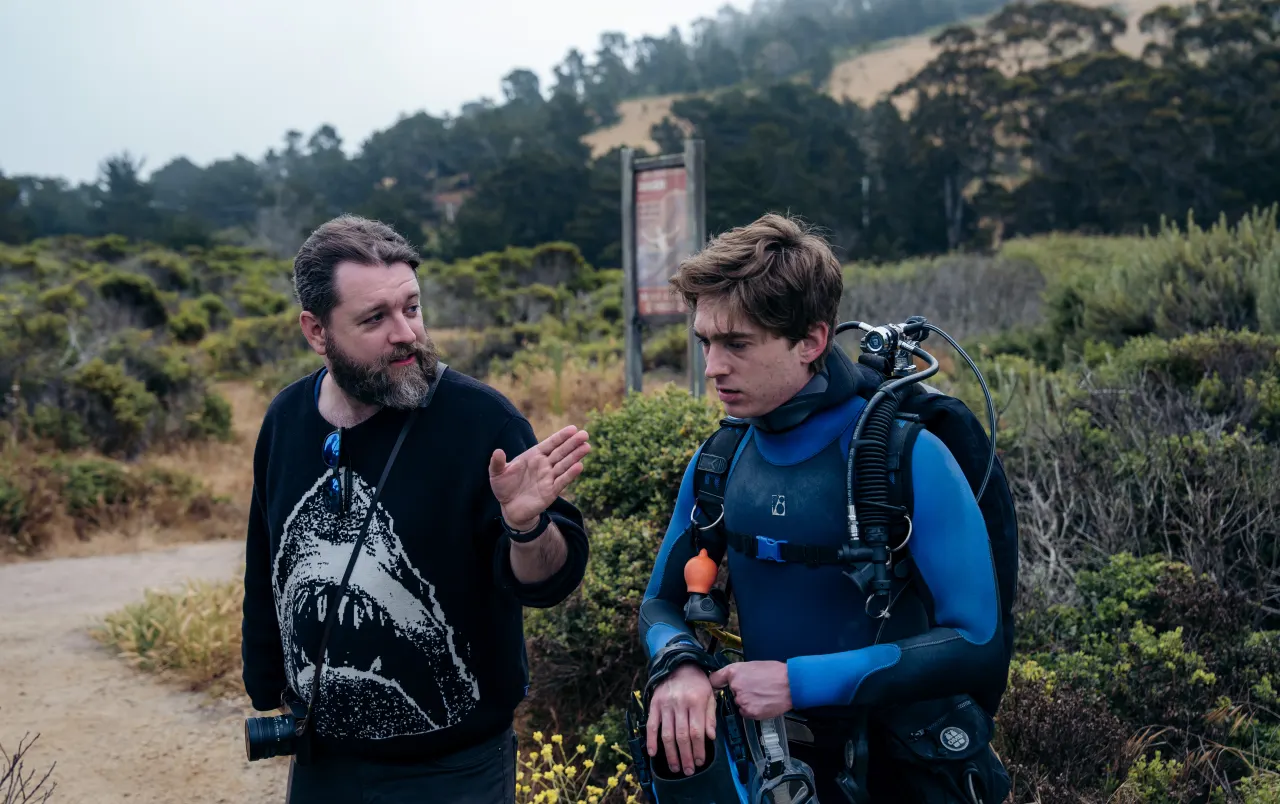
*Whalefall* uses a survival story to explore the unresolved relationship between Jay Gardiner and his late father, Mitt. Director Brian Duffield and author Daniel Kraus describe how the film’s perilous premise carries emotional weight: Jay’s search for his father’s remains leads to him being trapped inside a sperm whale.
The production built full-scale whale interiors and relied on close coordination across departments to film in the cramped, intricate sets. Weta Workshop made several stomach models, while a 12-foot-tall, 18-foot-long whale head was built in California. The crew adapted lighting, costumes and camera positions to the space, and actor Austin Abrams wore redesigned diving equipment so he could speak while portraying Jay.
- Jay’s struggle inside a whale reflects his strained relationship with his father.
- The film used full-scale whale sets for its claustrophobic scenes.
- Production teams adapted cameras, lighting and diving gear to the tight space.
New here? Start with this
Whalefall centres on Jay Gardiner, whose father Mitt has died. Jay is searching for his father’s remains when he becomes trapped inside a sperm whale, turning the story into a fight to survive.
The story connects that danger with the strained relationship between Jay and Mitt. Its setting also draws on the challenges of deep-sea diving, where confined spaces and limited air can make survival difficult.
The film adapts a novel by Daniel Kraus and is directed by Brian Duffield, with Austin Abrams playing Jay. The whale’s interior was built as a detailed physical set, shaping how the cast and crew could stage the story.