Hugh Bonneville among stars backing campaign against AI voice cloning
Developed over time first seen 2 months ago
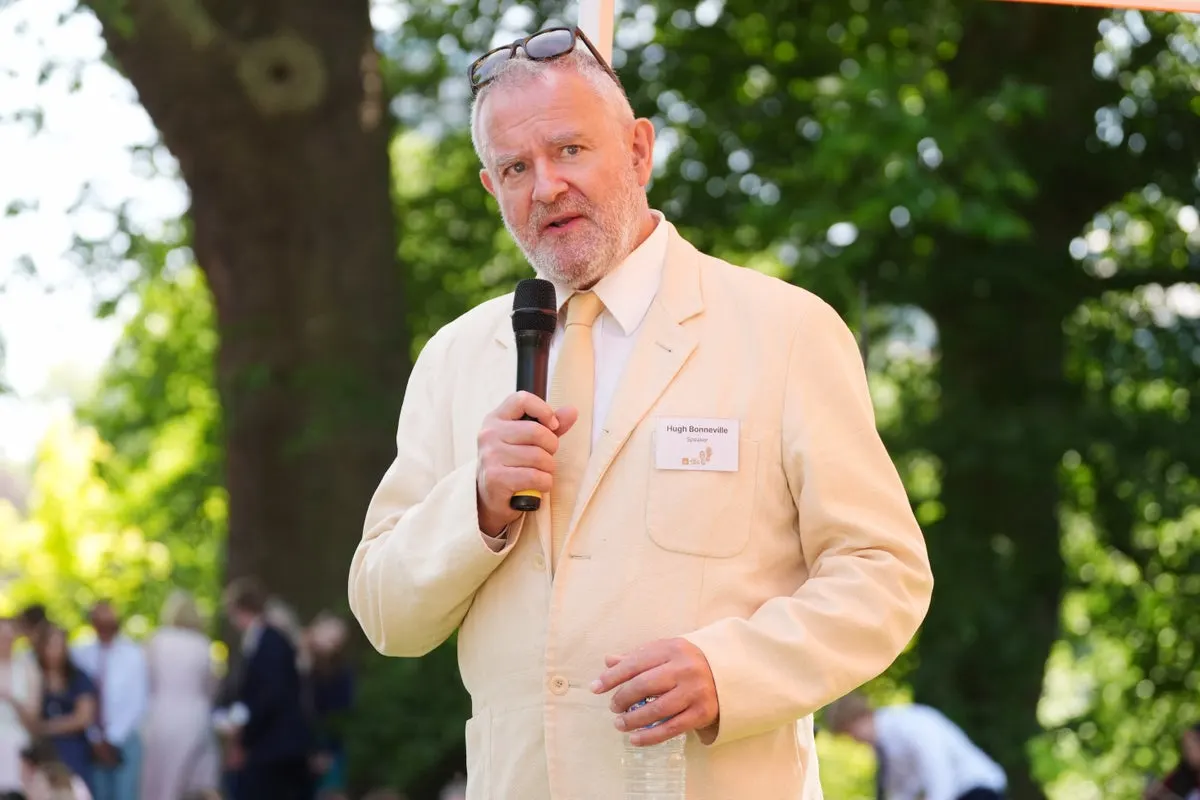
Actors including Hugh Bonneville, Nicola Coughlan and Matt Lucas have joined the Save Our Voices Now campaign, calling for legal protection against AI voice cloning. The campaign argues that copying voices without consent threatens personal identity and performers’ rights, while also making impersonation fraud easier, and says legislation has not kept pace with the technology.
Around 80 people signed an open letter to Prime Minister Andy Burnham, and a Gov.uk petition calls for statutory ownership rights over every person’s voice. Campaigners say 28% of UK adults have been targeted by voice-cloning scams and cite Denmark’s proposed reforms, which would allow people to seek removal of unauthorised AI content and compensation.
- Stars urge legal protection from AI voice cloning
- Around 80 people signed the open letter
- Campaign cites scam risks and Denmark’s reforms
New here? Start with this
AI voice cloning uses software to create a convincing imitation of someone’s speech from recordings of their voice. It can be used in entertainment, such as dubbing or synthetic narration, but also to make material that appears to have been spoken by a person who did not agree to it.
Performers and other public figures are concerned that replicas could be used without payment or permission, potentially affecting their work and reputation. The same technology can also be used in scams, for example when criminals imitate a relative or colleague to ask for money or information.
Britain does not currently have a single, specific legal right giving people ownership of their voice. Campaigners are therefore seeking new rules that would let individuals challenge unauthorised voice copies and seek remedies when they are used.
Both sides, in good faith
The strongest fair case each way — we don't pick a winner.
The case for
Supporters argue that a person’s voice is a core part of their identity and livelihood, so the law should give everyone clear control over commercial or deceptive AI replicas. They say statutory rights would help performers bargain fairly, deter impersonation fraud, and provide practical routes to removal and compensation when cloning occurs without consent.
The case against
Critics may argue that a broad new voice-ownership right could be difficult to define and enforce, particularly where AI-generated speech merely resembles a person or is used for parody, research, accessibility or artistic work. They may favour targeted protections against fraud, passing off and misuse of personal data instead, warning that overly restrictive rules could chill legitimate innovation and expression while creating costly uncertainty for smaller developers.
Full account
Actors including Hugh Bonneville, Nicola Coughlan and Matt Lucas have backed Save Our Voices Now, a campaign seeking stronger protection against AI systems that imitate human voices. Other supporters named in the reports include Luke Evans, Jen Brister, Siobhán McSweeney and Pearl Mackie. The group argues that voice cloning can allow a person’s speech to be reproduced and made to deliver words they never said.
The campaign has attracted about 80 signatures for an open letter addressed to Andy Burnham, described in the reports as prime minister, and has launched a Gov.uk petition. Its central proposal is for people in Britain to have statutory ownership rights over their own voices. Supporters present this as an issue both of personal identity and of performers’ control over work derived from their voices.
Bonneville said a voice forms part of an individual’s identity, adding a light-hearted assurance that his remarks had not been generated by AI. McSweeney raised concerns that law, contracts, workplace practice, ethics and artists’ rights were failing to keep pace with the technology. She said AI could be useful when treated as a tool, but argued that human involvement and the connection audiences value should be retained.
Save Our Voices Now founder Peter Caulfield said sufficiently capable systems could create a clone from only a few seconds of audio, potentially enabling unauthorised commercial use as well as fraud. The campaign says 28% of UK adults report having been targeted by a voice-cloning scam; this is a campaign claim rather than an independently substantiated figure in the supplied reports. Both accounts also point to Denmark’s planned legal approach, under which people would be able to seek removal of unauthorised AI material using their face, body or voice and pursue compensation.
Where outlets differ
The first report describes McSweeney as a Derry Girls actress, while the second calls her an actor.
The second report gives longer versions of Bonneville’s and McSweeney’s comments, including McSweeney’s reference to her voice as a working tool and Caulfield’s assertion that misuse is occurring now; the first uses shorter extracts.
The first report says Denmark is making legal reforms, whereas the second frames them as reforms that are giving citizens ownership rights. Both convey the same broad comparison.
Source 2’s heading explicitly says the letter calls for legislation to protect voice ownership; Source 1 places greater emphasis on the reported scam risk and the campaign founder’s warning.
More coverage
AI Celebrity Elections Entertainment Government Politics Technology