Human Imagination, Directable AI: How Asian Directors Wrap Kling AI Into Their Workflows
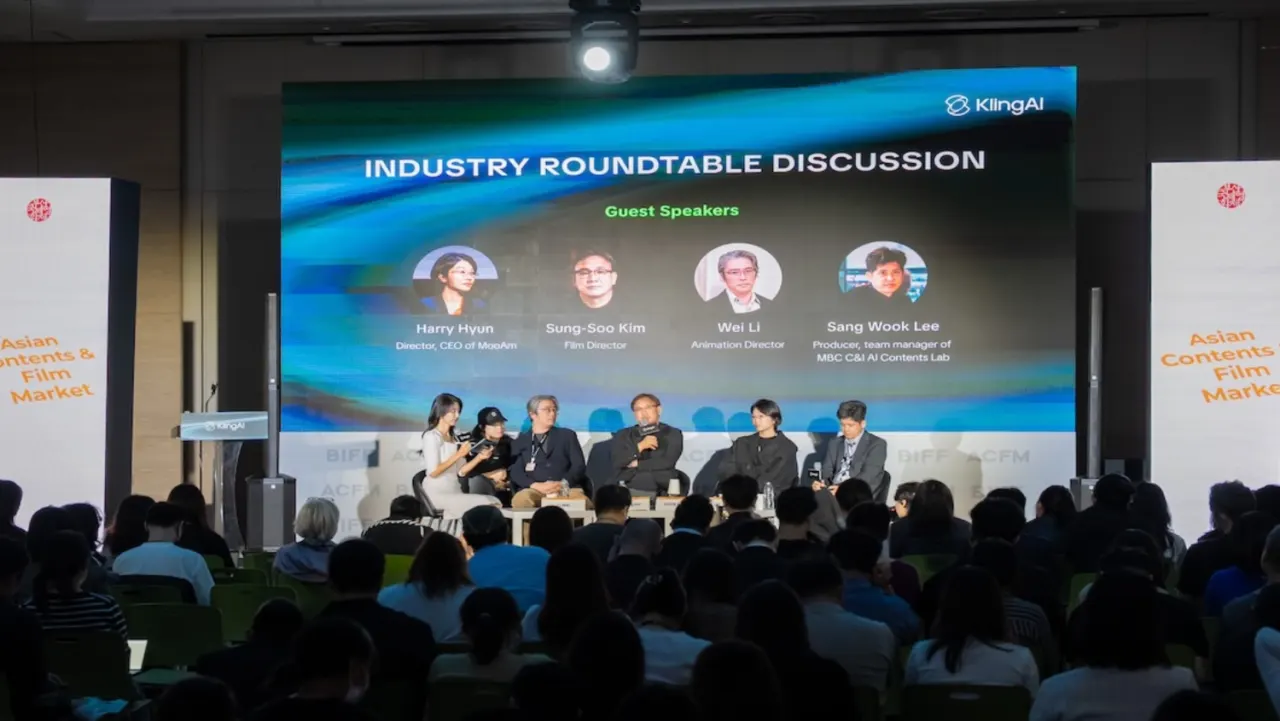
South Korean filmmaker Sung-Soo Kim used Kling AI to complete *Worm Train*, a short film in which an exhausted commuter turns into a giant worm on a crowded subway. The project shows how newer AI tools can help directors realise complex scenes, while the filmmakers at a Busan film industry panel argued that human creative direction remains central.
Kim paused production in March because the technology could not convincingly depict the worm’s physical interactions with passengers. He resumed in late September after Kling 4.0 improved continuous motion and control of characters and shots. Other examples included *Rendering Love*, which combines live action with AI-generated virtual idol performances, and *Natasha*, which uses live action for nuanced acting and AI for costly settings and crowd scenes.
- Kling 4.0 helped Kim finish a difficult subway sequence.
- Filmmakers described AI as a tool guided by human vision.
- Other projects combine live action with AI-generated scenes.
New here? Start with this
Generative AI tools can create or alter moving images from prompts and other inputs, helping filmmakers build scenes that would be difficult or expensive to film. Their results can change as the software improves, and directing still involves choices about story, performance and how each shot fits together.
In South Korea, filmmaker Sung-Soo Kim made Worm Train, a short film about a commuter who becomes a giant worm on a crowded train. Other projects have combined filmed performances with AI-made characters or settings, using each method for different parts of a production.
These examples reflect a wider question for film-makers: how to use new tools while keeping creative decisions and human performances at the centre of the work. The answer matters to directors and production teams weighing what AI can make possible, and how it may affect the way films are made.
Both sides, in good faith
The strongest fair case each way — we don't pick a winner.
The case for
AI tools can make ambitious filmmaking more accessible by helping directors create complex effects, settings and crowds that might otherwise be too costly or technically difficult. Kim’s experience suggests that improved motion and shot control can turn an unrealised idea into a finished film, while hybrid productions can reserve live action for performances that need particular nuance.
The case against
AI-generated scenes may still struggle with convincing physical interaction and continuity, as Kim’s decision to pause production illustrates. Relying on the tools could also narrow creative choices to what the software can depict and make human direction seem more central in theory than in practice, so filmmakers have reason to scrutinise the results and preserve meaningful artistic control.