Culture news and discussion on TalkFuse.
Ukraine’s largest Moscow drone assault kills two, damages refinery
Developed over time first seen 2 months ago
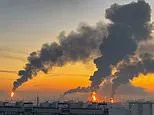
Ukraine carried out its largest drone attack on the Moscow region, striking the city's main oil refinery and residential buildings. Russian officials said 450 drones heading for the capital were intercepted, though the assault still killed at least two people and wounded 20 others. The strike damaged three key units at the refinery, which supplies more than a third of Moscow region's fuel and provides petrol, diesel and aviation fuel to Russia's military. President Zelensky described the attack as targeting facilities worth "billions of dollars that sustain the war machine", whilst Russian officials claimed it was an attempt to disrupt ongoing parliamentary elections.
The attack saw explosions verified by the BBC lighting up Moscow's night skies and a warehouse catching fire. Temporary restrictions were imposed overnight at two major airports—Sheremetyevo and Vnukovo—though these were lifted by Sunday morning. Separately, Ukrainian officials reported that Russian attacks killed nine people, including three children, in the Kyiv and Sumy regions on Saturday, reflecting the escalating intensity of strikes by both sides on civilian infrastructure and energy facilities. The assault continues wider patterns of Russia and Ukraine targeting each other's energy-generating and transport facilities, a campaign that persists despite US President Trump's claims that the two sides had agreed to cease such attacks.
- Sources
- 2
- Outlets
- 2
- Left · Centre · Right
- 0 · 1 · 1
In short
- Ukraine's largest drone assault on Moscow damages main refinery, kills at least 2
- Russian officials said 450 drones were shot down; key fuel facility struck
- Escalating attacks on energy infrastructure from both sides continue unabated
How this story developed
- 2 months ago Ukraine confirmed attacks on the oil refinery and logistics facility, with the casualty count remaining at two deaths and six injured.
- 2 months ago The reported number of injured has been revised down from 20 to six, and damage to a warehouse logistics facility has been confirmed.
- 2 months ago Ukraine launched its largest drone attack on the Moscow region, striking the main oil refinery and residential buildings; Russia claimed 450 aircraft were intercepted, though the assault killed at least two people and wounded 20 others.
Full account
Ukrainian forces carried out one of their most substantial aerial assaults on the Moscow region on Sunday, deploying hundreds of drones against strategic and civilian infrastructure across the capital and surrounding areas. Russian air defence systems claimed to have intercepted a large portion of the incoming aircraft, though multiple unmanned vehicles succeeded in reaching their intended targets. The attack resulted in two confirmed deaths, with several others sustaining injuries, and left extensive fires burning across industrial and residential zones throughout the night.
The Moscow oil refinery, a facility repeatedly targeted in recent months, sustained direct hits that set large portions ablaze and created plumes of black smoke visible across much of the city. Russian officials indicated that Ukrainian forces had also struck a major warehouse within a logistics complex near Sofyino and damaged residential properties, including a residential building in the Ramenskoye district from which approximately 400 occupants, including some 70 children, were evacuated. A 44-year-old woman lost her life in the Sofyino strike, whilst an elderly man was killed when a downed drone impacted a private residence in the Orekhovo-Zuevo district; several others sustained injuries in both locations.
Moscow's municipal authorities sought to frame the offensive within the context of Russia's ongoing parliamentary elections, which had entered their third day, characterising the bombardment as an attempt to undermine the voting process. Ukrainian leadership, by contrast, emphasised the industrial and military significance of the targeted refinery, with President Volodymyr Zelensky describing the destruction as representing assets worth billions that support Russia's military operations. Ukrainian defence officials stated that three critical production units at the facility had been compromised, and asserted that the installation supplied over one-third of the Moscow region's fuel requirements, portions of which were diverted to military usage.
The campaign formed part of a broader escalation in reciprocal strikes between the two nations, which have intensified attacks on energy infrastructure and logistics networks despite assertions by the United States President, made several days prior, that both sides had agreed to cease such operations. Russian casualties inflicted by Ukrainian attacks in the preceding day included nine individuals across the Kyiv and Sumy regions. Aviation services experienced significant disruption, with Moscow's principal airports, including Sheremetyevo and Vnukovo, implementing restrictions or suspending operations, though these were subsequently lifted by morning, with some flight delays anticipated.
The strike represented the culmination of months of Ukrainian targeting of Russia's refining sector, which has resulted in sustained reductions to the nation's fuel production capacity, contributing to widespread shortages across Russia's extensive geographical territory and triggering inflationary pressures on petroleum products. The Moscow facility, which processed approximately 11.6 million metric tonnes of crude oil in 2024 and yielded roughly 2.9 million tonnes of petrol alongside 3.2 million tonnes of diesel in that period, had previously sustained damage from Ukrainian operations and constituted a strategically significant component of Russia's energy infrastructure.
Where outlets differ
From the full account, which is AI-written from the sources:
Source 1 emphasises the Trump administration's failed peace announcement and Putin's framing of the election as a legitimacy test for the war; Source 2 focuses on Ukrainian strategic objectives and characterises the election as controlled and unfair
Source 1 provides detailed 2024 refinery production statistics; Source 2 emphasises the facility's current role in supplying Moscow region fuel and military requirements
Source 1 reports 400 evacuations from a single apartment block; Source 2 provides different injury figures (20 injured vs. Source 1's accounting)
Source 2 mentions reciprocal Ukrainian casualties (9 deaths in Kyiv/Sumy regions); Source 1 does not reference Ukrainian losses
Source 2 specifies three key refinery units damaged per Ukrainian military claims; Source 1 states damage extent was unknown
Source 2 provides detailed airport restriction timeline (overnight restrictions lifted by morning); Source 1 mentions airspace closure and disruption without specifics
Centre outlets 1
Only here: killed, russia, major, ukrainian, assault
Right-leaning outlets 1
Only here: strikes, refinery, fires, spread, across
Every side used: drone, moscow
Headline columns compared word for word; nothing in them is AI-written.
Steelman: both sides, in good faith
The strongest fair case each way — we don't pick a winner.
The case for
Ukraine is engaged in existential self-defence against an invader that has systematically attacked its civilian population and infrastructure. Strikes on Russian military-industrial targets—particularly a refinery that supplies a third of Moscow region's fuel and logistics facilities directly supporting operations—represent legitimate military objectives under international law. Degrading Russia's logistical and energy capabilities is essential to Ukraine's defence and materially impacts Russia's capacity to wage war.
The case against
Ukraine's right to self-defence is beyond question, but whether such deep strikes into Russian civilian areas advance its actual strategic interests remains genuinely debatable. These operations risk dangerous escalation, may harden Russian positions against negotiation rather than weaken them, and invite potentially devastating retaliation against Ukrainian civilians. The question is not whether Ukraine legally can conduct these attacks, but whether the military value justifies the risks of further escalation and the human costs that may follow.
Explained simply
Russia and Ukraine have been at war since Russia's invasion in February 2022. The conflict has involved military operations across Ukraine and increasingly strikes on infrastructure and population centres deep within each country's territory.
Ukraine has conducted attacks on Russian military and economic targets, including oil facilities and logistics hubs, as a strategy to degrade Russia's military capacity and supplies. Russia has carried out similar strikes on Ukrainian cities and infrastructure, affecting civilians and critical services on both sides.
Oil refineries are vital to any country's fuel supply, powering both military equipment and civilian transport and heating. Damage to major refineries can disrupt fuel availability across entire regions and strain the broader economy.
Coverage · 2 sources
Bias meters
From 2 rated sources.
Culture Elections Europe Politics Russia-Ukraine War Travel World