World news and discussion on TalkFuse.
Protests surround Nathan Cofnas’s Oriel College talk in Oxford
Developed over time first seen 3 days ago
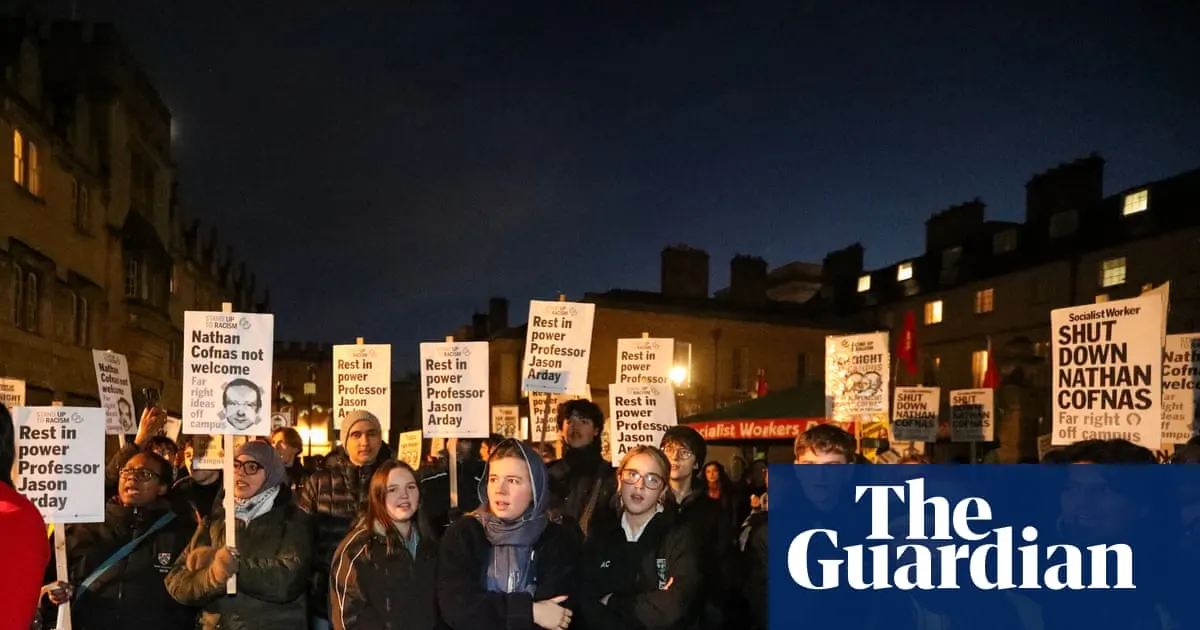
Nathan Cofnas’s talk at Oriel College went ahead despite opposition from students, staff and local politicians, with hundreds of people protesting outside. The event mattered to protesters because Cofnas had raised plagiarism allegations against Cambridge professor Jason Arday earlier that year, and they feared his appearance would signal support for views they considered harmful.
About 40 people attended the talk, which was organised by Oxford’s Reform UK student society and focused on what Cofnas called the “race equality thesis”. He declined to apologise to Arday’s family when asked, arguing that the question implied powerful figures should not be criticised. Arday died weeks after resigning from his Cambridge post amid media scrutiny that began with Cofnas’s claims; Oriel said it had a statutory duty to allow the event, and police later cleared protesters from the entrances.
- Sources
- 2
- Outlets
- 2
- Left · Centre · Right
- 1 · 0 · 1
In short
- Cofnas’s Oriel College talk went ahead despite hundreds protesting.
- Around 40 people attended the event.
- Protesters linked their opposition to Cofnas’s claims about Jason Arday.
How this story developed
- 2 days ago On Tuesday, hundreds protested outside Oriel, chanting Arday’s name and trying to block the entrances, while about 40 people attended Cofnas’s talk, where he refused to apologise to Arday’s family; police later cleared the entrances.
- 2 days ago Nathan Cofnas’s talk at Oriel College went ahead despite protests over his earlier allegations against Cambridge professor Jason Arday and concerns about its impact on the college community.
Full account
Hundreds of people gathered outside Oriel College in Oxford on Tuesday evening to protest against a talk by Nathan Cofnas, an academic and blogger who describes himself as a “race realist”. The event, organised by the university’s Reform UK student society, was titled “An evening with Nathan Cofnas: is DEI undermining higher education?”. It went ahead despite objections from students, college staff and local politicians. Oriel said it had a statutory duty to permit the talk.
Demonstrators chanted slogans and held signs referring to Professor Jason Arday, a former Cambridge academic who died in August after resigning from his post. Cofnas had made plagiarism allegations against Arday earlier in the year; the claims were followed by sustained media scrutiny. Protesters said allowing Cofnas to speak risked making students of colour feel unwelcome. American poet Amanda Gorman, who is studying at Oxford, also criticised the decision in an Instagram video, while a petition backed by Stand Up To Racism calling for the university not to give Cofnas a platform reportedly received more than 30,000 signatures.
Accounts differ on the scale and character of the demonstration and audience. One report describes hundreds gathering and says the crowd sought to block the college’s main entrances; another says protesters appeared to try to prevent people entering and records chants calling for Cofnas to be shut down. The second report also describes scuffles involving protesters, police and a security guard, and says a Ku Klux Klan hood and a sign reading “Racists welcome here” were placed on a statue of Cecil Rhodes. Inside, reports put the audience at roughly two dozen to about 40 people, with one describing the lecture theatre as less than a third full.
During the talk, Cofnas argued against what he called the “race equality thesis” and said diversity, equity and inclusion efforts rested on a false premise about equal potential among racial groups, according to the reports. Asked whether he would apologise to Arday’s family, he declined and said the question implied that powerful figures should not be criticised. He instead challenged Cambridge University over its handling of criticism of Arday. Protesters could be heard during the talk; one account also noted some audience members looking at their phones.
Where outlets differ
From the full account, which is AI-written from the sources:
The first report gives more detail about Oriel’s explanation for allowing the event, the protests’ focus on Arday, and Cofnas’s response to a question about apologising to Arday’s family. The second foregrounds Stand Up To Racism’s role, the petition, criticism from Amanda Gorman and MP Bell Ribeiro-Addy, and incidents around the entrance and Rhodes statue.
The reports describe the crowd’s chants differently and give slightly different estimates of the audience: about 40 in one account, and about two dozen in the other. The second says Cofnas used a microphone to be heard over the chants; the first says protesters were audible throughout.
Left-leaning outlets 1
Only here: protests, surround, nathan, cofnas, oriel
Right-leaning outlets 1
Only here: hundreds, protesters, block, university, academic
Every side used: talk, oxford
Headline columns compared word for word; nothing in them is AI-written.
Steelman: both sides, in good faith
The strongest fair case each way — we don't pick a winner.
The case for
Allowing the talk to proceed can be defended as protecting freedom of expression and universities’ role as places where contentious claims can be examined and challenged. Oriel’s stated statutory duty supports the view that a speaker should not be excluded simply because their views are objectionable, while protest and questioning remain legitimate responses.
The case against
The event can be opposed on the grounds that hosting a speaker who has made damaging allegations about a recently deceased academic may cause additional distress to those affected and undermine trust within the college community. Critics may argue that a university’s commitment to open debate does not require giving every speaker a platform, particularly when the event risks intimidating students or making them feel less welcome.
Explained simply
Oriel College is one of the colleges that make up the University of Oxford. Universities generally host talks and debates on disputed subjects, while also having responsibilities towards students and staff who may be affected by them.
Nathan Cofnas is an academic whose earlier claims of plagiarism against Cambridge professor Jason Arday drew public scrutiny. Arday resigned from his Cambridge post and died weeks later; the circumstances have prompted concern about the impact of the scrutiny, though the reported account does not establish a link between it and his death.
The dispute raises questions about how universities balance freedom of speech with concerns about harm and a hostile environment. Oriel said it had a statutory duty to let Cofnas speak, while protesters opposed his appearance and the claims associated with it.
Coverage · 2 sources
Bias meters
From 2 rated sources.
Read the full article at the source →
Originally published by The Guardian as “Hundreds protest against Nathan Cofnas talk on DEI at Oriel College in Oxford”.