‘I expect more’: the key questions from Martínez’s Manchester United broadside | Jamie Jackson
Developed over time first seen 1 day ago
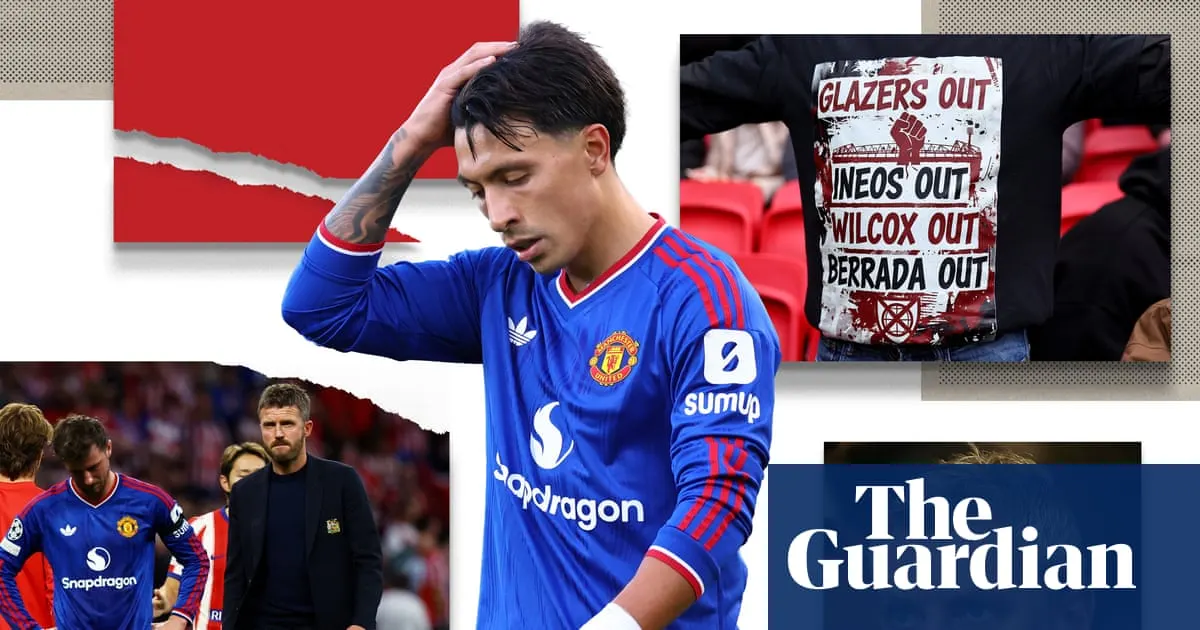
Lisandro Martínez publicly criticised Manchester United’s squad and director of football Jason Wilcox after the team lost 2-0 to Atlético Madrid, saying he expected more investment. His comments have intensified scrutiny of the club’s summer recruitment and leadership, amid a poor start to the season.
United’s focus on signing three midfielders, Andrey Santos, Youri Tielemans and Carlos Baleba, reportedly left players bemused that other positions were not strengthened. Defensive cover is a particular concern, while Martínez, 28, is out of contract next summer and may leave. Wilcox oversaw the transfer window and has faced criticism over earlier decisions, but head coach Michael Carrick is also judged on the team’s performances: United have earned six points from six league games and won twice in all competitions this season. Some players have publicly voiced support for Carrick and his staff.
- Martínez says United need more investment after losing to Atlético.
- Players reportedly questioned the summer focus on midfield signings.
- Wilcox and Carrick face scrutiny as United struggle this season.
New here? Start with this
Manchester United are one of English football’s biggest clubs, but they have struggled for consistent success in recent years. The head coach is responsible for preparing the team and its results, while the director of football helps shape the club’s longer-term squad and recruitment plans.
A transfer window is the period when clubs can sign or sell players. United’s summer focus on midfielders has prompted questions about whether other parts of the squad, including the defence, have enough cover. Those decisions matter because injuries and poor form can leave a team short of options over a long season.
Lisandro Martínez is a defender whose contract is due to end next summer, so his future is also part of the debate. At a club where supporters expect regular success, poor results can bring scrutiny of both the people choosing players and the coach responsible for the team on the pitch.
Both sides, in good faith
The strongest fair case each way — we don't pick a winner.
The case for
Martínez’s criticism can be seen as a reasonable demand for a squad capable of competing: concentrating resources on midfield while leaving defensive cover thin may expose the team, and poor results add urgency. Players have a legitimate interest in questioning recruitment decisions that affect their chances, while Wilcox and Carrick should be accountable for the choices and performances within their roles.
The case against
Publicly criticising the squad and a senior director after a defeat risks undermining confidence and distracting from the work needed to improve results. Recruitment involves trade-offs, and prioritising midfield may reflect the club’s assessment of its greatest needs; Carrick and the players also have responsibility to perform with the squad available rather than shift blame to leadership.
Full account
Manchester United’s 2-0 Champions League defeat at Atlético Madrid prompted an unusually public challenge from Lisandro Martínez. The defender said the squad lacked the strength of its leading rivals and called for greater investment, singling out director of football Jason Wilcox. His remarks came during a poor start to the season: Michael Carrick’s side have taken six points from their first six league matches and won only twice in all competitions. Martínez acknowledged that the players must improve, but argued that responsibility also extends to those who assemble the squad.
United spent heavily on midfielders Andrey Santos, Youri Tielemans and Carlos Baleba during the summer, while adding reserve goalkeeper Karl Darlow. No defender or forward arrived. According to Jamie Jackson’s reporting, other players share Martínez’s frustration that recruitment did not address more positions, particularly in a defence whose familiar personnel have been together for several seasons. Jonathan Liew’s account adds that United pursued defensive options but could not find buyers for players already at the club. That explanation raises a further question about how earlier contracts and recruitment decisions have constrained the present squad. Martínez’s own position complicates the episode: his contract expires next summer, and Jackson reports that teammates believe his expected departure may have contributed to the timing of his criticism.
Wilcox, who oversees football decisions under Sir Jim Ratcliffe, faces scrutiny over the transfer window and his wider record. Jackson points to United’s decision to retain Erik ten Hag in 2024 before dismissing him months later, and to Wilcox’s later dispute with Ruben Amorim over the team’s shape. Yet the resources available to Wilcox are also part of the argument. United’s spending remains substantial, but the Glazer family’s debt and Ratcliffe’s cost reductions feature in both accounts as pressures on the club. Liew places particular emphasis on ownership, arguing that Martínez’s complaint about investment leads beyond one executive to the financial decisions made over many years.
The criticism does not remove responsibility from Carrick or the players. United’s performances have been disjointed, and Martínez has made costly defensive errors of his own. Carrick must still improve the side with the squad available to him; Santos said after the Atlético defeat that the players continue to support their manager. The immediate question is whether United can recover results while addressing the tensions exposed by Martínez’s comments. His words have brought recruitment, coaching, player performance and ownership into the same debate, without establishing that any single one explains the club’s difficulties.
Where outlets differ
Both reports say Martínez’s concerns are shared within the dressing room. Jackson concentrates on Wilcox’s authority, recruitment choices, Carrick’s responsibilities and Martínez’s possible wish to leave. Liew gives greater weight to the difficulty of selling existing players and argues more forcefully that ownership decisions lie behind United’s financial constraints. Liew also highlights Martínez’s mistakes and the criticism his public remarks drew from former players.