‘I just knew it would sound incredible!’: why the Globe is giving Shakespeare some flamenco fire
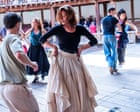
Shakespeare’s Globe is staging Love’s Labour’s Lost with a strong flamenco influence, led by director Indiana Lown-Collins, who believes the art form matches the play’s themes of passion, desire and death. She says the Globe’s acoustics and oak stage make it an ideal setting for flamenco, and chose the comedy because its emotional intensity and Spanish setting lend themselves naturally to that style. The production also uses flamenco to emphasise the strength of the play’s women, presenting them as a force that disrupts and overtakes a male court.
Most of the cast are not trained flamenco dancers, with only two professionals involved, so the rest are undergoing a three-hour daily rehearsal “bootcamp” under choreographer Carmen Igarza. The article describes how heeled boots, music and movement are reshaping the actors’ performances, giving them more swagger, posture and physical confidence. Lown-Collins contrasts this with what she sees as a more restrained British attitude to the body, arguing that flamenco helps release the emotions the male characters try to suppress until they finally erupt.
In short
- The Globe is blending Shakespeare with flamenco in Love’s Labour’s Lost
- The director says flamenco fits the play’s passion and conflict
- Most of the cast trained through daily flamenco bootcamps
Explained simply
Shakespeare's Globe is staging Love's Labour's Lost with a flamenco dance style integrated throughout the production. Director Indiana Lown-Collins chose this play because its themes of passion and desire work well with flamenco's emotional intensity, and partly because the story is set in Spain. She felt the Globe's oak stage and acoustics make it an ideal space for flamenco music and movement.
Most of the cast are not professionally trained flamenco dancers and are undergoing intensive daily rehearsals with choreographer Carmen Igarza to learn the style. The flamenco training is changing how the actors move and perform, giving them greater physical confidence and presence on stage.
The flamenco approach emphasises the female characters as powerful figures who disrupt and overtake the male court. Director Lown-Collins argues that flamenco's uninhibited expression helps release the strong emotions the male characters suppress, contrasting with what she sees as a more reserved British approach to the body on stage.