Culture news and discussion on TalkFuse.
“I think that might be a misread”: Thief designer on why making a triple-A immersive sim doesn’t really work
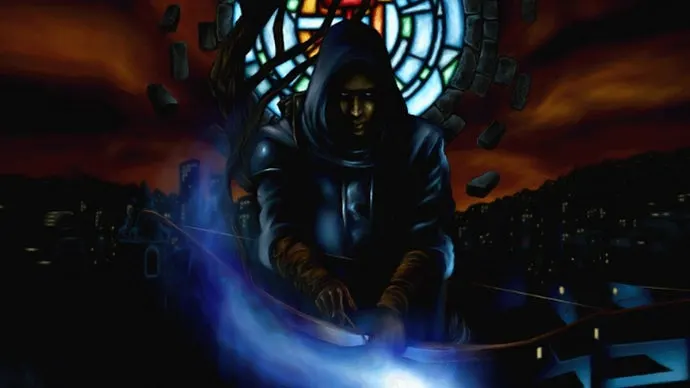
Randy Smith Evergreen, a designer on the original Thief: The Dark Project, has argued that immersive sims are ill-suited to triple-A budgets and should instead be made on smaller, leaner scales. Speaking to PC Gamer, he suggested that developers in the genre often mistakenly feel pressure to compete with blockbuster titles like Ghost of Tsushima or GTA 6, when the actual audience for immersive sims may not support that level of investment. This matters because several recent triple-A immersive sims have struggled commercially, and Evergreen's comments point towards a "triple-I" or double-A model as a more sustainable path for the genre's future.
Evergreen proposed budgets of roughly $3-10 million, made by smaller, passionate teams with genuine experience in or enthusiasm for the genre, rather than chasing mass-market appeal. He noted that the original Thief was made for around $3 million (about $6 million adjusted for inflation), and questioned whether a similarly modest game released in 2026 would sell dramatically fewer copies than a $250 million triple-A production. He suggested this reflects where the market for immersive sims is heading, or at least where it should head.
In short
- Thief designer says imsims shouldn't chase triple-A budgets or scale
- Original Thief cost roughly $3m ($6m adjusted for inflation)
- He favours smaller, passionate teams over blockbuster-style development
Steelman: both sides, in good faith
The strongest fair case each way — we don't pick a winner.
The case for
Immersive sims have a specific, devoted audience whose purchasing power doesn't justify triple-A investment, and chasing mass-market appeal through larger budgets only dilutes the genre's defining focus on player agency and mechanical depth. The original Thief's success at roughly $3 million (adjusted for inflation) demonstrates that the genre thrives at modest scales where developers prioritise systemic design and player choice over production spectacle, making the "triple-I" budget model both economically honest and creatively optimal.
The case against
Modern game development legitimately costs far more than it did in 1992, with technology, licensing, and systems complexity justifying larger budgets, whilst recent commercial failures may reflect poor execution or marketing rather than proving immersive sims cannot attract larger audiences. A well-funded immersive sim with clear vision and quality execution could potentially reach both dedicated enthusiasts and expand the genre's appeal, and prematurely accepting a ceiling on budgets forecloses possibilities rather than reflecting genuine market constraints.
Explained simply
Immersive sims are games that let players tackle situations in different ways, often by combining stealth, exploration and interacting with the environment. Thief: The Dark Project, an early example, was built around sneaking through levels and using tools and surroundings to avoid enemies.
Randy Smith Evergreen worked on the original Thief. He argues that these games may be better suited to smaller budgets and teams than to the large costs associated with blockbuster releases.
The debate matters because some recent big-budget immersive sims have struggled to sell enough copies to recoup their costs. A smaller-scale approach could reduce financial pressure, though it also raises questions about how many players the genre can reach.
Art Culture Entertainment Fashion Gaming