Business news and discussion on TalkFuse.
I Tried a Window-Cleaning Robot: Do Not Recommend
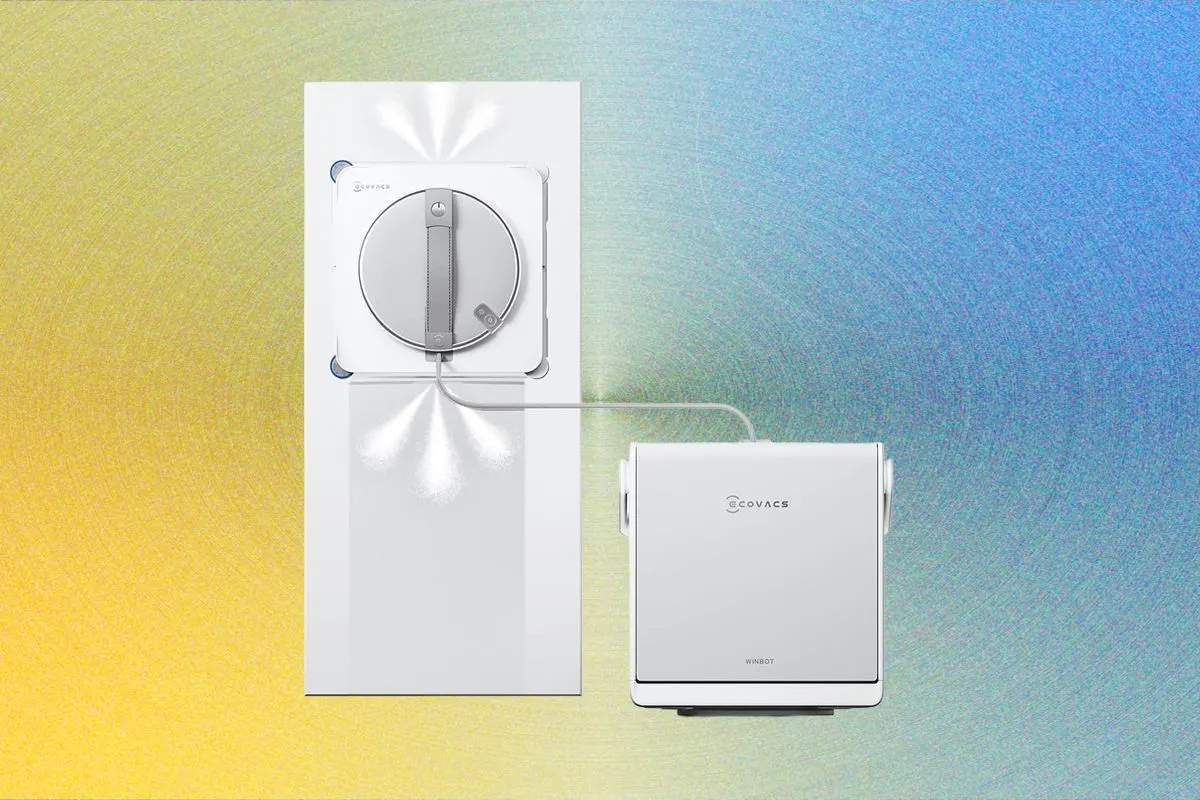
A Wired reviewer tested the premium Ecovacs Winbot W2S Omni window-cleaning robot and came away disillusioned with the entire product category, despite the device performing reasonably well on large, modern windows. While the robot's design impressed on straightforward glass surfaces, it struggled badly with more traditional window styles, leading the reviewer to conclude that robotic window cleaners are not worthwhile for most homes.
The Winbot performed decently on a large 7×10-foot modern window, cleaning efficiently via suction and tank-style tracks, though it left residue in corners and some smearing. It also required frequent pad changes and refilling of cleaning solution after just a window and a door, and struggled with obstacles like a door handle. The device fared far worse on the reviewer's Victorian-style sash-and-case bay windows, where it got stuck attempting to clean the largest pane. The reviewer noted the Ecovacs (around $449–$600) outperformed the cheaper Mova N1 ($199) in efficiency and design, but still judged the category unsuitable for typical homes with varied window types.
In short
- Wired reviewer found the Ecovacs Winbot W2S Omni disappointing overall.
- It cleaned large modern windows fairly well but left residue.
- It struggled badly on traditional Victorian bay windows, getting stuck.
Steelman: both sides, in good faith
The strongest fair case each way — we don't pick a winner.
The case for
Window-cleaning robots address a genuine consumer need for convenience and accessibility, particularly for elderly or mobility-impaired individuals who cannot safely clean windows themselves. The Winbot's competent performance on suitable windows demonstrates that the technology works well for modern homes with straightforward designs, and declining prices as the category matures suggest expanding utility. For consumers with compatible window types who prioritise convenience over perfect results, these devices offer meaningful value that justifies the investment.
The case against
The review exposes a critical limitation: these robots work acceptably only for a narrow segment of homes with modern, simple window layouts, whilst most households have mixed window styles and traditional frames where the technology fails. At £300–600, the Winbot is expensive relative to traditional alternatives—whether hiring professionals periodically or cleaning manually—particularly given the frequent maintenance required and imperfect cleaning results. For the typical household with varied windows, recommending against purchase is sound consumer guidance.
Explained simply
Window-cleaning robots attach to glass with suction and move across it while a cleaning pad wipes the surface. They are designed to reduce the effort of cleaning windows, but their results can depend on the size and shape of the glass, and on handles or other obstacles.
Ecovacs and Mova are among the companies selling these devices at different prices. Many homes have a mix of window styles, including older sash windows with several separate panes, which can be harder for a robot to navigate than one large, flat window.
The question for buyers is whether a robot can handle the windows they have and save enough time to justify its cost and upkeep. That matters especially for households where window cleaning is occasional, or where windows need repeated attention to remove marks.