I wanted a clock that never needed setting. Things escalated.
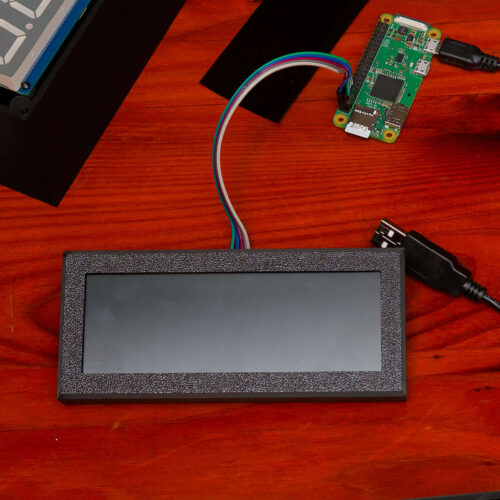
An Ars Technica writer, dissatisfied with cheap seven-segment LED clocks that require manual resetting after power cuts or clock changes, set out to find a self-setting alternative with a red display and no privacy-invasive companion apps. Unable to find a commercial product meeting all his requirements, he decided to build his own using a Raspberry Pi, turning a simple bedside clock into an extended DIY electronics project.
He chose a Raspberry Pi (using both a Zero W and Zero 2 W) over an Arduino for its Debian-based OS, built-in Wi-Fi and NTP support for automatic time-setting, and familiar Linux remote management tools. For the display, he used Adafruit's 1.2-inch seven-segment LED modules paired with an HT16K33 controller "backpack" board, which he had to solder himself for the first time, buying a beginner soldering kit and magnifying lens for the task. He has published the full bill of materials, software and 3D-printer files for the case in a public repository for others to replicate.
In short
- Writer couldn't find a self-setting red LED clock, so built one.
- Used a Raspberry Pi with Wi-Fi/NTP for automatic time-setting.
- Soldered an Adafruit seven-segment display and shared project files publicly.
Explained simply
A journalist wanted a simple bedside clock that would automatically set itself to the correct time and never need manual adjustment after power cuts or when clocks change. The ideal clock would have a red seven-segment display and no requirement to use a privacy-invasive smartphone app, but he found no commercial product meeting all these requirements.
What began as a hunt for a ready-made solution became an extended DIY electronics project using a Raspberry Pi computer, custom LED display modules, and hand-soldered components. To complete the project, he taught himself soldering for the first time, investing in a beginner's kit and magnifying lens to perform the precise work needed to assemble the display controller board.
He has now published complete instructions, component lists, software code and 3D-printed case designs online so that others can replicate his clock. The open-source approach allows anyone with basic electronics knowledge and access to the required components to build an identical device.