Culture news and discussion on TalkFuse.
‘I would be ashamed to have written any part of this’: Odyssey translator BLASTS Christopher Nolan’s blockbuster – and complains it lacks sex scenes
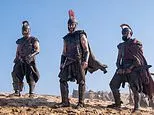
Emily Wilson, the classicist known for her acclaimed English translation of Homer's "The Odyssey," has strongly criticised Christopher Nolan's forthcoming film adaptation, saying she would be "ashamed" to have contributed to it. Her comments add a prominent literary voice to the scrutiny surrounding one of the year's most anticipated blockbusters, raising questions about how faithfully Nolan's take on the ancient Greek epic honours the source material.
Wilson's objections reportedly centre on the film's departures from the original text, including her complaint that it lacks the sexual content present in Homer's poem. Her remarks are likely to fuel debate among classicists and fans about the balance between cinematic adaptation and textual fidelity as the film's release approaches.
In short
- Odyssey translator Emily Wilson criticises Nolan's film adaptation harshly.
- She says she'd be "ashamed" to have written any of it.
- She complains the film omits sex scenes from Homer's original.
Steelman: both sides, in good faith
The strongest fair case each way — we don't pick a winner.
The case for
Emily Wilson's position reflects the classical scholar's legitimate concern that Nolan's departures, particularly the removal of sexual content central to Homer's exploration of desire, fidelity and temptation, fundamentally alter the thematic texture of the Odyssey. The sexual encounters in Homer are not incidental ornamentation but integral to characterising Odysseus, testing his constancy and illustrating the human struggles at the poem's heart; a faithful adaptation should grapple with these elements rather than sanitise them, and Wilson's scholarly authority gives her standing to judge whether the film honours what Homer actually wrote.
The case against
Christopher Nolan's creative choices reflect the legitimate demands of cinematic storytelling, which differs fundamentally from epic poetry in pacing, audience expectations and narrative convention. Film adaptation requires selectivity and reimagining to serve visual storytelling rather than slavish textual reproduction; Nolan's decisions about sexual content need not diminish thematic concerns about desire and fidelity but may simply express them through different cinematic language. Directors have artistic freedom to make works that respect a source's spirit rather than every detail, and audiences seeking perfect textual fidelity can always return to Homer's actual text rather than expecting a blockbuster film to function as illustrated literature.
Explained simply
Homer's "The Odyssey" is an ancient Greek epic poem written around 2,700 years ago. It tells of a legendary hero's struggle to return home after war and remains one of the most influential works in Western literature, adapted repeatedly in different forms.
Emily Wilson is a classicist and translator best known for her 2017 English translation of "The Odyssey," which was widely praised for its clarity and scholarly rigour. Her work as an expert on the poem gives her an influential voice when Homer's epic is adapted and presented to modern audiences.
Christopher Nolan, one of Hollywood's most prestigious contemporary directors, is making a major film adaptation of "The Odyssey." When ancient literary texts are adapted for cinema, questions commonly arise about how closely the film should remain faithful to the source material and which elements of the original work matter most. These tensions between creative freedom and textual fidelity are central to how any significant literary work comes to the screen.