Politics news and discussion on TalkFuse.
I’d rather talk to influencers than Tory MPs, says defiant Burnham as he’s condemned for being a ‘vibes’ PM in hostile PMQs
Developed over time first seen 17 hours ago
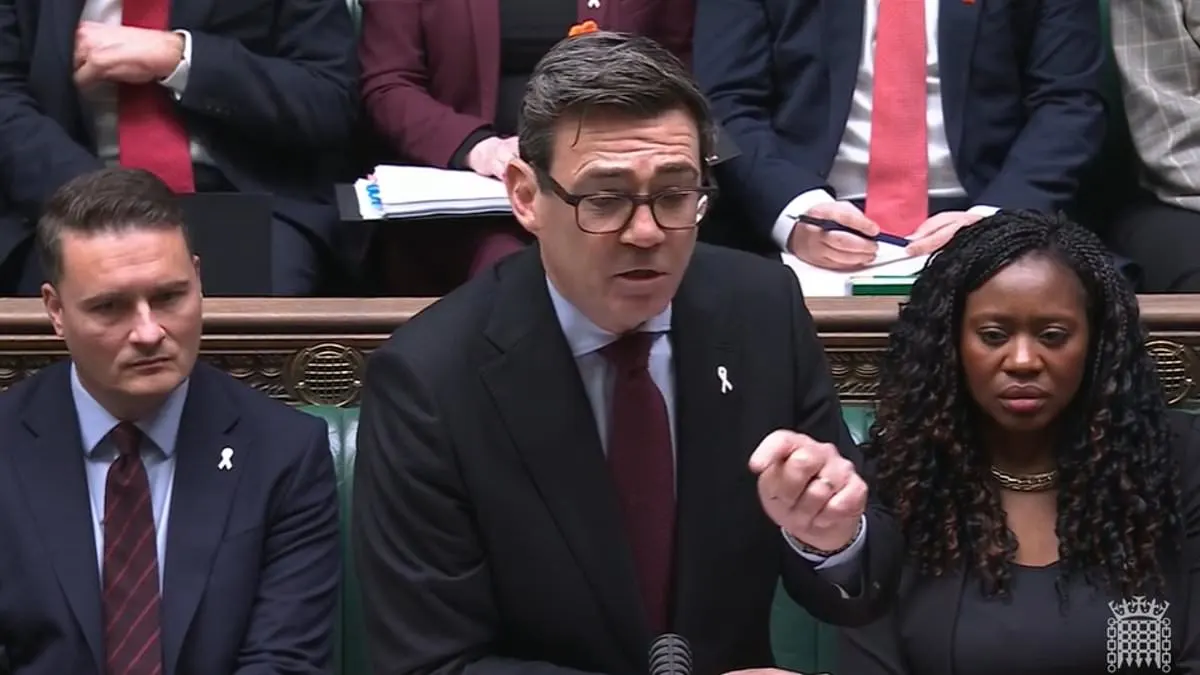
Andy Burnham faced criticism from Kemi Badenoch after a social media influencer posted a video featuring misogynistic language outside No 10 following a reception there. Burnham called the content inappropriate and said it was taken down, but refused to apologise for inviting influencers, arguing that young people use them for information.
Badenoch accused him of debasing the prime minister’s office and questioned whether his agreement with Brussels would proceed without discounted tuition fees for European students. Burnham defended engaging with new media and said discussions with the EU on tuition fees would continue. The article reports that the video was initially liked by the No 10 TikTok account and remained available on the creator’s YouTube channel.
- Sources
- 2
- Outlets
- 2
- Left · Centre · Right
- 0 · 1 · 1
In short
- Burnham declined to apologise for hosting influencers at No 10.
- Badenoch criticised a guest’s misogynistic video recorded outside Downing Street.
- Burnham said talks with the EU on student tuition fees would continue.
How this story developed
- 9 hours ago Newly added coverage shows Andy Burnham was pressed repeatedly at Prime Minister’s Questions over whether his EU agreement would proceed without lower tuition fees for European students.
- 15 hours ago Andy Burnham faced hostile questioning at Prime Minister’s Questions over videos posted by social media guests at a Downing Street reception and the terms of his recent EU deal.
- 16 hours ago Andy Burnham faced criticism from Kemi Badenoch after a social media influencer posted a video featuring misogynistic language outside No 10 following a reception there.
Full account
Prime Minister Andy Burnham faced a hostile exchange with Conservative leader Kemi Badenoch at Prime Minister’s Questions after videos from a Downing Street reception for social media creators drew criticism. One attendee, Max Balegde, posted footage in which he mouthed words from a trending audio clip containing misogynistic and offensive language. Badenoch said the remarks demeaned women and called on Burnham to apologise for allowing the video to be filmed at the official residence.
Burnham said the video was inappropriate and had been taken down, and agreed that it was right to criticise it. He also said Balegde had apologised. However, he refused to apologise for inviting influencers to Downing Street, arguing that they could help the government reach younger audiences. The reception, held on 9 November, was attended by around 60 creators; videos from the event also showed Burnham DJing.
The dispute widened into a clash over the government’s use of social media and the tone of political scrutiny. Badenoch accused Burnham of preferring questions from creators to the challenge of Parliament, saying she would not offer him “soft questions”. Burnham replied that he had spoken to influencers and then had to come to the Commons to speak with their opposite. The remark prompted uproar in the chamber.
Questions also remained about whether Balegde might be invited to another Downing Street event and whether he had ever received public money for social media work. The Prime Minister’s official spokesman declined to predict future invitations and said creators had not been paid to attend the reception, while noting that influencers had been paid for work with government departments in the past. The exchange left the broader argument unresolved: Burnham defended influencer engagement while acknowledging that the video’s content was unacceptable.
Where outlets differ
From the full account, which is AI-written from the sources:
The first report foregrounds Badenoch’s demand for an apology and describes the footage and its language in detail; the second gives more space to the question of possible future invitations, payment and the government’s response.
The second report specifies the reception date, the approximate number of attendees and Balegde’s follower counts, and identifies him as Max Trobe. Those details are not included in the first report.
The first report says the No 10 TikTok account initially liked the video and mentions a separate YouTube caption; the second does not include those details. The second instead describes the clip as using audio from a trending meme.
Centre outlets 1
Only here: defends, inviting, badenoch
Right-leaning outlets 1
Only here: rather, talk, tory, defiant, condemned
Every side used: burnham, influencers, pmqs
Headline columns compared word for word; nothing in them is AI-written.
Steelman: both sides, in good faith
The strongest fair case each way — we don't pick a winner.
The case for
Engaging influencers can help political leaders reach young people who may not follow conventional news or parliamentary debate. Burnham’s position is that talking with them is worthwhile, while acknowledging that a particular video was inappropriate and should be removed from official channels.
The case against
A Downing Street reception gives influencers access and status that can lend credibility to their content, so leaders have reason to take care about what is shared or endorsed. Critics can argue that calling one video inappropriate is not enough if it remains on an attendee’s channel and the No 10 account liked it, and that the unresolved tuition-fee question also leaves uncertainty about the EU agreement’s terms.
Explained simply
Andy Burnham is the UK prime minister and leader of the Labour Party. Prime Minister’s Questions, often shortened to PMQs, is a weekly Commons session where MPs question the prime minister. The Conservatives are the main opposition party, and Tory MPs use the session to scrutinise the government.
The EU is the political and economic union of European countries, and the UK’s relationship with it affects areas such as trade and education. Tuition fees are charges students pay for university; changing what European students pay could affect access to UK universities and the terms of an agreement with the EU.
Influencers are people who build audiences on social media and can shape what followers see and discuss. Their role in political communication is debated, as are the standards expected of people invited to official government events and the government accounts that engage with their posts.
Coverage · 2 sources
Bias meters
From 2 rated sources.