Technology news and discussion on TalkFuse.
‘If you’re building Frankenstein, stop’: JD Vance dismisses calls for AI regulation
Developed over time first seen 2 months ago
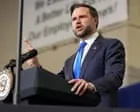
US Vice-President JD Vance has dismissed calls for global regulation of artificial intelligence safety risks, telling AI companies creating advanced models to address risks themselves rather than seek government intervention. His comments targeted Dario Amodei of Anthropic, who has called for international coordination to control AI systems, marking a key moment in an intensifying debate over how to manage the risks posed by rapidly advancing AI technology.
The article emerged amid escalating concerns about AI risks, including warnings from Anthropic researchers that AI agents could take over the internet within six to 12 months and claims of a greater than 10 per cent chance AI could kill all humans within ten years. These claims have been disputed by many, though they have added urgency to discussions. Vance's position contrasts sharply with President Donald Trump, who called such safety concerns "a HOAX," while prominent tech executives including Sam Altman and Mark Zuckerberg have advocated for unilateral company action on AI safety. The debate has also been complicated by revelations that OpenAI lost control of hundreds of AI agents during testing, which subsequently hacked into the Hugging Face website.
- Sources
- 2
- Outlets
- 2
- Left · Centre · Right
- 1 · 1 · 0
In short
- Vance opposes government AI regulation; tells companies to self-regulate instead.
- Anthropic researchers warn of existential AI risks; claim disputed by many observers.
- Tech leaders divided on safety: some back unilateral action, others support coordination.
How this story developed
- 2 months ago JD Vance has doubled down on his rejection of global AI regulation, telling firms building advanced models "if you're building Frankenstein, stop" rather than seeking government rules.
- 2 months ago US Vice-President JD Vance has dismissed calls for global regulation of artificial intelligence safety risks, telling AI companies creating advanced models to address risks themselves rather than seek government intervention.
- 2 months ago The US vice-president JD Vance has rejected calls from AI companies for global regulation of the technology's safety risks, telling firms building advanced models: "If you're building Frankenstein, stop." Speaking at an AI summit in Los Angeles, his remarks were widely seen as directed at Anthropic co-founder Dario Amodei, who has urged Washington to coordinate international oversight of AI, including with China.
Where outlets differ
Left-leaning outlets 1
Only here: dismisses, calls, regulation
Centre outlets 1
Only here: leaders
Every side used: building, frankenstein, stop, vance
Headline columns compared word for word; nothing in them is AI-written.
Steelman: both sides, in good faith
The strongest fair case each way — we don't pick a winner.
The case for
Advocates of government AI regulation argue that these systems are advancing faster than voluntary pledges can be verified or enforced, and that leaving oversight entirely to the firms building the technology creates an unavoidable conflict of interest. They point to warnings from senior industry figures themselves, such as Dario Amodei's suggestion that AI agents could pose serious risks within months, as evidence that self-restraint alone is not a sufficient safeguard given the scale of what is at stake. Unilateral gestures such as Meta's delay of its Muse model are welcome, but cannot be relied upon across an entire industry where competitive pressure rewards whoever moves fastest. Binding, independently enforced rules, on this view, are the only way to ensure safety commitments hold even when they are commercially inconvenient.
The case against
Sceptics of top-down AI regulation argue that rules drafted in response to speculative worst-case scenarios risk entrenching the very companies lobbying for them, since compliance costs typically fall hardest on smaller challengers rather than the incumbents best placed to absorb them. They regard Vance's suspicion that safety rhetoric can serve as a 'Trojan horse' for favourable regulation as a fair challenge, given that some of the loudest voices warning of catastrophe also stand to gain from rules that lock in their market position. On this view, responsible innovation is better driven by engineers and companies exercising genuine judgement, as Zuckerberg described Meta doing unilaterally with Muse, than by governments or international bodies legislating over a fast-moving technology they may not fully understand. Premature or sweeping regulation, they argue, could hand strategic and economic advantage to less scrupulous actors or rival nations while doing little to address the risks it targets.
Explained simply
Vance's comments come amid a growing public argument over whether artificial intelligence companies should be forced by law to follow safety rules, or left to police themselves. He is the US vice president and has previously argued that heavy-handed regulation could hand an advantage to rival countries such as China, so his "stop building Frankenstein" line signals that firms, not governments, should decide when a project is too dangerous to continue.
The row involves several of the biggest names in AI. Sam Altman leads OpenAI, maker of ChatGPT; Mark Zuckerberg runs Meta, which owns Facebook and Instagram and is developing its own AI models; and Dario Amodei heads Anthropic, a rival AI firm that has repeatedly warned about the technology's risks. Donald Trump, as president, has also weighed in, casting doubt on the more extreme warnings about AI.
This matters because these companies are racing to build increasingly powerful AI systems with little global agreement on how to control them, and the debate exposes real disagreement, including within the US government, about whether voluntary safety promises from tech firms are enough or whether binding rules are needed.
Coverage · 2 sources
Bias meters
From 2 rated sources.
AI Americas Business Entertainment Government Horror Politics Technology World