Video games news, releases, esports and culture — all the biggest gaming stories in one place.
If you’re looking for ideas on how to mod your RTX 4060, maybe remove its fans and slap a ridiculously big heatsink on it like this person did
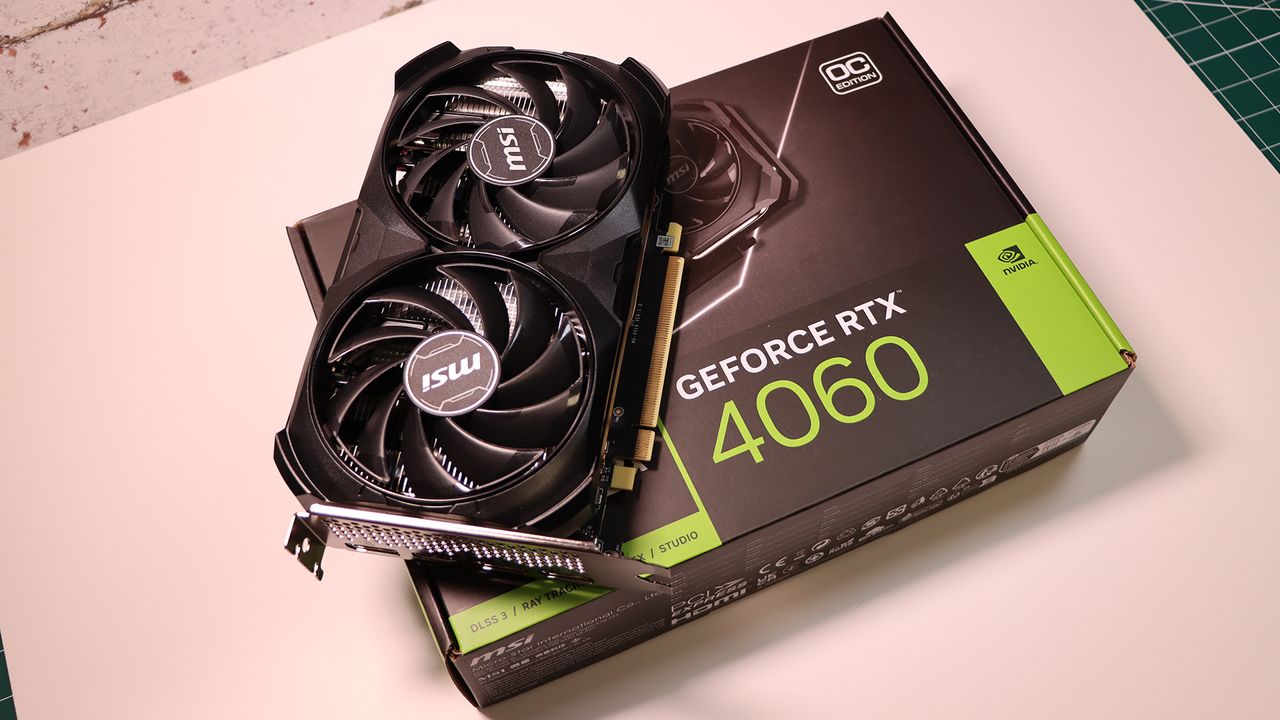
A graphics card enthusiast has demonstrated a fully passive cooling solution for Nvidia's RTX 4060 by engineering a substantial custom heatsink that replaces the GPU's original fan-based design. The oversized heatsink, which weighs roughly 5.6 pounds, uses spread-apart riveted fins to dissipate heat without moving parts, creating an unconventional but functional cooling system that the modder documented and shared publicly.
The project is pragmatically feasible because the RTX 4060 remains one of Nvidia's lower-power graphics cards, with a thermal design power of just 115 watts—significantly less than newer models like the RTX 5060 at 145 watts. This modest heat output makes passive cooling achievable without the risk of thermal throttling, though the resulting system is notably bulkier than typical GPU installations. The modder has made the heatsink schematic available for others interested in pursuing similar passive cooling builds.
In short
- A hobbyist replaced the fans on an RTX 4060 graphics card with a large custom passive heatsink weighing 2.56 kg.
- The modification is technically viable because the RTX 4060's low 115W power consumption generates minimal heat compared to higher-end GPUs.
- The DIY heatsink features widely-spaced riveted fins and was shared online with a schematic available upon request.
Explained simply
Graphics cards are the electronic components that computers use to generate images for displays, from everyday web browsing to demanding gaming and professional tasks. Like all processors, they generate heat while working and need cooling systems to prevent damage and maintain performance. Most graphics cards rely on fans to force air across metal fins, but some enthusiasts explore alternatives, such as passive heatsinks that cool through metal's natural ability to dissipate heat.
Passive cooling—cooling without moving parts—is rarely used in graphics cards because most models generate far too much heat to stay cool without active air circulation. However, some of Nvidia's lower-power cards remain cool enough for passive solutions to work reliably. This opens up possibilities for enthusiasts willing to trade the compact design of normal graphics cards for silent, moving-part-free cooling.
Passive cooling appeals to those seeking absolute silence and maximum reliability in their systems, since there are no fans to fail or produce noise. It also demonstrates how enthusiasts push the boundaries of computing design by combining unusual engineering solutions. Even when such solutions sacrifice practical considerations like size, they can inspire innovations and show what's technically feasible.