Video games news, releases, esports and culture — all the biggest gaming stories in one place.
Ignore that other game about crime that’s out and burgle some ugly farmhouses in Keepsake County, a “midwestern stealth game” with a 2000s Cartoon Network vibe
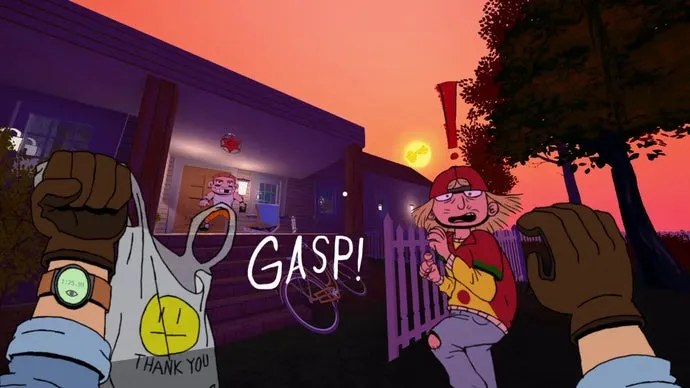
Keepsake County, a stealth game about burglarising isolated farmhouses, has launched after being delayed earlier this month. Its developers acknowledged the awkward timing, as the release coincided with the launch of other games attracting attention, including GTA 6.
The game generates each house procedurally, so layouts vary between attempts. Players pick locks, restrain residents and steal items, while choosing where to park their car and managing the risk of police arriving; equipment can be upgraded between runs to speed up lockpicking or delay the police.
In short
- Keepsake County has launched after a delay.
- Farmhouses are procedurally generated.
- Players can upgrade gear between burglaries.
Steelman: both sides, in good faith
The strongest fair case each way — we don't pick a winner.
The case for
Keepsake County offers a distinct stealth experience built around procedural houses, planning and managing risk, giving players variety across repeated attempts. Its stylised, cartoon-inspired presentation and focus on burglary mechanics may appeal to people seeking something different from larger crime games.
The case against
The game’s premise asks players to restrain residents and steal from isolated homes, which some may find unpleasant or too close to real-world victimisation for entertainment. Its launch alongside much higher-profile games could also make it harder to attract attention, while procedural layouts and upgrade systems may not be enough to distinguish it for players who find the core burglary loop unappealing.
Explained simply
Stealth games ask players to avoid being seen while completing a task, often by sneaking past people or using tools to get around obstacles. A procedurally generated setting is one the game’s software creates anew, so the layout can change each time someone plays.
In Keepsake County, players break into isolated homes, take valuables and try to avoid police attention. Its developers have described it as a “midwestern” game, a reference to the rural American setting and style; the cartoon comparison points to the look of some US television from the 2000s.
The game’s subject matter draws on burglary as a source of tension and risk in a fictional setting. Its launch alongside high-profile releases also places it in a crowded market where smaller games compete for players’ attention.