New releases, music videos and album news — indie, rap, rock and pop. Always covering Ren, Chris Webby, Sam Tompkins, bbno$, CHINCHILLA, Muse, Yungblud and more.
In 1972, Frank Zappa inspired David Bowie to draw a guitar solo. Mick Ronson made it sing
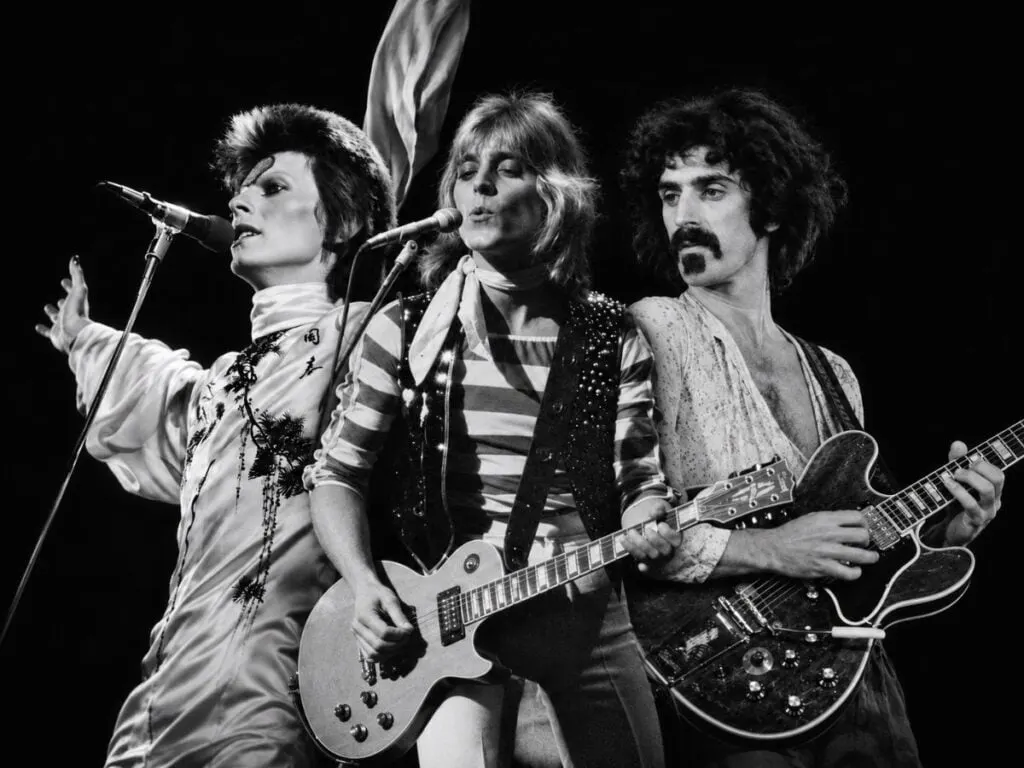
David Bowie used an unusual visual method to guide Mick Ronson’s guitar solo on “Moonage Daydream”, drawing its changing shape with a crayon or felt-tip pen. The approach helped turn Bowie’s abstract, space-themed vision into a solo that became a defining part of the Ziggy Stardust sound.
Bowie said the idea was inspired by reading that Frank Zappa used drawn symbols to explain musical ideas to his musicians. He sketched a shape that began as a flat line, widened into a megaphone and ended in broken strokes; Ronson translated it into sustained notes followed by shorter phrases. Bowie praised Ronson’s raw, soulful playing and his ability to bring the sketch to life.
In short
- Bowie drew the shape he wanted for the solo.
- Frank Zappa’s methods inspired the visual approach.
- Mick Ronson turned the sketch into a soaring performance.
Explained simply
David Bowie was a British singer and songwriter whose 1972 album The Rise and Fall of Ziggy Stardust and the Spiders from Mars introduced a fictional, otherworldly rock star. Mick Ronson, Bowie’s guitarist and musical collaborator at the time, helped shape the album’s sound.
Frank Zappa was an American musician known for experimental music and unusual ways of communicating musical ideas. Bowie had read that Zappa used drawings to explain music to his band, and adapted the idea for “Moonage Daydream”, asking Ronson to turn a sketch into a guitar solo.
The song became one of the best-known tracks from the Ziggy Stardust album. Its solo shows how a visual idea and a musician’s interpretation could combine in the recording process.