Technology news and discussion on TalkFuse.
In Shenzhen, Xi and ‘friend’ Putin lull Trump to sleep amid pomp
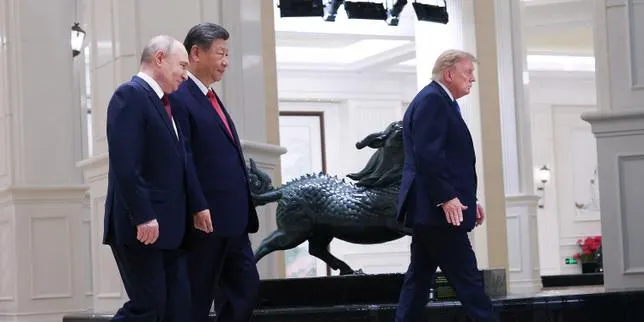
Donald Trump, Xi Jinping and Vladimir Putin held an unprecedented three-way meeting in Shenzhen on the sidelines of the APEC summit. The article argues that the ceremony and warm public exchanges projected closeness, while leaving major differences unresolved and giving each leader political benefits, particularly Xi’s chance to present China as a central diplomatic power.
Trump and Putin met for about 40 minutes before joining Xi for 90 minutes of talks; together, the three countries possess 90% of the world’s nuclear weapons. A statement from China and Russia said they would discuss reducing nuclear risks, increasing oil supplies and reforming the United Nations, without details. Disputes remained over Taiwan, nuclear arms and AI, while Putin’s return to the summit after a nine-year absence offered him renewed international visibility.
In short
- Xi used elaborate ceremony to position China at the centre of diplomacy.
- The leaders announced broad areas for dialogue but few specifics.
- Taiwan, nuclear arsenals and AI remained points of deep disagreement.
Steelman: both sides, in good faith
The strongest fair case each way — we don't pick a winner.
The case for
The meeting can be seen as useful diplomacy: bringing leaders of nuclear powers together may help reduce risks and keep channels open even when core disagreements remain. Its public warmth and Xi’s role as host also allowed China to demonstrate diplomatic reach, while Putin’s attendance and Trump’s engagement could create openings for further talks.
The case against
The ceremony and friendly exchanges may have produced more political benefit than substantive progress, since the reported discussions offered no concrete steps on nuclear risks or other disputes. Critics could argue that the event gave Putin renewed international visibility and helped Xi project influence, while disagreements over Taiwan, arms and AI remained unresolved.
Explained simply
The APEC summit brings together leaders from countries around the Pacific to discuss economic and regional issues. China’s Xi Jinping, Russia’s Vladimir Putin and US President Donald Trump lead three countries with sharply different interests, but each has a stake in managing relations with the others.
China and Russia have drawn closer in recent years, including through trade and energy ties, while the United States has disputes with both. The three governments also have major nuclear arsenals, making communication about weapons and the risk of conflict significant. Their differences include Taiwan’s status, nuclear arms and the use of artificial intelligence.
High-profile meetings can give leaders a chance to show they are influential and willing to engage, even when agreements are limited. China’s role in hosting international diplomacy matters to Xi’s effort to present the country as a central power; Putin’s presence also gives Russia visibility at a major summit.
AI Asia Geopolitics Politics Technology World