Culture news and discussion on TalkFuse.
Infantino’s World Cup plan is part of a desire for expansion that was clear from the start | Paul MacInnes
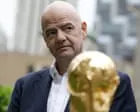
Fifa's plan to sell a share of the World Cup's commercial rights to outside investors is not an isolated move but the latest step in a long-running drive by president Gianni Infantino to expand football's competitions and grow the revenue they generate. Since his surprise election in 2016, promising reform after the Sepp Blatter era, Infantino has consistently pursued growth and funding increases, and this pattern helps explain why the sale plan was announced without consultation with football's wider stakeholders.
The article traces a timeline of expansionist moves: proposals in 2016 to enlarge the World Cup, confirmation in 2017 that the 2026 tournament would grow to 48 teams, a 2018 push for a global Nations League, a 2021 plan for a biennial World Cup, the launch and proposed expansion of a 32-team Club World Cup, the uncontested award of the 2034 World Cup to Saudi Arabia, and the 2030 tournament being spread across three continents and six host nations, with talk of expanding it to 64 teams. The piece questions what continues to drive Infantino's appetite for growth, noting he has already roughly trebled Fifa's revenues since taking office, and suggests patronage from redistributed funds helps secure support for his continued leadership.
In short
- Fifa's World Cup rights sale fits Infantino's long pattern of expansion.
- Since 2016 he has repeatedly grown tournaments and Fifa's revenues.
- Critics say growth secures political support via redistributed funds.
Steelman: both sides, in good faith
The strongest fair case each way — we don't pick a winner.
The case for
A thoughtful case for Infantino’s expansion agenda is that broader tournaments and new commercial arrangements can bring more countries, clubs and fans into elite football, while increasing revenue that Fifa can distribute to develop the game worldwide. Supporters could argue that growing revenues also makes the organisation less dependent on a narrow set of income streams and gives it more resources to invest in football.
The case against
A thoughtful case against the agenda is that relentless expansion may overload players and calendars, dilute the sporting value of competitions and give commercial growth priority over the game’s long-term health. Major changes made without meaningful consultation can also weaken trust among players, clubs, supporters and host communities, while the distribution of new revenue may reinforce political support for Fifa’s leadership rather than ensure broad accountability.
Explained simply
Gianni Infantino became Fifa president in 2016, succeeding Sepp Blatter whose tenure was marked by corruption scandals. He promised reform and has since pursued a strategy of steadily expanding Fifa's competitions and the revenues they generate.
Under Infantino, the World Cup has been enlarged from 32 teams to 48, with proposals to expand it further to 64. Fifa has also created a 32-team Club World Cup, proposed a biennial World Cup format, and arranged for the 2030 tournament to be hosted across three continents by six nations.
These expansions create more matches and broadcasting opportunities, generating substantially higher revenues for Fifa. The funds distributed to national football bodies worldwide mean these competition changes have significant consequences for how football is organised globally.
Art Celebrity Culture Entertainment Football Government Politics Sport