Inside Russia’s ‘plague zone’: Putin’s five lockdown areas amid ‘pneumonic plague outbreak’ as countries tighten border controls
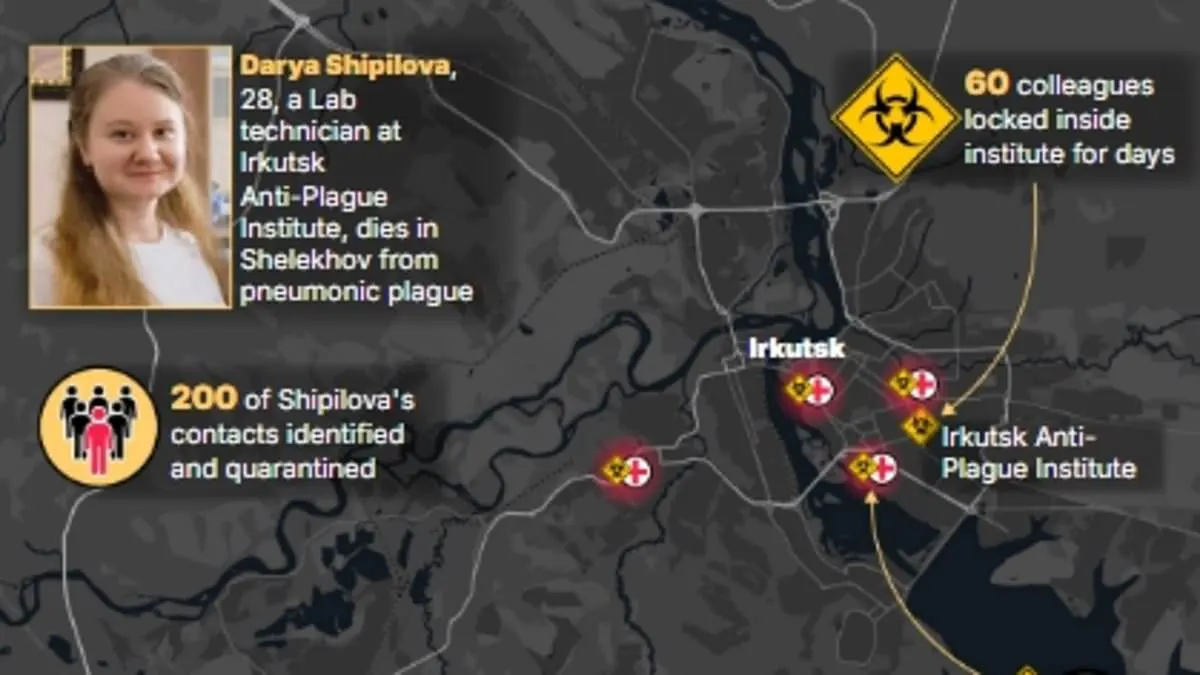
Russia has imposed lockdowns on hospitals and medical centres across a 30-square-mile area in Siberia following the death of Darya Shipilova, a 28-year-old laboratory technician at the Irkutsk Anti-Plague Institute. She reportedly broke a test tube containing live pneumonic plague bacteria whilst working at the institute and became ill in late September, dying on 1 October. Despite Russia's claims that she died from "unidentified pneumonia," the incident has sparked international concern and prompted neighbouring countries to tighten border health controls.
Approximately 200 people who came into contact with Ms Shipilova are being monitored, whilst more than 60 of her colleagues have been confined to the research institute, sleeping on floors and chairs despite none testing positive. Up to five hospitals in the Irkutsk region are operating in "epidemic mode," including three major city hospitals and a children's hospital, with staff and patients barred from leaving for a three-week quarantine. Pneumonic plague is a severe respiratory infection that causes fever, shortness of breath and coughing up blood, typically appearing between three and seven days after contact; it is nearly always fatal if untreated, though fatality rates drop to around 17 per cent if treated with antibiotics within 24 hours.
- Lab technician died after breaking test tube containing plague bacteria in Russian research institute
- Lockdowns imposed on five hospitals with 200-plus people under monitoring in Siberian region
- Russia downplays death as pneumonia whilst international concern grows over disease spread
New here? Start with this
Darya Shipilova was a 28-year-old laboratory technician at the Irkutsk Anti-Plague Institute in Siberia who broke a test tube containing live pneumonic plague bacteria whilst working. She fell ill in late September and died on 1 October.
Pneumonic plague is a severe respiratory infection that causes fever, shortness of breath and coughing up blood, typically appearing within three to seven days after exposure. Without antibiotics, it is nearly always fatal, though fatality rates drop to around 17 per cent if treated with antibiotics within 24 hours.
In response, Russian authorities have imposed lockdowns across a 30-square-mile area, with up to five hospitals operating under strict restrictions and three-week quarantines. Approximately 200 people who had contact with Ms Shipilova are being monitored, and more than 60 of her colleagues remain confined at the institute despite testing negative. Neighbouring countries have since tightened their border health controls.
Both sides, in good faith
The strongest fair case each way — we don't pick a winner.
The case for
Russia's response represents standard protocol when managing plague, one of the most lethal known pathogens. With pneumonic plague exhibiting near-certain fatality in untreated cases and a three-to-seven-day incubation period, isolating approximately 200 contacts and placing healthcare facilities on high alert are medically justified precautions to prevent catastrophic spread. Though onerous, confining exposed laboratory staff and tightening border controls reflect the genuine danger posed when a pathogen this lethal escapes containment in a populated region.
The case against
Proportionality is essential in emergency response, yet confining over 60 uninfected staff to the institute on floors and chairs, whilst placing multiple hospitals in full lockdown for a single laboratory accident, appears to exceed what epidemiology strictly demands. More concerning is the apparent lack of transparency—the authorities initially characterised the technician's death as "unidentified pneumonia" rather than plainly stating it was plague—which undermines confidence in their assessment of the actual threat level. Without clear communication about genuine risk, it becomes impossible to judge whether the response represents appropriate caution or dangerous overreach that harms the broader healthcare system.