Buddhist adviser supported Christa Pike during botched execution attempt
Developed over time first seen 2 hours ago
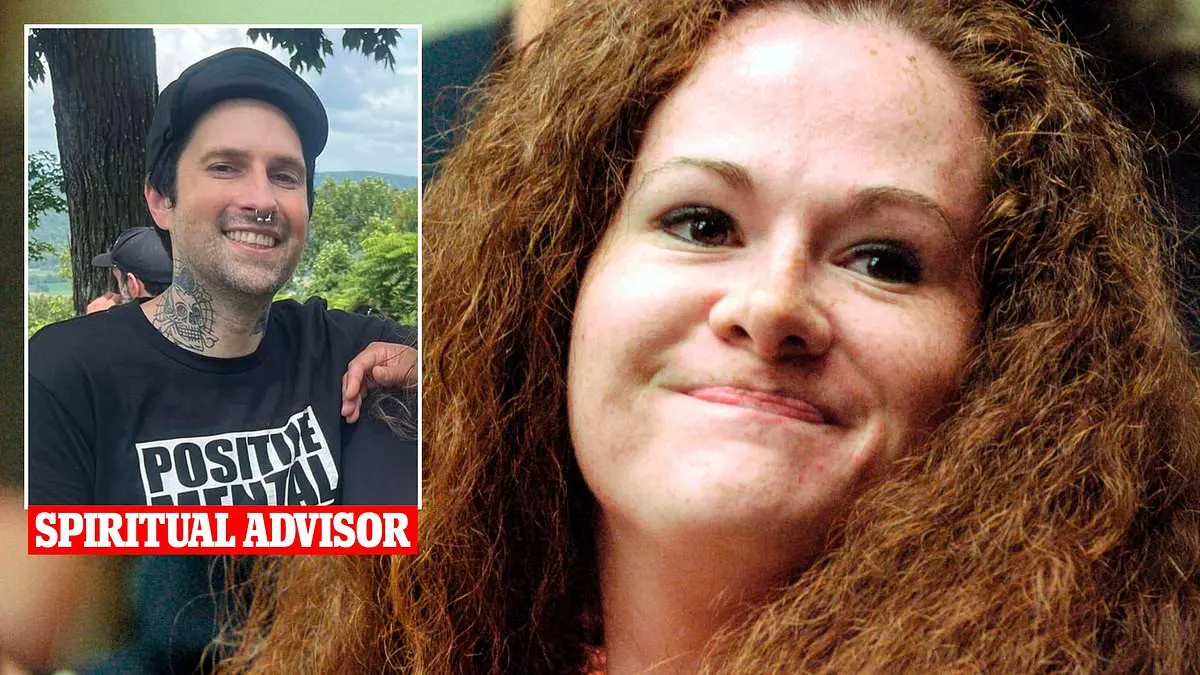
Tennessee authorities halted Christa Pike’s execution after repeated attempts to insert needles failed, leaving her in critical condition. Her Buddhist spiritual adviser, Reverend Mikey Noechel, was beside her during the procedure, highlighting the role of religious support in the case and drawing attention to the meditation group that has taken Pike into its community.
Pike, now 50, was sentenced to death for the 1995 torture and murder of her 19-year-old classmate Colleen Slemmer; Pike was 18 at the time. Witnesses said Noechel spoke and sang with her as staff tried at least seven needles, before the execution was called off minutes later. Wild Heart Meditation Center in Nashville has opposed her execution on Buddhist grounds and held a vigil; Pike has said she began using meditation in recent years to manage her thoughts.
- Christa Pike’s execution was halted after at least seven unsuccessful needle attempts.
- Buddhist adviser Mikey Noechel stayed with her in the chamber.
- Wild Heart Meditation Center opposes her execution and held a vigil.
New here? Start with this
Christa Pike, now 50, was convicted of the torture and murder of 19-year-old Colleen Slemmer in 1995, when Pike was 18 years old. She was sentenced to death and has been imprisoned on Tennessee's death row for over three decades. In recent years, Pike has become involved with a Buddhist meditation community.
Pike has adopted Buddhist meditation practices and become part of Wild Heart Meditation Center in Nashville. Reverend Mikey Noechel, a Buddhist spiritual adviser at the centre, has become an important figure in her life. Pike has said meditation helps her manage her thoughts, and the meditation centre has publicly opposed her execution on Buddhist grounds.
Capital punishment cases involving religious advisers and organised faith community opposition represent an area where criminal justice and religious practice intersect. Pike's case is one example where a faith community has become actively engaged with a death row case. Religious organisations' involvement in capital punishment debates continues to be an aspect of how these cases are discussed.
Both sides, in good faith
The strongest fair case each way — we don't pick a winner.
The case for
Those supporting Pike's execution argue that capital punishment serves essential functions of justice for the most serious crimes. Pike tortured and murdered a teenager in 1995; after three decades of imprisonment, the death sentence represents society's gravest judgment about accountability and honours the victim's memory and family's suffering. This perspective holds that genuine justice for extreme crimes requires proportionate consequences, and that compassion for the condemned should not overshadow justice for the victim, or diminish the principle that the most heinous acts warrant the most serious penalties.
The case against
The Buddhist perspective opposing Pike's execution, represented by the meditation centre and spiritual adviser, argues that capital punishment perpetuates cycles of violence rather than transcending them and violates the core ethical principle of non-violence. Even for terrible crimes, this view contends that decades of imprisonment constitutes adequate accountability; execution, particularly when complicated by botched procedures as here, merely multiplies suffering without rehabilitative benefit or genuine justice. From this standpoint, true justice involves compassionate accountability and spiritual transformation, not further killing that compounds tragedy.
Full account
The Buddhist adviser who accompanied Christa Pike during Tennessee’s unsuccessful attempt to execute her on Wednesday 30 September was the Reverend Mikey Noechel, a teacher at Nashville’s Wild Heart Meditation Center. Witnesses described Noechel speaking and singing with Pike beside the execution gurney as staff struggled to administer the lethal injection. The attempt was eventually halted, and Pike, 50, was taken to hospital. Her lawyers said in a court filing on Friday that she remained unconscious and on a ventilator. Noechel’s presence drew attention to a relationship that had begun more than two years earlier, when he introduced Pike to loving-kindness meditation, a practice he had planned to use with her in the chamber.
Wild Heart identifies Pike as a member of its Buddhist community and had arranged a vigil outside the prison in support of her and Noechel. Before the execution, Noechel told Nashville public radio that he opposed putting her to death and believed the act would perpetuate harm. He also said Pike accepted responsibility for the murder for which she was sentenced and understood the pain of Colleen Slemmer’s family. Pike was 18 when she took part in the killing of Slemmer, a 19-year-old fellow student, in Knoxville in 1995. Slemmer’s mother, May Martinez, said after the failed execution that she had been denied justice for her daughter.
Accounts of the procedure describe repeated attempts to establish intravenous access before staff administered an initial dose and then a second dose of pentobarbital. Pike’s lawyers say at least seven needles were used in her left arm. They allege that the drug may have entered tissue outside her bloodstream because the lines were incorrectly placed or veins had failed; that explanation has not been established by the state’s investigation. Witnesses reported that Pike remained alive after both doses. Her lawyers said she cried and complained of pain during the procedure, while Noechel tried to calm her. The state has not yet given a detailed public account of why the execution failed.
Governor Bill Lee has suspended Tennessee’s remaining executions for 2026 and ordered an independent review. On Saturday, he announced that Department of Correction Commissioner Frank Strada would leave his post later in October. Strada said he believed the department had followed its protocol, but that stepping aside was in the state’s interests while investigators examined what happened. The review will have to address both the technical failure and the care Pike received afterwards. For Slemmer’s family, the halted execution prolonged a case that has lasted more than three decades; for Pike and those supporting her, it has raised urgent questions about her condition and what the state may do next.
Where outlets differ
Source 1 concentrates on Noechel, Wild Heart’s support for Pike and witness accounts from the chamber. Source 2 concentrates on Pike’s medical condition, her lawyers’ account of the injections and Strada’s resignation. Source 1 describes the attempt as being called off after needle insertions, while Source 2 gives a fuller account of two doses of pentobarbital; the reports do not establish the medical cause of the failure.
More coverage
Read the full article at the source →
Originally published by Daily Mail as “Inside the religious order that stood by Christa Pike during botched execution as Satanist killer’s spiritual advisor is revealed”.