Inside the Secret Service ‘shell game’ to hide US presidents in plain sight
The US Secret Service routinely uses decoy vehicles, aircraft and misdirection to conceal the real movements of the president, a practice highlighted by reports that Donald Trump was secretly transferred by catering truck to a separate military aircraft after appearing to board Air Force One in Ankara on 8 July. Those remaining on the original plane were unwitting decoys, unaware the president was no longer aboard as it left the Nato summit in Turkey. Such deception is longstanding agency practice, used to protect presidents from anyone seeking to track or harm them, particularly during high-risk foreign travel.
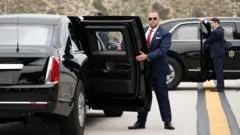
Former agents told the BBC that smaller-scale versions of this "shell game" happen routinely, with presidential motorcades typically featuring two identical "Beast" limousines that swap positions en route, and Marine One flying in groups of three helicopters to obscure which carries the president. More elaborate deceptions have been used abroad in the past: Bill Clinton flew into Islamabad in 2000 behind a decoy jet, George W Bush secretly visited Baghdad in 2003 despite claiming he would be in Texas, and Joe Biden was secretly taken to Ukraine in 2023 with a minimal press pool. The exact threat prompting the Trump aircraft switch remains unclear, and neither the Secret Service nor the White House has confirmed the details.
In short
- Trump reportedly switched planes secretly via catering truck in Ankara
- Secret Service routinely uses decoys to protect presidential movements
- Similar tactics used for Clinton, Bush and Biden on past foreign trips
Steelman: both sides, in good faith
The strongest fair case each way — we don't pick a winner.
The case for
The Secret Service must assume presidents face existential threats from foreign governments, terrorist organisations, and domestic extremists. Deception through decoys and shell games is essential tradecraft that increases the complexity and cost of any attack to near-impossible levels. Without such methods, protection becomes merely reactive. A president dead or captured is incompatible with democratic governance itself, making this security imperative transcend normal expectations of transparency.
The case against
Whilst security concerns are real, routine, large-scale deception of the press and public raises serious democratic questions. Without reasonable visibility into presidential movements, meaningful oversight becomes impossible and government becomes unaccountable. The examples suggest deceptions extend beyond narrow, demonstrable threats into blanket opacity. A democracy weakened by systematic government deception is not truly safer than one that balances legitimate security with proportionate transparency.
Explained simply
The US Secret Service protects the president, including during travel, when routes and schedules can expose him to threats. To make it harder for anyone to track his movements, agents may use decoy vehicles or aircraft and change plans without telling everyone involved.
The president’s motorcade can include matching limousines, while Marine One may fly with other helicopters to make it less clear which one he is in. These measures are part of a broader approach to keeping presidential movements secure, especially on trips abroad.
The Secret Service works with the White House, the military and other security teams to organise presidential travel. Keeping movements difficult to predict is intended to reduce risks to the president while allowing official visits and duties to go ahead.
Americas Government Politics World