Inside the Supermassive Debate Over the James Webb Telescope’s ‘Little Red Dots’
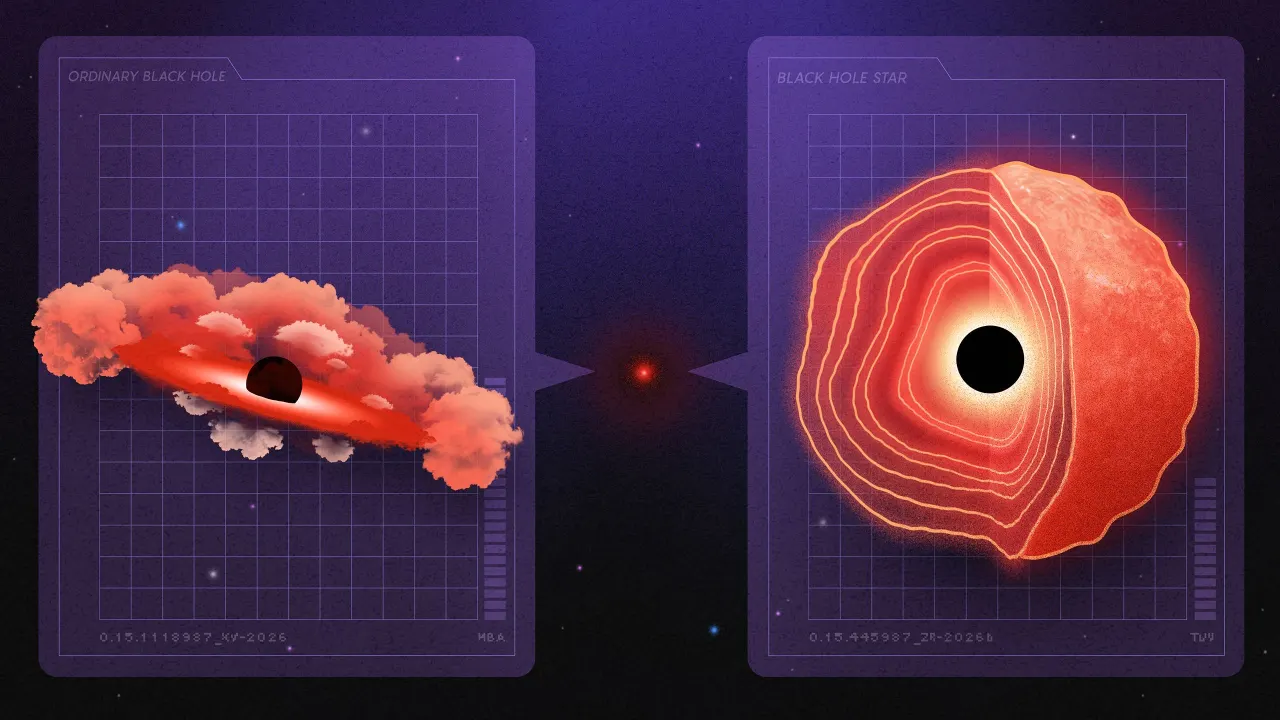
Astronomers are divided over what Webb’s “little red dots” are: most appear to resemble supermassive black holes, but two unusual examples may be a new kind of object. Some researchers propose these are colossal hydrogen stars with black holes forming inside them, a possibility that could change how scientists understand the early growth of black holes.
The dots are tiny, bright and common in Webb images. Detailed spectra showed hydrogen light spread across a broad range of colours, often a sign of gas moving rapidly around a black hole. Yet many dots lack the X-rays and flickering typical of known black holes, while follow-up studies have offered competing explanations, including unusually dense gas around black holes.
In short
- Webb’s little red dots remain difficult to explain.
- Two unusual examples may contain forming black holes.
- Astronomers disagree over what the evidence shows.
Steelman: both sides, in good faith
The strongest fair case each way — we don't pick a winner.
The case for
The broad hydrogen spectra in many little red dots resemble gas moving rapidly around supermassive black holes, making black holes a strong explanation for at least most of the objects. Their lack of typical X-rays or flickering does not rule that out: unusually dense gas around a black hole could obscure or alter those signals, as some follow-up studies propose.
The case against
The missing X-rays and flickering make the dots unlike familiar black holes, and the evidence is not yet conclusive that the black-hole explanation fits them all. The two unusual examples may instead be colossal hydrogen stars with black holes forming inside them, a possibility that could explain their distinctive features and offer a new account of how early black holes grew.
Explained simply
The James Webb Space Telescope observes distant galaxies by collecting infrared light, which can reveal objects from the early universe. Among its images are small, bright sources nicknamed “little red dots”; their light has travelled for billions of years before reaching us.
Astronomers study the light from these sources to work out what they contain and how their gas is moving. Many show signs associated with supermassive black holes, but some do not display other features often seen in known examples, and researchers have proposed different explanations.
Understanding the dots could help explain how black holes grew in the young universe. One proposal is that a small number are enormous hydrogen stars with black holes beginning to form inside them, though this remains an open question.
Americas Celebrity Entertainment World