World news and discussion on TalkFuse.
Intel’s 256-core Xeon 7 CPUs are a Diamond in the rough
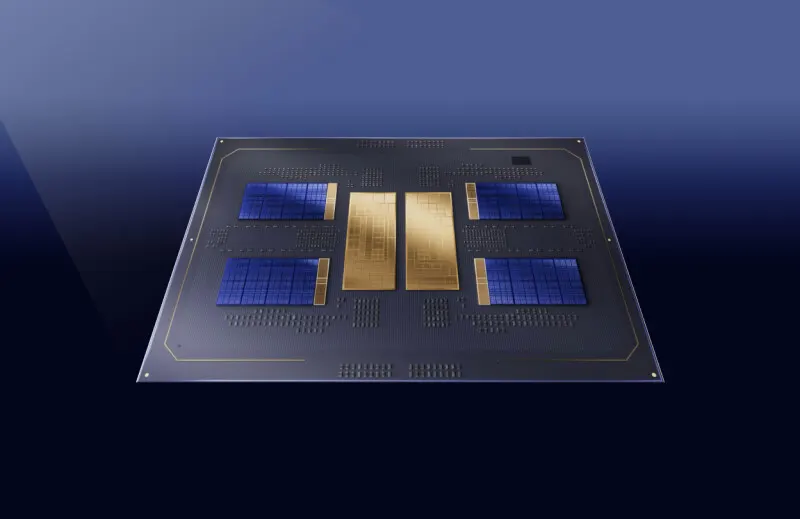
Intel used the Hot Chips conference to reveal fresh details of its long-delayed Xeon 7 server chips, codenamed Diamond Rapids, confirming the top model will pack 256 performance cores rather than the previously touted 192. The launch has slipped to 2027, but the chip's chiplet-based design marks a significant architectural shift for Intel, bringing it closer to parity with AMD's rival high-end server processors and representing what the article describes as Intel's most sophisticated Xeon design to date.
Diamond Rapids will only be available in high-core-count variants aimed at HPC workloads, since the mainstream eight-channel version has been cancelled, meaning it will compete with AMD's upcoming 256-core Epyc "Venice" chips only at the very top end of the market. The processor is built from up to 22 chiplets combining compute dies made on Intel's advanced 18A-P process, base dies fabricated on Intel 3-T carrying up to 1.28GB of combined L3 cache, and fabric hub dies on Intel 3, with Intel claiming the process technology offers notable power or performance gains over previous generations.
In short
- Intel's Diamond Rapids Xeon 7 chips now top out at 256 cores.
- Launch delayed to 2027; only high-end HPC variants will ship.
- New chiplet design rivals AMD's forthcoming 256-core Epyc Venice chips.
Steelman: both sides, in good faith
The strongest fair case each way — we don't pick a winner.
The case for
Intel's Diamond Rapids demonstrates genuine innovation through its sophisticated chiplet architecture, achieving 256-core parity with AMD's competing Venice chips. The design combines multiple advanced process technologies and promises meaningful power and performance advantages, representing realistic progress toward competitive positioning in the crucial high-end HPC segment where advanced capabilities matter most.
The case against
Intel's delayed 2027 launch and architectural revisions suggest the company has struggled with execution in competitive server markets, whilst abandoning mainstream variants represents retreat from the broader market where Intel once dominated. Arriving late with matching 256-core specifications casts Intel in a catch-up rather than leadership position, and the complexity of coordinating 22 chiplets across multiple process generations introduces integration risks.
Explained simply
Intel makes Xeon processors for servers, which power data centres and high-performance computing (HPC) systems used for tasks such as scientific modelling. The number of cores affects how many calculations a chip can handle at once, though performance also depends on the rest of the system and the workload.
Diamond Rapids is part of Intel’s Xeon 7 generation. Its design combines several smaller pieces of silicon, called chiplets, rather than relying on one large piece; AMD uses a similar approach in its Epyc server chips. This design can bring together computing cores, memory for frequently used data and connections between chiplets.
The range is aimed at the high end of the server market, where Intel competes with AMD for customers running demanding workloads. These processors matter because their performance and power use can affect the cost and capacity of data centres.