World news and discussion on TalkFuse.
Iran accuses Zelenskyy of ‘false flag’ Kuwait drone strike op to get Trump’s attention
Developing story first seen 6 hours ago
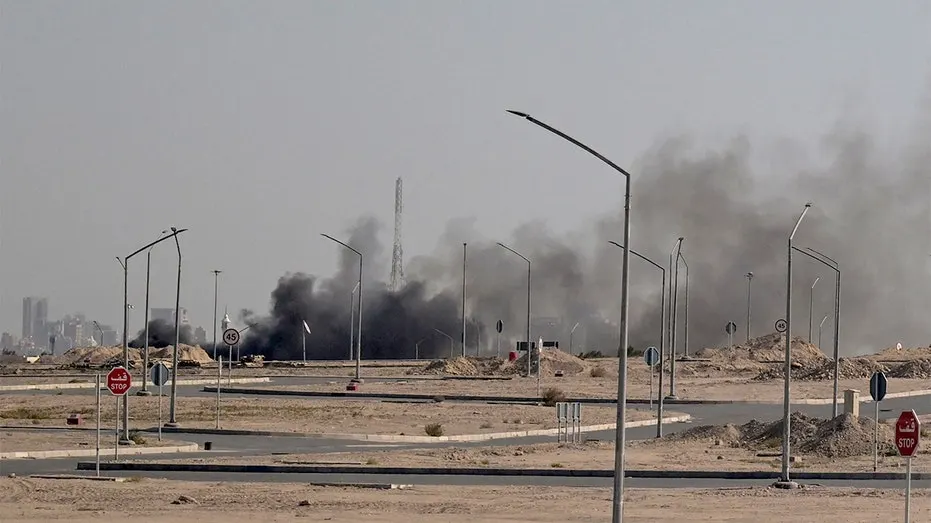
The article adds accusations from a former Iranian nuclear negotiating adviser that Ukraine staged the deadly drone incident in Kuwait as a “false flag” operation to attract Donald Trump’s attention. The claim is unsubstantiated; Kuwaiti and Italian officials blamed Iran, while Tehran denied responsibility and offered to co-operate with an investigation.
Kuwait said debris from intercepted Iranian drones struck a military facility on Thursday, initially injuring four people. Two Italian defence technicians later died and two others were wounded; the technicians worked for Rheinmetall Italia maintaining detection antennas for the Skyguard air defence system. Ukraine has sent drone specialists and interceptor drones to the Middle East to help defend against Iranian attacks.
- Sources
- 2
- Outlets
- 2
- Left · Centre · Right
- 0 · 1 · 1
In short
- An Iranian adviser accused Ukraine of staging the Kuwait drone incident.
- Kuwait and Italy blamed Iran; Tehran denied responsibility.
- Two Italian defence technicians died after debris struck a military site.
How this story developed
- 56 minutes ago A former adviser to Iran’s nuclear negotiating team accused Ukraine of carrying out a deadly drone attack in Kuwait as a “false flag” operation to impress US President Donald Trump.
- 1 hour ago The article adds accusations from a former Iranian nuclear negotiating adviser that Ukraine staged the deadly drone incident in Kuwait as a “false flag” operation to attract Donald Trump’s attention.
Full account
Two Italian technicians have died after a drone incident at a site in Kuwait, with Kuwaiti and Italian authorities blaming Iran and Tehran denying responsibility. The men worked for Rheinmetall Italia, the Italian arm of German defence manufacturer Rheinmetall. Kuwait’s defence ministry said four people were injured when debris from intercepted Iranian drones fell on a military facility; the two Italians later died, while a Kuwaiti and a Pakistani national were treated for injuries. The ministry described the location as a vital site but did not identify it precisely.
Italy’s foreign ministry said the technicians had been working on detection antennas for the Skyguard air-defence system. Rheinmetall confirmed the deaths and said its employees had been providing technical support for air-defence systems. Italian media named them as Antonio Saccoccio, 65, and Emanuele Lo Russo, 36. Italy’s foreign minister was reported as saying an investigation indicated that the drone was manufactured in Iran, and cited the role of Iranian proxies in regional attacks.
Iran rejected the accusations. Foreign Minister Abbas Araghchi said the incident appeared suspicious and that Tehran would work with Kuwait and Italy to establish what had happened. He also described it as resembling a “precooked recipe for war”. An Iranian armed forces spokesperson said Iran had conducted no military or offensive operation. In a separate statement, Iran’s embassy in Rome warned of alleged false-flag activity intended to widen the conflict and draw European countries into it.
The accusation that Ukraine staged the strike came from Mohammad Marandi, a former adviser to Iran’s nuclear negotiating team, in comments reported by Iranian media. He claimed Ukrainian operatives were active in parts of the Middle East and said the attack was intended to demonstrate Ukraine’s value to US President Donald Trump. Fars, an outlet affiliated with Iran’s Islamic Revolutionary Guard Corps, also cited a security source alleging that Ukrainian operatives had deployed drones in several countries. These claims were presented as Iranian allegations; the reports provided no independent evidence linking Ukraine to the attack.
The coverage differs in emphasis and detail. One report centres on Marandi’s allegation against Ukraine and Iran’s embassy warning, while also relaying claims from Fars. Another foregrounds the deaths, the competing accounts of responsibility and the regional context, including earlier reported Iranian drone attacks in Kuwait. The accounts also vary in how they describe the site and the technicians’ work: the Kuwaiti facility was called military or vital, while the Italian account specified antenna maintenance for the Skyguard system.
Where outlets differ
From the full account, which is AI-written from the sources:
The first report highlights the Iranian claim that Ukraine carried out a false-flag attack to attract Trump’s attention, along with the embassy’s warning about attempts to involve Europe. The second report focuses on the casualties, the accusations by Kuwait and Italy, Iran’s denial and the wider conflict.
The first report gives the technicians’ names and describes their work on Skyguard detection antennas. The second also gives their reported ages and says they were supporting air-defence systems, while citing Italian reporting that the drone was made in Iran.
The first report attributes the Ukrainian-operatives claims to Marandi and a Fars-cited security source. The second does not include those allegations and instead gives more detail about Araghchi’s response and recent events in Kuwait.
Centre outlets 1
Only here: italians, killed, denies, responsibility
Right-leaning outlets 1
Only here: accuses, zelenskyy, false, flag, drone
Every side used: strike, kuwait, iran
Headline columns compared word for word; nothing in them is AI-written.
Coverage · 2 sources
Bias meters
From 2 rated sources.
Europe Government Middle East Politics Russia-Ukraine War World