World news and discussion on TalkFuse.
Iran referred to UN Security Council for nuclear non-compliance
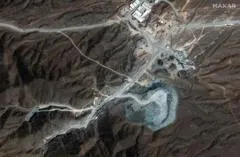
The UN's nuclear watchdog, the International Atomic Energy Agency (IAEA), has referred Iran to the UN Security Council for failing to comply with its obligations under the nuclear non-proliferation treaty, marking the first such referral in two decades. The resolution, passed by the IAEA's board of governors in Vienna, cites Iran's failure to provide information on its stockpile of highly enriched uranium and its refusal to grant inspectors access to nuclear sites. Tehran has condemned the move, arguing that US and Israeli strikes on its facilities are responsible for disrupting the verification process now being used against it.
The resolution, put forward by the UK, France, Germany and the US, was supported by 23 countries, with eight abstentions, while China, Russia and Niger voted against it. Because China and Russia hold veto power on the Security Council, new sanctions against Iran are considered unlikely despite the referral. Access to Iranian nuclear sites, including Natanz and Fordo, has been blocked since Israeli and US strikes during a 12-day conflict in June 2025, with further attacks launched on 28 February. Iran maintains its nuclear programme is peaceful, though Western officials remain concerned, noting Tehran held roughly 440kg of 60%-enriched uranium at the start of the latest conflict, close to weapons-grade level.
In short
- IAEA refers Iran to UN Security Council for non-compliance, first in 20 years
- Sanctions unlikely as China and Russia hold council vetoes
- Iran blocks inspectors, blaming US-Israeli strikes on its nuclear sites
Steelman: both sides, in good faith
The strongest fair case each way — we don't pick a winner.
The case for
Supporters of the referral argue that Iran’s failure to account for highly enriched uranium and allow inspections prevents the IAEA from verifying that its programme is peaceful. They see referral as a measured way to uphold treaty obligations and press for transparency, even if new Security Council sanctions are unlikely.
The case against
Critics argue that strikes on Iranian nuclear facilities disrupted inspections and that referring Iran while access remains blocked risks treating the consequences of those attacks as evidence of Iranian non-compliance. They contend that diplomacy and restored verification are more likely to clarify the programme and reduce tensions than a move they see as one-sided or escalatory.
Explained simply
The International Atomic Energy Agency (IAEA) is the UN body that monitors nuclear programmes and checks whether countries are meeting their agreements. Iran is a party to the Nuclear Non-Proliferation Treaty, which allows countries to pursue nuclear energy for peaceful purposes while placing limits and safeguards on their nuclear work.
Iran’s programme is at the centre of a long-running dispute. Iran says it is peaceful, while some governments are concerned about its stock of uranium enriched to high levels and whether inspectors can verify how it is being used; uranium at 60% enrichment is closer to the level used in nuclear weapons.
The UN Security Council can consider measures such as sanctions, but its five permanent members, including China and Russia, can veto resolutions. The referral therefore matters as a formal step in international oversight, though it does not by itself impose sanctions.
Americas Geopolitics Middle East Politics World