Iran war won’t end until after crucial November elections, says Trump
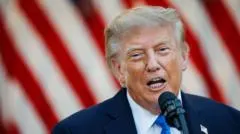
US President Donald Trump has said he does not expect the war with Iran to end until after November's midterm elections, and that oil prices will remain elevated until then. His comments come amid falling approval ratings and mounting pressure from within his own Republican Party to bring the seven-month conflict to a close, with the remarks made as he travelled to Texas for the party's first-ever midterm election convention.
Oil prices reached $100 a barrel on Wednesday for the first time since July, driven by intensifying fighting across the Middle East, while US diesel prices hit an all-time high earlier in the week. Trump claimed, without evidence, that Iran was trying to influence the election to install a "weak" government that would let it pursue nuclear weapons, a claim Tehran denies. Fighting has escalated since a 60-day ceasefire expired last month, with the US striking five Iran-linked oil tankers, Iran attacking two US Navy destroyers and eight tankers in the Strait of Hormuz, and Iran-backed Houthis striking Saudi oil facilities. Midterm elections take place on 3 November, with Republicans at risk of losing control of Congress.
In short
- Trump says Iran war won't end until after 3 November midterms
- Oil hit $100 a barrel Wednesday amid escalating Middle East fighting
- US and Iran traded attacks on ships in Strait of Hormuz
Steelman: both sides, in good faith
The strongest fair case each way — we don't pick a winner.
The case for
Supporters could argue that keeping pressure on Iran until after the elections gives the US leverage to deter further attacks, protect shipping and prevent Iran from advancing its nuclear programme. They may see a premature end to the campaign as risking a weaker settlement and greater instability later.
The case against
Critics could argue that tying the war’s expected duration to the election calendar suggests domestic political considerations are prolonging a costly conflict, while high oil and fuel prices burden households and businesses. With fighting escalating and no evidence offered for Trump’s claim about Iranian election interference, they may favour a clear strategy for ending the war and reducing the risks to US forces and regional stability.
Explained simply
The conflict involves Iran, the United States and regional groups and governments drawn into the fighting. A ceasefire that had paused some hostilities expired last month, and attacks have since affected oil tankers and facilities across the Middle East.
The Strait of Hormuz is a narrow shipping route used to carry much of the world’s oil, so disruption there can push up fuel prices. The United States is also approaching midterm elections, when voters choose members of Congress, which can affect how much support a president has for his policies.
Donald Trump is the US president and a Republican; Iran’s government is led by a separate political system that the US regards as an adversary. Republicans risk losing control of Congress in the 3 November vote, making the war and its economic effects politically significant in the United States.
Business Elections Government Markets Middle East Politics World