Ireland Records Largest MRSA Outbreak Linked to Bouncy Castle at Community Event
Developed over time first seen 2 months ago
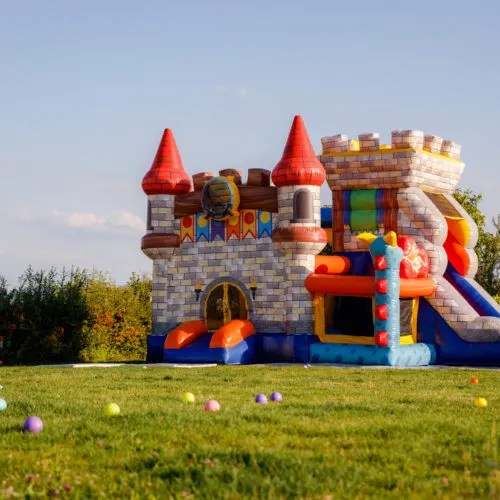
A medical report has confirmed that Ireland's largest recorded outbreak of MRSA occurred after 48 children and adolescents developed skin and soft tissue infections having played on bouncy castles at a community gathering in the HSE Dublin and Midlands region last autumn. Fifteen of those affected sought hospital treatment and four were admitted, though none required intensive care and all recovered following an average four-day stay. Doctors say the outbreak, caused by a rare and aggressive strain of the antibiotic-resistant superbug, is the first of its kind linked to bouncy castle play, a transmission route not previously described in medical literature, and it highlights a novel infection risk from close physical contact during ordinary children's recreation in warm, humid conditions.
The report, published in the journal Eurosurveillance, recorded 22 confirmed and 26 possible cases among children aged five to sixteen, with an average age of twelve and almost three-quarters male; infections most often appeared as spots, redness and blisters, chiefly on the legs, abdomen and buttocks, with twelve patients also suffering fever, nausea or vomiting. An outbreak control team involving several HSE areas, the National MRSA Reference Laboratory and Children's Health Ireland at Crumlin traced cases back to three bouncy castles used during rough-and-tumble play in wet, humid weather, with many children spending four hours or more on the equipment. Patients were treated with antibiotics, body wash and nasal ointment, the bouncy castle operator was told to disinfect the equipment before reuse, and a local primary school received infection-control guidance; the outbreak was declared over 40 days after the event with no new cases.
- Sources
- 2
- Outlets
- 2
- Left · Centre · Right
- 0 · 0 · 1
In short
- Ireland's largest MRSA outbreak traced to children's bouncy castle play
- 48 infected, 15 hospitalised, four admitted; all recovered fully
- First documented case of MRSA spreading via bouncy castles
How this story developed
- 2 months ago New details have emerged about Ireland's largest recorded outbreak of MRSA, confirming that 48 children and adolescents developed skin and soft tissue infections after playing on bouncy castles at a community gathering in the HSE Dublin and Midlands region last autumn, with 15 seeking hospital treatment and four admitted.
- 2 months ago A community gathering in Ireland's Dublin and Midlands region in autumn 2025 became the site of a significant public health incident when 48 children contracted a hypervirulent, multidrug-resistant strain of MRSA following exposure to a bouncy castle.
- 2 months ago A medical report has confirmed that Ireland's largest recorded outbreak of MRSA occurred after 48 children and adolescents developed skin and soft tissue infections having played on bouncy castles at a community gathering in the HSE Dublin and Midlands region last autumn.
- Daily Mail Medical history – of the wrong kind – was made last year when one of the most common sights at children’s parties was linked to a major outbreak of the MRSA superbug… now one of our top doctors explains the unusual and complex circumstances
- Ars Technica Bouncy castle launches horrifying MRSA outbreak, striking 48 kids in Ireland
Full account
A community gathering in Ireland last autumn has been linked to what is believed to be the largest outbreak of MRSA ever recorded in the country, after dozens of children and teenagers developed aggressive skin infections following an afternoon spent on bouncy castles. Around 120 people, roughly half of them children and adolescents, attended the event in a suburb within the HSE Dublin and Midlands region, which included a barbecue, a sweets stall and three inflatable bouncy castles set up on a green area. In total, 48 children and young people went on to develop skin and soft-tissue infections, with 33 managed by their GP, 15 requiring hospital assessment and four admitted to hospital. All of those affected eventually recovered, and none needed intensive care, though the four hospitalised children stayed in for an average of four days. Findings from the investigation were published this week in the journal Eurosurveillance.
The outbreak came to light nine days after the gathering, when a 12-year-old boy was admitted to hospital with MRSA folliculitis, a follicle infection producing small, pus-filled spots. His diagnosis prompted health officials to look for a wider pattern, and they quickly identified around 25 further cases among children who had attended the same event, triggering the urgent formation of an outbreak control team drawing on several HSE areas, the National MRSA Reference Laboratory and Children's Health Ireland at Crumlin. The event's organiser helped investigators trace attending families, who were each given a risk assessment to check for signs of infection. Conditions on the day were reportedly warm, humid and showery, and parents recalled children being visibly wet and engaged in boisterous, close-contact play on crowded castles; nineteen of the affected children were estimated to have spent four hours or more on the equipment, consistent with prolonged, sustained exposure.
Laboratory analysis identified the culprit as a rare and unusually aggressive strain of MRSA, designated t016-ST22-MRSA-IV, capable of producing a toxin called Panton–Valentine leukocidin, which damages immune cells and drives tissue inflammation. This may explain why the infections progressed so quickly: many children developed symptoms within four days, and some within just hours, notably faster than the four-to-ten-day incubation period typically expected for MRSA. Symptoms ranged from spots, pustules and blisters to more severe abscesses, mostly affecting the legs and thighs, in keeping with the type of skin contact expected inside a bouncy castle. Twelve children also reported systemic symptoms such as fever, nausea or vomiting. Genomic testing showed the strain was resistant to at least four antibiotics, including flucloxacillin, ciprofloxacin, gentamicin and trimethoprim, though it remained treatable with others such as clindamycin, tetracycline and linezolid. Affected children were treated with a combination of antibiotics, medicated body wash and nasal ointment, and advised to stay away from school or childcare settings until their symptoms had fully cleared.
The outbreak was formally declared over forty days after the event, once two full incubation periods had passed without any new cases emerging. Investigators noted that while community outbreaks of MRSA are not unusual in crowded, close-contact settings such as sports clubs, prisons or childcare facilities, transmission via a bouncy castle had not previously been documented in medical literature, making this both the largest MRSA outbreak recorded in Ireland and an apparently novel route of spread. Coverage of the episode varies in emphasis: one account foregrounds the toxin's virulence and the rapid, dramatic progression of symptoms, while another focuses more on the practical response, including the weather conditions, the scale and duration of children's play on the castles, and the detailed public-health tracing effort involving multiple agencies. Health officials have not publicly named the equipment operator, though reports indicate the operator was contacted as part of the investigation.
Where outlets differ
From the full account, which is AI-written from the sources:
Source 1 (science-focused outlet) emphasises the toxin's virulence, the genomic detail of the strain, and frames the outbreak dramatically around a hypervirulent pathogen, while Source 2 (Irish outlet) focuses more on the public-health response, the multi-agency investigation, and practical details like weather and time spent on the castles.
Source 2 provides specifics not in Source 1, such as the 40-day period before the outbreak was declared over, the involvement of Children's Health Ireland at Crumlin, and the fact that 19 children spent four or more hours on the castles.
Source 1 gives more clinical/microbiological detail, including the specific incubation-period comparison and the full list of antibiotics the strain resisted or remained susceptible to.
Source 2 notes the operator of the bouncy castles was contacted, a detail cut off in the available excerpt, whereas Source 1 does not mention the operator at all.
Explained simply
Ireland's health service has confirmed the country's largest ever outbreak of MRSA, a type of bacteria that has become resistant to many common antibiotics and can cause skin infections that are harder to treat than usual. The cases were traced to a community event last autumn where children played on bouncy castles, with dozens later developing infections and some needing hospital care.
MRSA normally spreads through skin contact or contaminated surfaces, and outbreaks are more often linked to hospitals or close-contact settings like sports teams. This case is notable because it is the first time bouncy castles, a common feature of children's parties and fairs, have been identified as a likely source of transmission, something not previously recorded in medical research.
The findings come from health investigators and medical researchers who studied the outbreak in detail, including how it spread, who was affected and how it was eventually brought under control. The story matters because it raises questions about hygiene at everyday children's activities and could prompt closer scrutiny of how such equipment is cleaned and used.
Coverage · 2 sources
- Ars TechnicaBouncy castle launches horrifying MRSA outbreak, striking 48 kids in Ireland
- Daily MailRightMedical history – of the wrong kind – was made last year when one of the most common sights at children’s parties was linked to a major outbreak of the MRSA superbug… now one of our top doctors explains the unusual and complex circumstances
Americas Art Culture Offbeat Software Weird & Viral World