Is Putin about to wage war on Europe? Fears Russia could launch drone attacks or stage Baltic island invasion after CIA chief’s mystery visit to Moscow
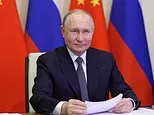
Fears are growing that Russia could be preparing military or hybrid action against Europe, following a surprise visit to Moscow by CIA director John Ratcliffe that has fuelled speculation the US is seeking to head off a potential attack on Nato. The Kremlin's response was hardly reassuring, with officials warning it was "too early" to say whether the crisis in US-Russia relations could be resolved, while claiming Ukraine "is definitely losing the war". The visit comes amid mounting Western concern that Moscow could seize Nato territory within weeks of deciding to act, ranging from cyber-attacks to armed incursions along the alliance's eastern flank.
Analysts have identified several ways Russia could threaten Europe, including drone incursions that have already prompted a sharp rise in fighter jet scrambles, up over 250 per cent in July compared with the previous year, alongside unexplained drone activity near German airports and military bases. Baltic leaders, including Lithuania's president, have warned of possible "targeted kinetic operations" against critical infrastructure, while Russian opposition figure Garry Kasparov cautioned that Putin may attempt a small drone incursion across Nato borders to bolster a "winning narrative" at home. Britain's spy chief has described the current climate as a "space between peace and war", with Russian activity spanning sabotage, cyberattacks and disinformation across the continent.
- CIA chief's Moscow visit sparks fears of Russian action against Nato
- Fighter jet scrambles up over 250% amid rising drone incursions
- Baltic states warn of possible targeted attacks on infrastructure
New here? Start with this
Russia and Nato have been in a state of heightened tension since Russia's full-scale invasion of Ukraine in 2022, with Western officials repeatedly warning that Moscow could eventually test Nato's defences directly rather than confining its aggression to Ukraine. Nato is the military alliance of 32 countries, including the UK, US and most of Europe, bound by a mutual defence agreement, meaning an attack on one member is treated as an attack on all. The Baltic states of Estonia, Latvia and Lithuania, which border Russia and were once part of the Soviet Union, are seen as particularly exposed.
In recent months there has been a rise in incidents attributed to Russia across Europe, including drone sightings near airports and military sites, suspected sabotage, and cyberattacks, which officials describe as "hybrid" warfare, meaning actions that fall short of open conflict but are designed to unsettle and probe Western defences. John Ratcliffe is the director of the CIA, the United States' foreign intelligence agency, and his visit to Moscow is significant because high-level contact between American and Russian intelligence officials is rare and usually reserved for moments of serious concern.
Vladimir Putin has led Russia as president or prime minister since 1999 and has overseen the war in Ukraine, which is still ongoing. Any suggestion that Russia might strike Nato territory matters because it raises the possibility of direct conflict between Russia and Western countries, something that has been avoided throughout the Ukraine war, and it explains why intelligence contacts, military readiness and statements from Baltic leaders and Western spy chiefs are being watched so closely.
Both sides, in good faith
The strongest fair case each way — we don't pick a winner.
The case for
Those who take the threat seriously point to a pattern of concrete, verifiable incidents rather than speculation alone: fighter jet scrambles up over 250 per cent, unexplained drones near German airports and bases, and repeated warnings from Baltic leaders and Britain's own spy chief that Europe now sits in a "space between peace and war". They argue that a CIA director's unscheduled trip to Moscow is not the sort of thing undertaken lightly, and that Russia has form for testing Western resolve through sabotage and hybrid tactics before any overt move. On this view, given the catastrophic cost of being wrong once before in Crimea and 2022, prudence demands treating these signals as a genuine warning rather than dismissing them, even while acknowledging much remains uncertain.
The case against
Sceptics of the more alarming reading argue that Russia's military is heavily committed and attritted in Ukraine, and that deliberately striking NATO territory would invite an Article 5 response from a far stronger alliance, an outcome no rational Kremlin strategist would court. They note that drone sightings and airspace incidents can have mundane explanations, including navigational error, testing, or spillover from the war in Ukraine, rather than deliberate provocation, and that ambiguous Kremlin rhetoric is standard diplomatic hedging rather than evidence of an invasion plan. They also caution that dramatic invasion narratives can serve other interests, such as justifying higher defence budgets or shifting attention from difficulties on the Ukrainian front, and that responsible reporting should resist amplifying worst-case speculation before firmer evidence emerges.
Art Culture Europe Geopolitics Paranormal Politics Weird & Viral World