World news and discussion on TalkFuse.
‘It’s a biohazard’: Native communities in US south-west try to recover after flooding intensified by El Niño
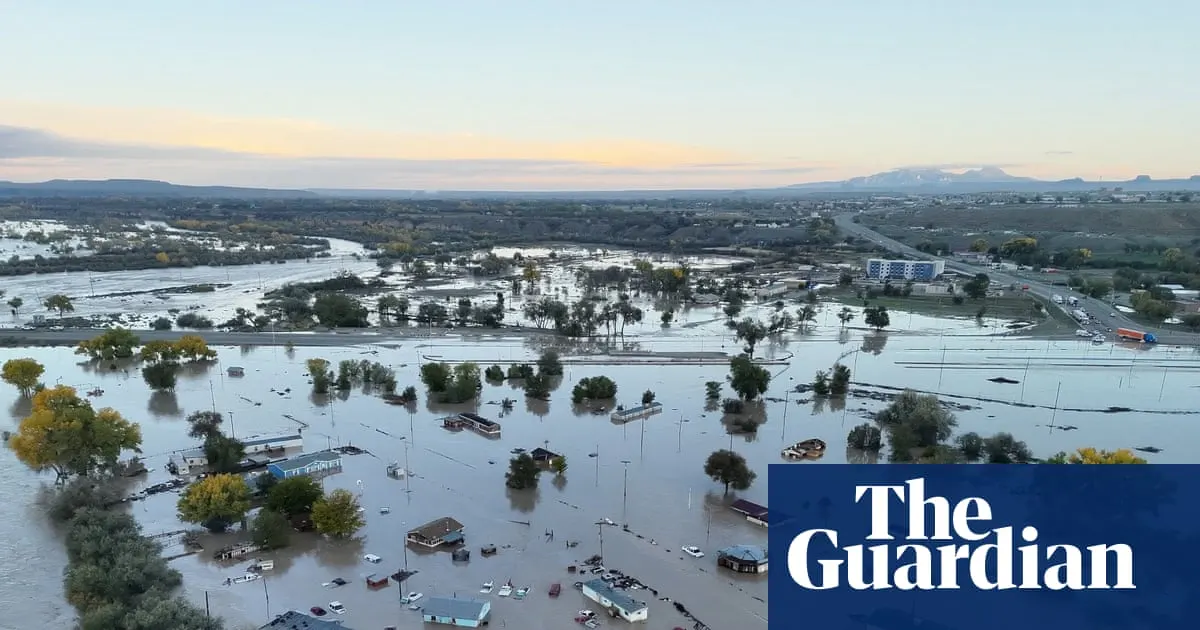
Flooding intensified by heavy rain in New Mexico’s Four Corners region submerged homes and farmland, damaged wastewater facilities and contaminated the San Juan River with sewage. Navajo communities are now facing displacement and the loss of crops, while the polluted water poses health risks and threatens a source of irrigation important to local farming and cultural practices.
The river reached 21 feet near Shiprock, its highest reported level there since 1935, after two major storms in late October and early November. Communities across the Navajo Nation and nearby areas were affected: elders were rescued in Dennehotso, residents near Bluff were slow to return amid E coli levels 25 times the norm, and Shiprock residents such as Jimmie Goodman evacuated to temporary housing.
In short
- Flooding brought sewage into the San Juan River.
- The river reached 21 feet near Shiprock.
- Navajo farms and communities face lasting disruption.
Explained simply
The San Juan River flows through parts of the south-western United States, including the Navajo Nation, where many communities rely on its water to irrigate crops. Farming is tied to both livelihoods and cultural practices, so damage to fields and water supplies can affect families well beyond the immediate flooding.
The Navajo Nation is a large Indigenous territory spanning parts of New Mexico, Arizona and Utah, with communities spread across rural areas. Local residents, elders and farmers have been affected, alongside services such as wastewater facilities that treat sewage before it enters the environment.
When floodwater damages those facilities, sewage can reach rivers and raise the risk of illnesses caused by bacteria such as E. coli. Contamination can make water unsafe to use and complicate efforts to return home and restore farms.
Americas Entertainment Music Politics World