‘It’s not about sex but empowerment’: why I picked a ‘naked’ frock as dress of the year
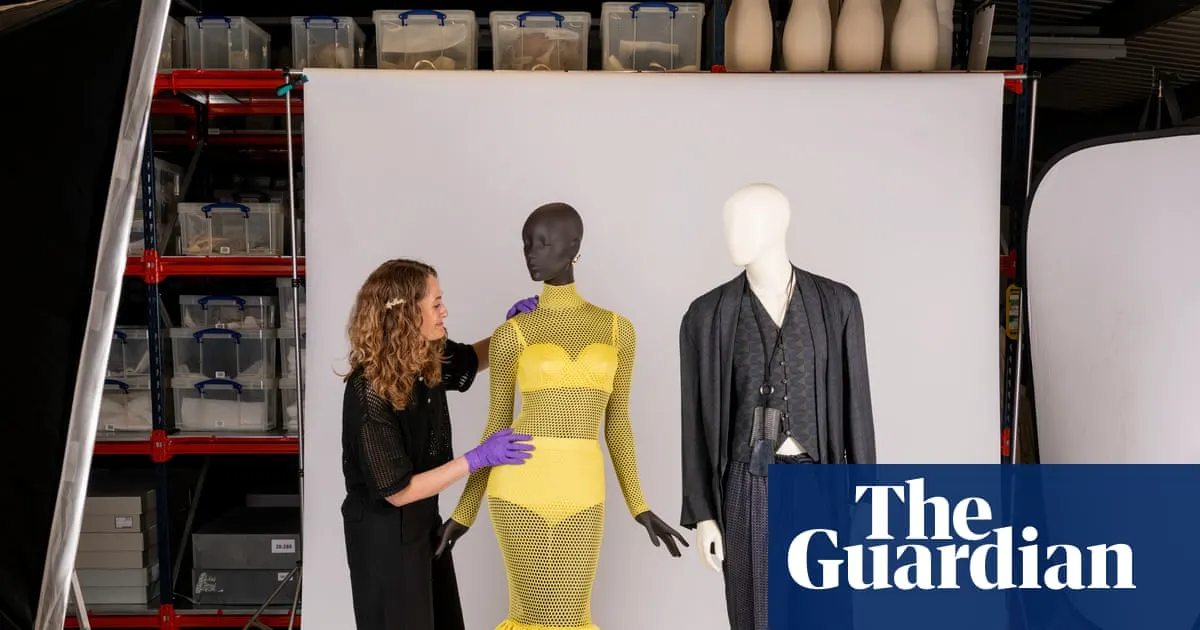
A fashion editor has selected Sarah Burton's sporty daffodil mesh dress as Fashion Museum Bath's Dress of the Year for 2025, citing its cultural significance rather than aesthetic appeal. The choice reflects the year's defining trend: the "naked" dress, a style of strategically transparent or minimal designs exemplified by celebrities including Margot Robbie in crystal strings and Julia Fox in transparent mesh. The editor approached the selection as an act of historical documentation, seeking a piece that would help future museum visitors understand not just the fashion, but the culture of 2025.
Fashion Museum Bath's annual Dress of the Year programme began in 1963, founded by Doris Langley Moore, and has preserved garments from Mary Quant to Naomi Campbell's pandemic hazmat suit. The museum itself is currently closed for renovation, with construction soon to begin on a new home in the city's old post office, expected to open in 2030, whilst its collection is temporarily stored in Wiltshire. The programme aims to keep the collection perpetually current by selecting pieces each year that capture the spirit of the times.
- Fashion editor chose transparent "naked" dress as 2025's most culturally significant look.
- Annual Dress of the Year programme documents fashion and culture since 1963.
- Fashion Museum Bath closes for renovation, reopening in 2030 at old post office.
New here? Start with this
Fashion Museum Bath's annual Dress of the Year programme has selected a piece each year since 1963 to preserve clothing that captures the spirit of its time. The museum was founded by Doris Langley Moore and has documented major cultural moments through fashion, from Mary Quant's designs to contemporary pieces like Naomi Campbell's pandemic hazmat suit. This year's selection reflects how the museum uses fashion as historical documentation rather than purely aesthetic judgment.
The winning piece is a sporty daffodil mesh dress by designer Sarah Burton, chosen for its representation of 2025's defining fashion trend: the "naked" dress. This style features strategically transparent or minimal designs, as seen worn by celebrities including Margot Robbie in crystal strings and Julia Fox in transparent mesh. The selection recognises this trend as culturally significant to understanding the year rather than simply appealing in appearance.
The programme aims to help future museum visitors understand not just the fashion of an era, but the culture that produced it. Fashion Museum Bath itself is currently undergoing renovation, with its collection temporarily stored whilst a new building opens in the city's old post office, expected in 2030. By selecting pieces like this year's dress, the museum ensures its collection remains relevant to understanding contemporary society.
Both sides, in good faith
The strongest fair case each way — we don't pick a winner.
The case for
The curator's choice reflects a legitimate approach to fashion history: documenting what was genuinely worn and celebrated in 2025, not imposing retrospective judgement about what 'should' have mattered. The 'naked' dress was a significant trend embraced by major celebrities and worn publicly, indicating real cultural currency. The museum's mission to keep its collection 'perpetually current' by capturing 'the spirit of the times' necessarily means selecting pieces that actually defined the era. Body confidence and rejecting rigid clothing norms is a meaningful cultural statement worth documenting.
The case against
Whilst the 'naked' dress was a celebrity trend, fashion museums should exercise curatorial judgement about what genuinely represents an era versus what merely captures transient moments. 2025 likely encompassed diverse fashion movements, and selecting a transparent dress as the year's defining garment risks reducing complex times to a single image. Moreover, framing exposed skin primarily as 'empowerment' may oversimplify other narratives worth capturing. Museums serving future generations should aim to document clothing that illuminates broader cultural values, not simply replicate what was already highly visible on social media.