It’s Time to Reexamine Monetary Policy Rules
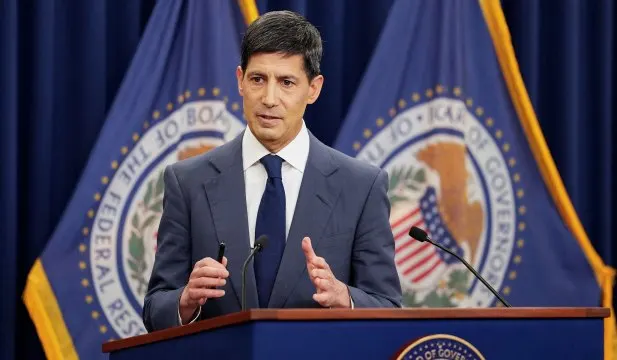
The article argues that the US Federal Reserve should reconsider adopting a formal monetary-policy rule to make interest-rate decisions more predictable and accountable. Its author, former congressman Jeb Hensarling, says recent inflation misses and the Federal Reserve’s discretionary approach show the need for reform under Chair Kevin Warsh.
Hensarling highlights the Taylor Rule, which links interest rates to inflation, the neutral rate and the gap between actual and potential output. He contrasts the 1982–2003 “Great Moderation”, when inflation was broadly 2–3%, with the 1970s and the post-pandemic period, arguing that prolonged low rates contributed to damaging inflation. He accepts that rules require exceptions during shocks, but says the Fed should publicly explain any deviation and follow a chosen rule most of the time.
In short
- Author urges the Federal Reserve to adopt a transparent monetary-policy rule.
- He links discretionary policy to inflation and past economic instability.
- Rules should guide decisions, with explained exceptions for emergencies.
Steelman: both sides, in good faith
The strongest fair case each way — we don't pick a winner.
The case for
Supporters of monetary policy rules argue that formal frameworks enhance accountability and predictability whilst reducing costly discretionary errors. Historical success during the 'Great Moderation' and recent inflation problems—attributed partly to prolonged low-interest discretionary decisions—demonstrate that systematic, transparent approaches provide superior discipline than pure discretion. Rules could permit explicit deviations during genuine crises whilst ensuring policymakers explain exceptions and otherwise follow a consistent framework, preventing the repeated mistakes that have destabilised the economy.
The case against
Opponents contend that rigid rules cannot accommodate the inherent complexity of modern economies, where unprecedented shocks demand expert judgment and real-time adaptation. They argue that formulaic approaches risk becoming counterproductive or obsolete as conditions evolve, and that experienced policymakers' nuanced assessment of inflation expectations, financial stability and emerging risks provides greater protection than mechanical rule-following. True accountability derives from transparent reasoning and demonstrated competence rather than constraint by frameworks that require constant reinterpretation.
Explained simply
Central banks like the US Federal Reserve make decisions about interest rates, which affect borrowing costs for businesses and consumers. Some economists and policymakers argue that the Fed should follow a formal rule when making these decisions, which would make interest-rate policy more predictable and transparent.
The debate stems from concerns about inflation. During the 1970s, high inflation damaged the economy, whilst the period from 1982 to 2003 saw inflation kept stable at around 2 to 3 per cent. More recently, interest rates remained low for an extended period, and in the years after the pandemic, inflation surged again, prompting questions about whether a formal rule might have prevented this.
One widely-discussed framework is the Taylor Rule. This rule would set interest rates based on three factors: current inflation, the neutral rate that neither stimulates nor slows the economy, and the gap between how much the economy is producing and how much it could produce. Proponents acknowledge that rules may require exceptions during major economic shocks, but argue the central bank should publicly explain any departures and otherwise follow the chosen rule.
Business Economy Government Politics