Japan temperatures soar over 40C, marking first ‘cruelly hot day’
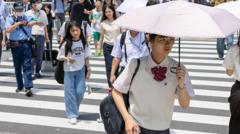
Japan has recorded its first-ever "kokushobi", or "cruelly hot day", after temperatures in three central cities exceeded 40C on Tuesday. The new classification, introduced by Japan's Meteorological Agency in April, was created to give the public a clearer warning of especially dangerous heat, and its first use comes amid a broader trend of intensifying heatwaves worldwide, with Japan's summers becoming progressively hotter and more hazardous.
Tajimi, Gujo and Toyoda all reached the 40C threshold, with the agency forecasting the heat to persist into next week. Nearly 300 of Japan's 914 observation points also recorded a "moshobi", or day above 35C, on Tuesday, while heatstroke alerts were issued across more than 40 prefectures. The Tokyo Fire Department said 287 people, aged three to 103, were hospitalised for suspected heatstroke on Tuesday alone, the highest daily figure this year, prompting an ambulance overload alert. Last year, a record 1,803 workplace heatstroke cases were reported nationally, of which 19 proved fatal, and Tokyo's government has urged office workers to wear more casual clothing to cope with the heat.
In short
- Japan records first "kokushobi" as temperatures top 40C in three cities
- Nearly 300 hospitalised for heatstroke in Tokyo on Tuesday, a 2026 high
- Heatstroke alerts issued in over 40 prefectures; heat set to continue
Explained simply
Japan’s Meteorological Agency uses temperature categories to warn people about extreme heat. “Moshobi” means a day when temperatures reach 35C, while the agency introduced “kokushobi”, or “cruelly hot day”, in April for temperatures of 40C or higher.
The warnings matter because extreme heat can cause heatstroke, which can require hospital treatment and can be fatal. Japan’s summers have become hotter, and heatwaves are part of a wider pattern of intensifying heat around the world.
The risks affect people at home, outdoors and at work. Japan’s government has encouraged changes such as lighter clothing in offices, while emergency services and health authorities issue alerts to help people take precautions.