Japan’s MMX mission will collect Phobos samples for return by 2031
Developed over time first seen 19 hours ago
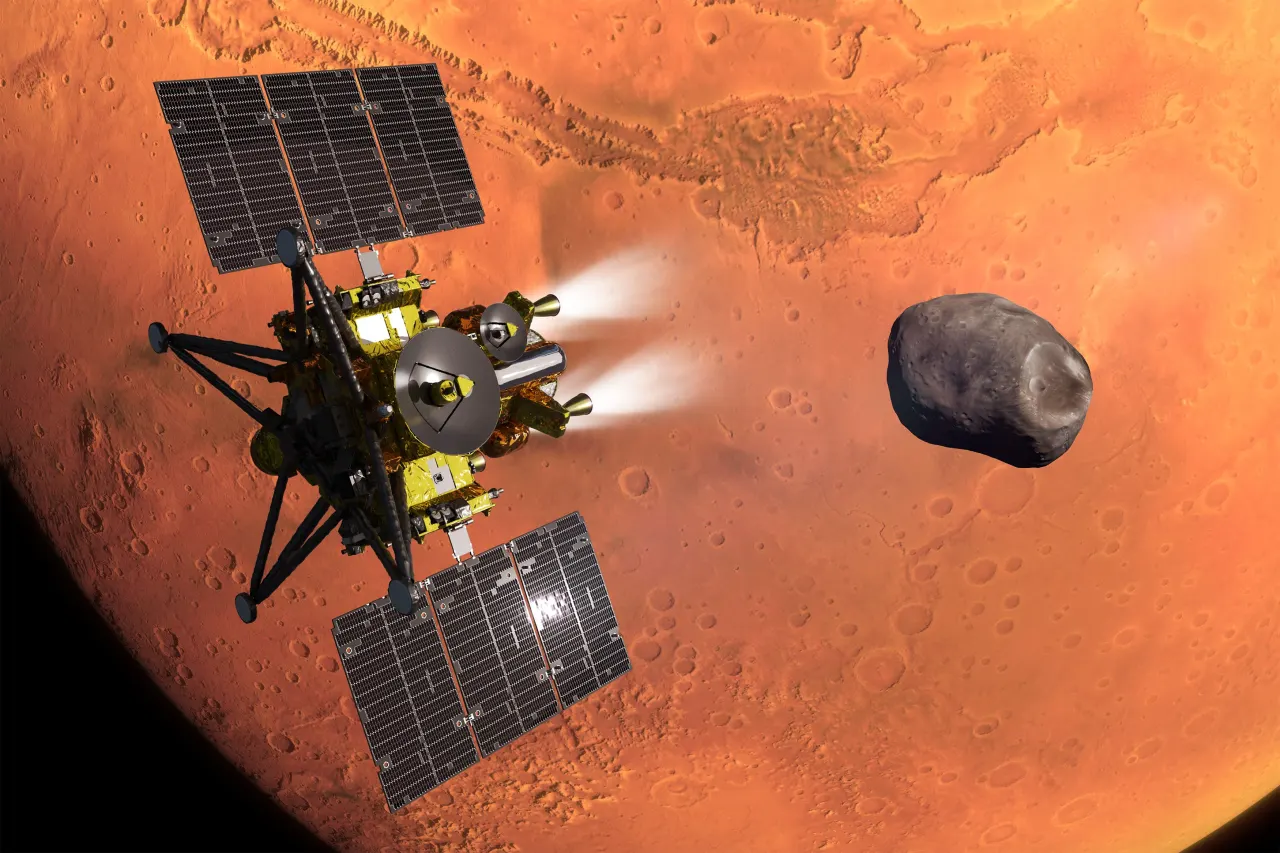
Japan’s MMX mission will travel to Mars to study its moons, Phobos and Deimos, and collect material from Phobos for return to Earth by 2031. The samples could help resolve whether the moons are captured asteroids or formed from debris after a collision with Mars, and may also reveal more about the planet’s history.
After nearly a year of travel, the spacecraft will survey Mars and both moons, with a rover due to explore Phobos before the spacecraft lands. It will use two sampling methods to collect at least 10 grams of material; three earlier Russian attempts to reach Phobos failed. The mission brings together researchers from Japan, NASA, the European Space Agency and Germany.
- Japan plans to return Phobos samples by 2031.
- The mission aims to explain how Mars’s moons formed.
- Researchers hope the samples may contain material from Mars.
New here? Start with this
Mars has two small moons, Phobos and Deimos, but scientists do not know how they formed. Phobos may be an asteroid captured by Mars or material left over from a huge impact on the planet, and its soil may include traces of Mars itself.
Japan’s MMX spacecraft is designed to study Mars and both moons, then send a rover to explore Phobos and gather soil. Researchers from Japan, NASA, the European Space Agency and Germany are involved, and the samples could help explain the moons’ origins and reveal more about Mars.
More coverage
Art Asia Culture Space Technology World
Read the full article at the source →
Originally published by Wired as “Japan’s MMX Mission Wants to Bring Martian Moon Samples Back to Earth”.