Jewish man reports assault while challenging graffiti in Holborn as police investigate antisemitic hate crime
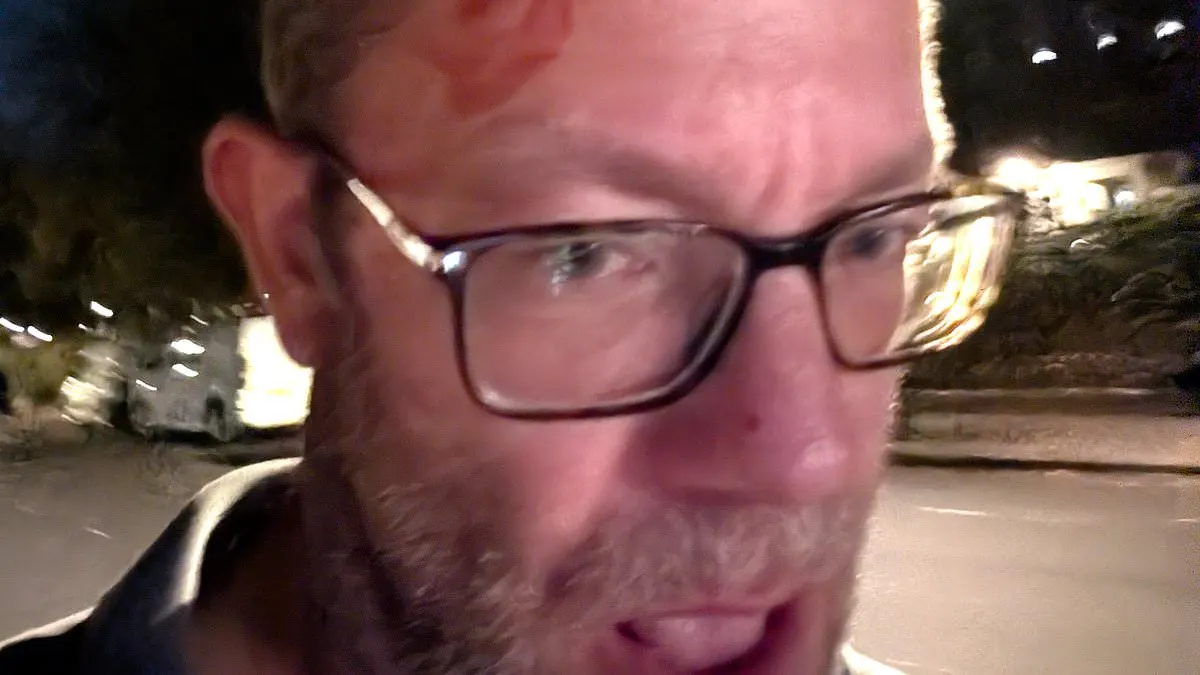
Jewish man Dan Levene says he was punched and kicked after challenging two people who were spray-painting a stencil in Holborn. The Metropolitan Police is investigating the reported assault as an antisemitic hate crime, amid wider debate about antisemitism and political rhetoric ahead of a local by-election.
Levene, 52, said the masked pair attacked him for about 20 seconds after he objected to graffiti describing Camden Council leader Sagal Abdi-Wali as a “puppet of genocidal Israel”. He reported a head wound and suspected cracked rib; police said he had minor injuries, needed no medical treatment, and no arrests had been made. The incident took place in Queen Square, near Great Ormond Street Hospital, before Thursday’s Holborn and St Pancras by-election.
- Police are investigating an assault on Dan Levene as an antisemitic hate crime.
- Levene says he was attacked after objecting to graffiti in Holborn.
- No arrests have been made.
New here? Start with this
Antisemitic hate crimes have become an increasing concern in Britain, with incidents ranging from graffiti to physical violence. Concerns about such crimes have grown alongside intensified international discussions about Israel and Gaza. These incidents are happening more frequently and drawing more public attention than in previous years.
The incident involves Dan Levene, a 52-year-old Jewish man, who reported being attacked in Holborn by two masked individuals whilst objecting to their spray-painted antisemitic graffiti. The graffiti targeted Camden Council leader Sagal Abdi-Wali and contained language linking her to Israel. The assault took place near Great Ormond Street Hospital in central London.
The reported attack is being investigated by the Metropolitan Police as an antisemitic hate crime, though no arrests have been made to date. The incident occurred ahead of a parliamentary by-election in Holborn and St Pancras. Debates about antisemitism in public discourse have become increasingly prominent in recent months.
Both sides, in good faith
The strongest fair case each way — we don't pick a winner.
The case for
This assault reflects a troubling pattern of antisemitic violence in response to hateful speech. The graffiti employed language—describing policy as 'genocidal' and Israeli leaders as 'puppets'—that deploys historical antisemitic tropes about Jewish power and control. When a Jewish person objected to this offensive speech, they were physically attacked, demonstrating how such rhetoric creates dangerous conditions where Jewish people face real harm for exercising basic civic rights. Addressing antisemitic speech and violence must be a priority for communities concerned with safety and inclusion.
The case against
Political violence is a serious crime that must be prosecuted, but we must be careful not to conflate legitimate political speech with antisemitism. Criticism of Israeli government policies is protected political discourse in democracies, and routinely labelling such criticism as antisemitic threatens the ability to debate contentious issues openly. The facts remain contested—accounts differ on severity and circumstances—which means investigation should focus on the perpetrators' actual motivations rather than assumptions based on the victim's religious identity. We risk suppressing legitimate democratic debate when we too readily attribute violence to hatred rather than examining its genuine causes.
Read the full article at the source →
Originally published by Daily Mail as “Jewish man ‘attacked by activists when he tried to stop them graffitiing’ – as police launch anti-Semitic hate crime probe”.