‘Jim Crow must go’: the artists and everyday heroes who fought injustice – in pictures
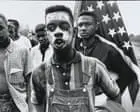
The Guardian presents a photo gallery showcasing works from an exhibition titled "Turn the Volume Up" at the Nasher Museum of Art at Duke University in Durham, North Carolina. The show, whose title draws on the phrase "Jim Crow must go", brings together photography, painting and mixed-media works by artists documenting resistance to racial injustice in America, spanning the civil rights era to the present day. It matters as a reminder of how visual art has recorded and amplified grassroots activism and everyday courage alongside more famous historical moments.
Featured works include Bruce Davidson's "Time of Change" photographs from the early 1960s, Spider Martin's image of Martin Luther King addressing 25,000 people at the end of a march in 1965, and Kara Walker's annotated prints revisiting Civil War-era imagery. Other contributors include Peter Williams, Reggie Burrows Hodges, Carol Summers, Ralph Gibson and Lyle Ashton Harris, whose pieces range from Vietnam War protest art to contemporary paintings of Black community life, together illustrating decades of artistic engagement with civil rights, war and racial justice movements in the United States.
- Gallery showcases "Turn the Volume Up" exhibition at Nasher Museum of Art, Duke University
- Features civil rights-era photography and art on racial injustice
- Includes works by Bruce Davidson, Kara Walker, Spider Martin and others
Both sides, in good faith
The strongest fair case each way — we don't pick a winner.
The case for
Supporters of the exhibition would argue that museums have always chronicled the moral struggles of their era, and that art documenting resistance to segregation and injustice belongs firmly within that tradition. They would say that centring 'everyday heroes' rather than only famous leaders honours the grassroots nature of civil rights activism, and that drawing a line from historical figures to a contemporary political moment shows art's continuing relevance to public life. For them, curating such work is an act of historical education and cultural memory, not partisan advocacy.
The case against
Others, while not disputing the historical injustices depicted, might reasonably question whether a public university museum should frame its exhibition around a sitting mayor's campaign-night rhetoric, seeing this as blurring the line between historical curation and endorsement of a current political figure or movement. They might argue that tying the show's very title to a specific politician's victory speech risks alienating visitors who read it as institutional alignment with one side of contemporary debates, and that museums are on firmer ground when they let historical material speak for itself rather than anchoring it to present-day political branding.