Business news and discussion on TalkFuse.
UK unemployment falls as wage growth barely outpaces inflation
Developing story first seen 4 hours ago
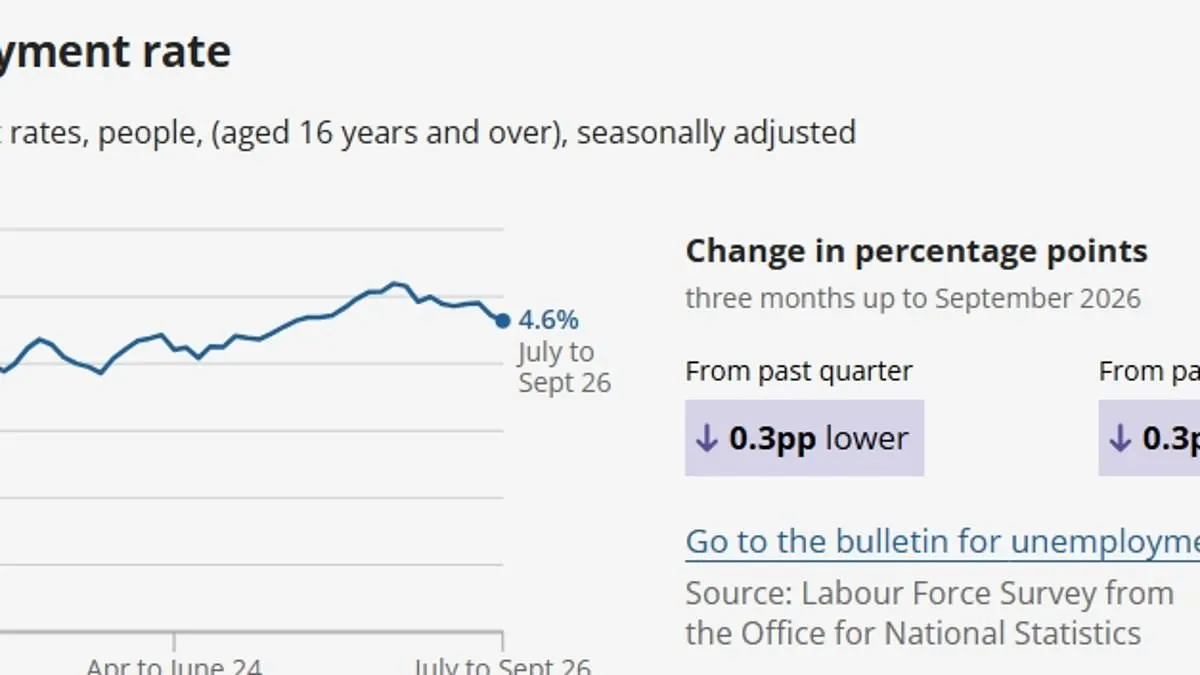
The unemployment rate fell to 4.6 per cent in the three months to September, its lowest since April 2025, while the employment rate rose. The Office for National Statistics said the figures offer a mixed picture and that survey volatility partly explains the change; falling payroll numbers and vacancies suggest hiring remains weak.
Vacancies dropped by 22,000 to 690,000 in August to October, the biggest quarterly fall since June 2025, while provisional figures show payrolls fell in October and remain below a year earlier. Regular earnings grew by 3.5 per cent in the year to September, only 0.4 percentage points above CPI inflation, as public sector wage growth slowed. Officials said smaller businesses cited higher labour and operating costs as a drag on hiring.
- Sources
- 2
- Outlets
- 2
- Left · Centre · Right
- 1 · 0 · 1
In short
- Unemployment eased to 4.6 per cent, but the figures are mixed.
- Vacancies fell by 22,000 to 690,000.
- Wage growth was just 0.4 points above inflation.
How this story developed
- 3 hours ago The Office for National Statistics added that survey changes between groups entering and leaving may partly explain the employment figures, while confirming that vacancies fell by 22,000 to 690,000 and public sector wage growth eased.
- 4 hours ago The UK unemployment rate dropped to 4.6 per cent in the three months to September, but falling vacancies and payrolls pointed to continued weakness in hiring, while wage growth left workers only slightly ahead of inflation.
Full account
The UK labour market delivered a mixed picture in the three months to September: unemployment edged down to 4.6 per cent from 4.7 per cent, while the employment rate rose to 75.4 per cent from 75.1 per cent. The Office for National Statistics cautioned that the change in unemployment may partly reflect unusually large differences in employment status between people joining and leaving its survey, so the figures should be treated with care.
Other indicators pointed to weakening demand for workers. Provisional estimates show the number of employees on company payrolls fell by 34,000 in October and was 95,000 below its level a year earlier. Vacancies declined by 22,000 between August–October and May–July, to 690,000. The ONS said the vacancy fall was concentrated among smaller businesses, which reported that higher labour and operating costs were affecting hiring.
Pay growth also slowed. Regular earnings, excluding bonuses, rose by 3.5 per cent over the year to the July–September period, down from 3.7 per cent in the previous reported month. With consumer price inflation at 3.1 per cent, this left real regular pay growth at about 0.4 per cent. Average regular earnings grew faster in the public sector, at 5.4 per cent, than in the private sector, at 3.1 per cent. The ONS attributed some of the slowdown in public sector pay growth to the effect of earlier pay awards dropping out of the comparison.
The reports place different weight on the implications. One highlights concern that falling vacancies could signal a drying-up of hiring opportunities, and quotes an economist warning that higher employment costs and automation may weigh particularly on entry-level roles. It also raises the prospect of further interest-rate increases, although these are forecasts rather than conclusions from the labour-market data. The other stresses that the report arrives ahead of Alan Milburn’s recommendations on youth unemployment, including a proposed long-term plan and guaranteed job support. Taken together, the figures suggest that lower measured unemployment has not been matched by stronger payroll employment or robust real pay growth.
Where outlets differ
From the full account, which is AI-written from the sources:
The first report gives greater prominence to falling vacancies, the pressures reported by smaller firms, and concerns about hiring, automation and possible interest-rate rises. The second focuses more on slowing wages and payroll losses, while also noting the rise in the employment rate and the timing of Alan Milburn’s youth-unemployment report.
The first describes inflation as the headline CPI rate but does not state its value in the supplied text; the second gives real earnings growth as 0.4 per cent without specifying the inflation rate. The account above uses the 3.1 per cent CPI figure stated in the first report’s quoted economist’s comments.
The reports use different comparison points for the unemployment rate: the first says 4.6 per cent is down from 4.7 per cent in the previous quarter, while the second says it is down from 4.7 per cent a month ago.
Left-leaning outlets 1
- UK jobs market is a ‘mixed picture’ as wage growth slows and unemployment falls – business liveThe Guardian
Only here: jobs, market, mixed, picture, slows
Right-leaning outlets 1
Only here: barely, outpaces, inflation
Every side used: wage, growth, unemployment, falls
Headline columns compared word for word; nothing in them is AI-written.
Steelman: both sides, in good faith
The strongest fair case each way — we don't pick a winner.
The case for
The fall in unemployment and rise in employment suggest more people are finding work, while regular wages still grew slightly faster than prices. Supporters of a cautiously positive reading would argue that these gains matter to household incomes and show the labour market retaining resilience despite economic pressures.
The case against
The headline improvement may overstate the labour market’s strength: the ONS cautioned that survey volatility partly explains the change, while payrolls and vacancies fell. With wage growth only narrowly ahead of inflation and smaller businesses citing higher costs, a sceptical reading is that hiring and workers’ gains remain fragile.
Explained simply
The UK labour market is measured through surveys and employer records that track jobs, unemployment, pay and vacancies. The Office for National Statistics (ONS), the public body that produces these figures, cautions that survey results can fluctuate, so changes over a short period may not show a lasting trend.
Pay growth matters because it affects how much people can afford as prices rise. CPI is a measure of inflation: when wages grow only slightly faster than CPI, workers’ pay gains in buying power are limited.
Employers’ decisions to hire are influenced by the costs of wages and running a business. Vacancies and payroll figures offer another view of the jobs market, alongside the unemployment and employment rates.
Coverage · 2 sources
Bias meters
From 2 rated sources.
Read the full article at the source →
Originally published by Daily Mail as “Jobs market stabilises as unemployment eases… but wages struggle against rising inflation”.