John Swinney’s election campaign lacked ‘vision or big-picture thinking’ Sturgeon says in her book’s new foreword
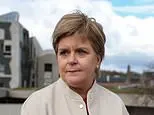
Nicola Sturgeon has criticised John Swinney's Holyrood election campaign strategy, saying the SNP's pitch to voters lacked "vision or big-picture thinking" and was "detached from the big issues bearing down on people's lives". The remarks appear in a new foreword to her memoirs and mark the first time she has publicly criticised Mr Swinney's approach since standing down as First Minister, adding to pressure on the SNP leader following the party's failure to secure a majority in May's election.
The comments feature in a new 6,000-word introduction to the paperback edition of Sturgeon's book Frankly. Mr Swinney had suggested a majority would represent a mandate for an independence referendum, but the SNP fell short. In the same foreword, Sturgeon also accuses her estranged husband, Peter Murrell, of exposing her to "suspicion, humiliation and vilification" after he was jailed for embezzling more than £400,000 from the SNP.
- Sturgeon criticises Swinney's election campaign as lacking vision
- Comments appear in new foreword to her memoir Frankly
- She also accuses estranged husband Murrell over SNP fraud fallout
New here? Start with this
John Swinney leads the Scottish National Party (SNP) and has been Scotland's First Minister since 2023, taking over from Nicola Sturgeon after she resigned. Sturgeon had led both the SNP and the Scottish government for almost nine years and remains one of the most prominent figures in Scottish politics, though she stood down as an MSP and stepped back from frontline politics before the most recent Holyrood election in May.
The SNP has long campaigned for Scottish independence from the United Kingdom, and elections to the Scottish Parliament (Holyrood) are often framed by the party as a way to build support for that goal. In May's election, Swinney had suggested that winning a majority of seats would strengthen the case for another independence referendum, but the SNP did not achieve that outright majority, raising questions about the party's strategy and Swinney's leadership.
Sturgeon has also faced personal turmoil in recent years: her estranged husband, Peter Murrell, who was formerly the SNP's chief executive, was jailed after admitting to embezzling more than £400,000 from the party, a scandal that drew significant public and media scrutiny of Sturgeon herself. Her memoir, Frankly, covers her time in politics and this period of upheaval, and a new foreword written for its paperback release is where her latest comments about Swinney and Murrell appear.
Both sides, in good faith
The strongest fair case each way — we don't pick a winner.
The case for
Those sympathetic to Sturgeon's critique argue that a former leader who delivered election-winning majorities has both the standing and the responsibility to speak candidly when she believes the party has lost its way. They contend that a campaign built primarily around a referendum mandate, without a broader vision connecting independence to voters' everyday concerns such as the cost of living, the NHS and public services, was always likely to underwhelm, and that pointing this out plainly is a constructive service to the SNP and the wider independence movement rather than an act of disloyalty.
The case against
Supporters of Mr Swinney's approach would argue that he inherited a party weakened by internal turmoil, financial scandal and falling poll numbers, and that steadying the ship with a disciplined, credible offer was a reasonable and necessary strategy rather than a failure of ambition. They may also feel it is unfair, and unhelpful to party unity, for a predecessor to publicly second-guess campaign strategy in a book foreword after the fact, particularly when some of the difficulties Mr Swinney faced, including the fallout from the Murrell affair, were not of his making.