Jon Ossoff unleashes vicious Nazi jab at Trump loyalist as GOP money flees Georgia race
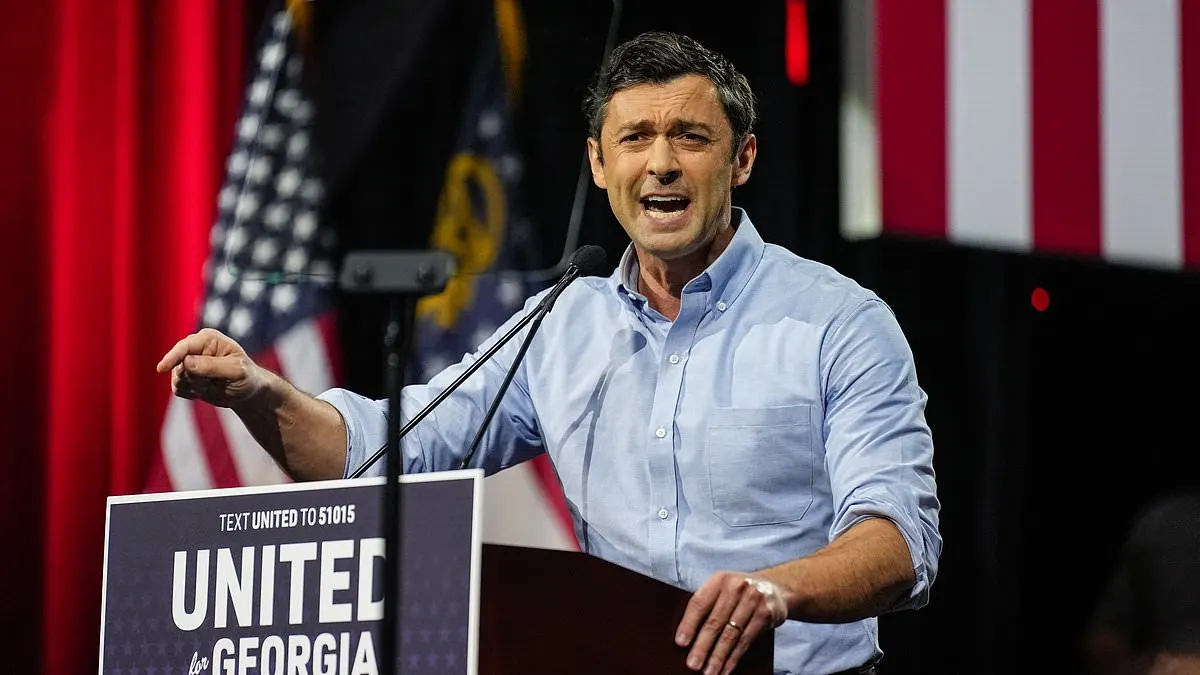
During a Thursday night Georgia Senate debate, Democratic Senator Jon Ossoff repeatedly accused Republican Representative Mike Collins of hiring extremists with Nazi ties and promoting neo-Nazi content. Ossoff opened by claiming Collins had dishonoured Georgia through "personal bigotry and widely documented ties to white nationalists" and continuously returned to these allegations throughout the debate across multiple policy topics. The confrontation came as the Senate GOP's top super PAC shifted nearly $2 million in advertising funding from the Georgia race to neighbouring South Carolina.
Ossoff's allegations specifically targeted former Collins staffer Preston Parra, whose social media contains Nazi imagery and racial slurs, and Collins' son-in-law David Alan Scheer II, a fitness influencer accused of sharing antisemitic conspiracy theories and Nazi-associated propaganda. Collins stated that Parra has no current affiliation with his office or campaign, calling such posts "vile" and "completely unhinged." Collins asserted he has "condemned racism, anti-Semitism, hate" but did not directly denounce Scheer by name, instead defending his family against what he called inflammatory claims. Collins countered by characterising Ossoff as an out-of-touch "trust fund kid who's never had a job in his life."
- Ossoff accused Collins of hiring extremists with Nazi ties during Senate debate.
- GOP super PAC shifted $2m advertising from Georgia to neighbouring South Carolina.
- Collins denied allegations, called offensive content "vile," noted family received threats.
New here? Start with this
Georgia is holding a competitive Senate race between Democrat Jon Ossoff, the incumbent senator, and Republican Mike Collins, a House representative. The race has attracted significant national attention because Georgia is a swing state, and control of the Senate could depend on which party wins. Senate elections across the country in 2026 are widely seen as important for determining the balance of power in Congress.
A major issue in this campaign has centred on accusations that Collins or people closely associated with him have connections to extremist movements. These allegations involve individuals accused of sharing antisemitic and Nazi-associated content and imagery. Collins has disputed the claims and stated his opposition to racism, though he has not directly addressed every allegation.
The race has attracted substantial funding from national political organisations representing both parties. A major Republican fundraising organisation recently shifted considerable advertising spending from Georgia to neighbouring South Carolina, which is also holding a competitive Senate election.
Both sides, in good faith
The strongest fair case each way — we don't pick a winner.
The case for
Democratic critics contend that a candidate's hiring record and close associations reveal character and judgment, arguing that employing someone like Preston Parra with Nazi imagery and slurs on his public social media represents a serious vetting failure. They further emphasise that Collins' failure to specifically denounce his son-in-law's antisemitic conspiracy theories—instead offering only a general family defence—is troubling and suggests reluctance to confront extremism within his circle. This principle holds that voters deserve to know whether their representatives maintain principled standards against hate.
The case against
Republican defenders argue that Collins should not be held accountable for views of others beyond his direct control or for associations that no longer exist. They note that Collins explicitly called Parra's posts vile and has repeatedly condemned racism, anti-Semitism, and hate generally, which should demonstrate his values; holding him specifically responsible for his adult son-in-law's personal social media activity sets an unreasonable standard that no candidate could satisfy. From this perspective, voters should judge Collins on his own stated positions and record, not on guilt by association with others.